

Goa’s government finds itself the butt of almost constant ridicule nowadays. From the twitter thrashing of Mauvin Godinho by Tamil Nadu’s Finance Minister P Thiagarajan, revealing, among other things, his anti-people support for GST on Covid drugs and vaccines; to the surrealistic declaration that the government wants to forest Madhya Pradesh to compensate for the forests destroyed in Goa; to the unbelievable announcement that Goa is a top performer in the Niti Aayog’s Sustainability Development Goals’ (SDG) ratings, every bit of news about this Sawant-led government gets greeted with disbelief, scorn, jokes, and memes, not to mention hashtags like #PramodSawantMustGo.
The problem is that, bizarre as all the news sounds, it’s not new. Even this long-distance-forest-compensation which does not compensate Goa or Goans at all has actually been done before, in Karnataka. Mauvin Godinho already had a history of criminal charges, a disproportionate assets case, and party-hopping, long before he was exposed by Thiagarajan. As for the SDG ratings, we already know how low the standards are in Indian States, also how our government lies. According to the ratings, Goa is the only State to have already met the 2030 target of 100% access to safe and affordable drinking water, sanitation facilities, and hygiene for all – which is a blatant misrepresentation of reality. Not only the villages, but even the capital of Goa fails here. People were expected to stay home during the curfew, and wash hands and wear masks regularly, when their homes lack water supply; but the government wins laurels for lying about it.
So, it’s not that the government has reached new depths of incompetence or callousness. This is the norm. And that’s what it plans – back to normal, as soon as possible. The problem is us – the Goan people. For many Goans, after the last few painful weeks, the very thought of back to normal is repulsive. That’s why the government’s repeated reassurances, especially regarding its readiness to face the predicted third wave of Covid-19, ring hollow. By readiness, of course, all they mean is medical preparedness, that hospitals will be able to take care of the sick. But even this limited promise looks impossible to achieve.
Can this government throw out their own normal systems of functioning? These rotten systems, which are responsible for the recurring shortages of basic and life-saving medical facilities, and for the neglect of the sick, range from the under-the-table wheeling and dealing in medical goods, to the opaque pricing of the goods, to the shortage of medical staff, plus a shortage of decency in how staff are treated.
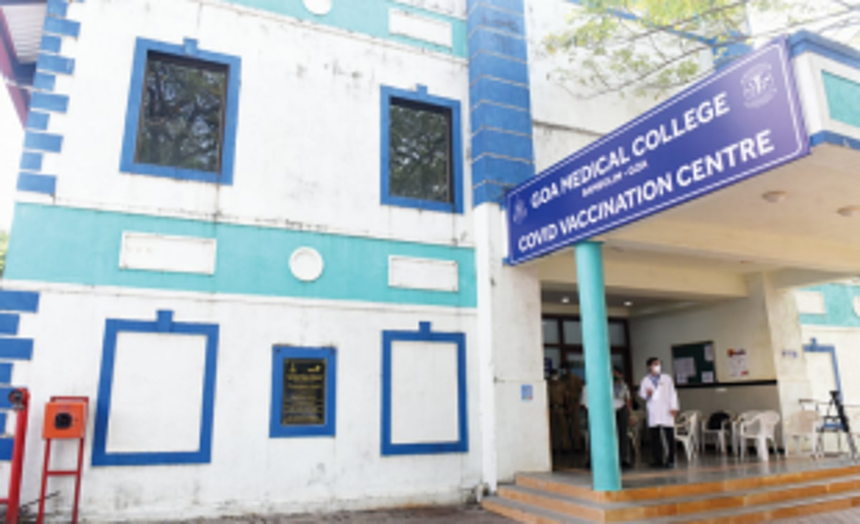
A case was filed recently at the High Court to get the government to ensure basic facilities, like drinking water and seats, for attendants of patients at the new Super-Specialty Covid Wing of the GMC. I know, from personal experience, how important patients’ attendants are, at the GMC. In fact, when my mother was recently admitted there, with me as her attendant, the ward doctor instructed me (when I was unable to lift her by myself) to have one more attendant present. The ward was already full of relatives-as-attendants, crowding the barely-one-metre-wide space between the beds, masks under noses – all this during a pandemic. It was shocking, to say the least, that relatives were handling things that need at least paramedical training, like watching over oxygen consumption, lifting patients onto trolleys and testing machines. It was also difficult to imagine how patients manage if they have no willing relatives/friends, and no money to hire private attendants. Health Minister Vishwajit Rane needs to explain why the GMC can’t employ enough trained staff to do away with these amateur attendants. Don’t Goans need jobs – or is it that Goans don’t want these kind of jobs? Because, a second and related question is, why aren’t those who do this attendant work treated with respect? Where in the world do you hear of hospital staff called ‘ward servants’? The official title, as used in recruitment advertisements, is ‘multi-tasking staff’. So how did multi-tasking staff become servants? All employees are expected to serve in whatever capacity they are employed, so why call only some as ‘servants’? Is it to show that they are lowly, or at the beck and call of other employees?
A rose by another name would smell as sweet, Rane might argue. After all, the ‘ward servants’ at GMC are probably earning much better than the ‘housekeeping staff’ at Manipal. Maybe that’s why the offensive title – to ensure that their halfway-decent pay and job security doesn’t encourage them to forget ‘their place’? Whatever the twisted logic, the title reflects a deliberate disrespect to these members, which will obviously translate into less respect for their work, by them and others, the credit for all of which must lie with the health minister and the State’s Disaster Management Authority.
But such basic issues as increasing employment, while also increasing respect and dignity, are not important for this govt. They have no interest in the basics, in keeping people physically and mentally healthy, happily employed, eating well, and living amid oxygen-producing trees. Far from it. All they want is to convince us that they will have enough oxygen when the next Covid wave arrives.
They want us to believe that this kind of direct murder will not recur. One doesn’t know how many Goans are convinced. But one thing is for sure – unless the focus shifts to the basics, things won’t change much. Whether direct or indirect, whether called Covid deaths or something else, the stink of this rotten system will not be easily hidden.
(Amita Kanekar is an architectural historian and novelist.)


