I had discussed Part 1 of the New Education Policy (on School Education) last month (Herald, 7 August). I propose to take a look at Higher Education in the Policy today. I must say, I found great changes, and many of our suggestions incorporated – but most of all, the paper has itself reduced in size – it’s simple and it’s great!
My Assessment of the Current Higher Education System: First, let me share with you my assessments of the current Higher Education canvas in our country. I had talked about the class-divide resulting basically from economic backgrounds of families and I had spoken off essential aspects of the school education system that need urgent corrections. So, the SAT-like Common Entrance Tests to Higher Education Institutes and Universities have to be devised by the NTA in those lines in my opinion. This is important as the school will then automatically orient their

pass-outs accordingly.
In terms of our Higher Education Institutions today, our position in the world-wide bench-markings are abysmal and they are going from bad to worse. In the QS World University Rankings 2021, most of our top-ranking institutes dropped in ranks e.g. the topper in India, IIT-Bombay of the only 4 institutes in QS 300, dropped from 152nd to 172nd. Just for comparison, South Korea (half of our economy size) has 8 institutes in the QS 300, the first one Seoul National is 37th in rankings!
When I talk to the top-brass of our Universities here – they give the patented excuse of “perceptional ratings” and that of “difficulty in securing sponsored R&D activities” and so on. So, why don’t we improve, for starters on these 2 parameters only – that’s in our hands – no? It’s good now, that we shall have an autonomous National Research Foundation to specifically promote research in our country.
My Take: My first point is one on “Passion”. It’s something on which Ralph Waldo Emerson would have once more said… “Passion rebuilds the world for the youth. It makes all things alive and significant.” (his “Self-Reliance”). I would want in our Policy – things which build passion for education in boys and girls as also in their teachers. I didn’t quite find this in the Policy and that’s where I confess, I’m a bit disappointed. And I would like to understand this in 5 parts: a) Aptitudes, Opportunity and Ambitions; b) Pedagogy; c) Assessments; d) Application/ Job
Worthiness; e) Research and Academics. Whereas I’ve addressed the first point in my discussions on the school education, Pedagogy in the Graduation levels is extremely important in my view – we are weak here. I expected the policy to come out with guidelines for the state-of-the-art pedagogy for our under-graduation program. This is something new…our pedagogy typically is much the same as in primary classes. Education in itself has to first be attractive to impart and then attractive to receive. Till it becomes a passion! We have set a goal of 50% Gross Enrolment Ratio in 15 years against 26% of today!
Second, the assessments – the Idea of portable Credit Bank is excellent – a practice being followed world-wide. I think it should start in 2021, along with the 4-year modular degree program, (in itself, an excellent way ahead). My other point on this, is resources – both human and financial. We have to gear up our teaching strength to state-of-the-art resources for an Eight-Semester program, setting papers, assessments, teaching, counselling and guidance. The policy has to set down norms. I’m not clear why we should restrict ourselves to inviting the top 100 universities of the world only – let’s open up! Also, a look in this context, into “for- profit” education. Transfer by DBT to deserving candidates any subsidy you fix, out of our social-welfare budgets but allow for-profit institutions in higher education particularly in professional programs.
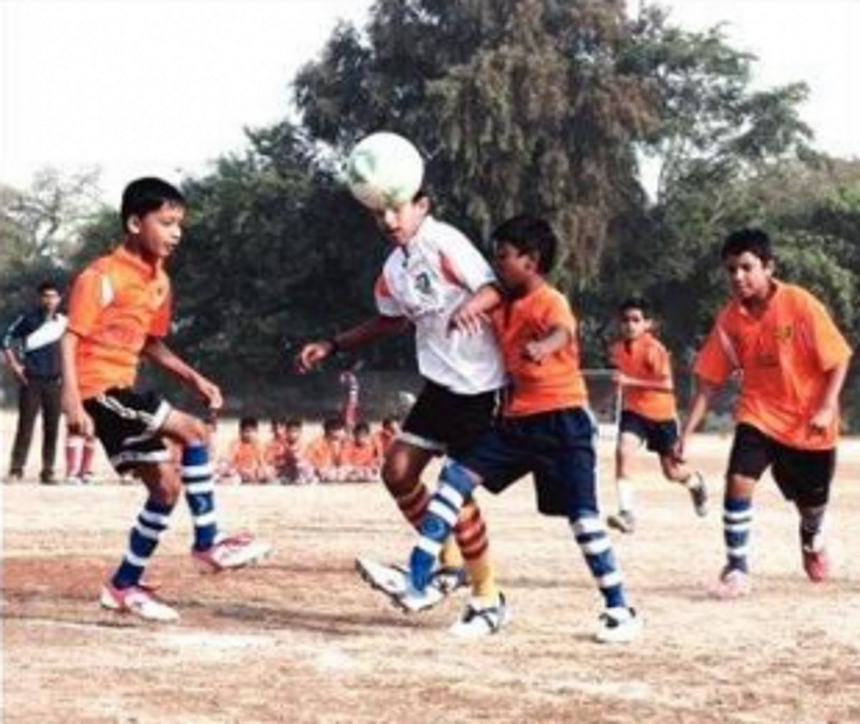
My third point is on sports: independent of the Sports Authority, in my view graduation cannot be completed without a good sports facility – sports offers immense learning opportunities in man-management, teamwork and building leadership. Imagine my consternation when I asked a class of 30, how many play serious soccer – just one hand goes up – in a State like Goa, where people view football as staple!
Fourth: The Higher Education Commission of India. It will need to be autonomous in the truest sense, it has to have the right resources (I discussed we spend just 2% of our GDP on Education when the BRICS average works out to 6!). There has to be an entire network for teacher education and constant upgradation – the wherewithal of which I miss in the Policy – I see a mention only! It has to have a robust inspection, audit, benchmarking, rating and reporting system on the thousands of colleges that will go autonomous in 10 years from today.
My last point is on Application – I mean in the segment that caters to small workshops, sole-technicians like carpentry, tailoring, small size caterings etc. we need greatly improved versions of the ITIs and Polytechnics – I think there should have been a chapter on this as well – it’s a big chunk of our self-employment scenario!
I confess, figuring contents in pages 96 and 97, the ones dealing with “How to Make Things Happen” it’s a sea of will-be’s and should-be’s! A set of guide lines will have to come out immediately, with draft changes in legislations, in regulations, there are thousands of universities and colleges involved and millions of boys and girls who need to understand the new system – fast.
And in conclusion: It’s my belief, to start you have to have Waldo’s “passion” – the passion for education, in imparting and in receiving – and it’s done!
(Binayak Datta is a Finance Professional)