Prime Minister Narendra Modi opened a Pandora’s Box of misery with his sudden announcement of a lockdown. He promised the SARS-CoV-2 crisis would be defeated in those 21 days. Since then, the country has lived through four iterations of the lockdown. Keeping people at home minimises variables giving the government opportunity to get a grip on the situation. Since the implementation of the ill-thought lockdown Covid-19 cases have increased, and India is reeling under a socio-economic and humanitarian crisis.
Problems created by the lockdown and its handling may infect the opening of the economy.
Unemployment & reduction in income in the middle class
Though the economy has been bleeding jobs for over a year, the govt’s lame handling of the pandemic vitiates matters. The corporate sector is conducting triages. Friends speak of pay cuts and layoffs. Though the government has ordered that there should be no layoffs and house helps be paid, it becomes a different matter when taps run dry. One is not going to even mention the impact of low dividends from shares and mutual funds on pensioners and others.
If restarting the economy entails pay cuts, job loss and a decline in dividends a turn round is not what one can expect.
Insufficient labour
The lockdown has not differentiated between ‘permanent’, ‘seasonal’ and ‘footloose’ migrants. Highways have borne witness to everybody from migrant families to individuals headed home with personal belongings. The 2016-17 Economic Survey estimated the total migrant workforce to be 100 million. While announcing support for stranded migrants the Finance Minister indicated 80 million were on the move. Loans will not jumpstart the MSME and other sectors if migrant labourers don’t return.
Low production will be caused by lack of demand from reduced or zero incomes and insufficient manpower.
Though there are reports of migrant labourers returning to work and companies offering better wages, the country is still not out of the red. The government may have to deal with the absence of labour in urban cities and an increase in population in rural India. Purchasing power of rural India will decrease from the fall of urban to rural remittances and lack of work for returning migrants, notwithstanding MNREGA.
Law and Order, and Abuse of Power
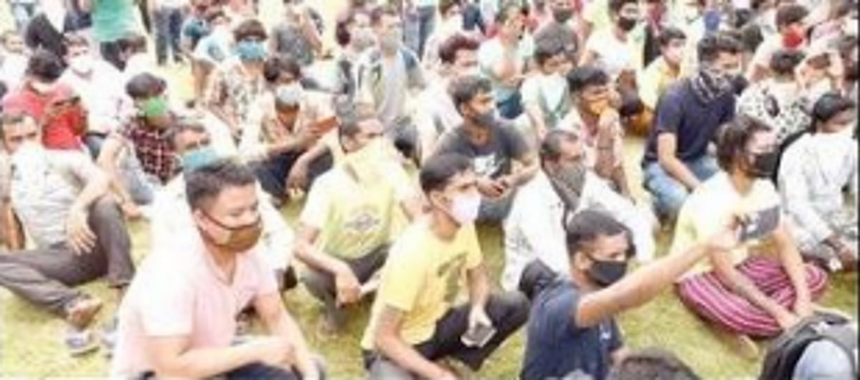
The actions of the police and administrative departments have been such that personnel doing their job have come in for much praise. The government, police and administration have cravenly handled the migrant situation. Lack of training and equipment, and absence of oversight led to law and order situations as workers protested their plight.
A health crisis transformed into a humanitarian crisis and aggravated by the heavy handedness of the government.
Those in power got away with ill-treating migrants because the migrants had no recourse and were single-minded in their efforts to return home. The story will be different if the same techniques are applied on the urban middle class.
Increase in rural population will burden the depleted public infrastructure – from schools to public health centres. With migrants returning to their villages with no jobs and little money there will be administrative, and law and order challenges.
This government’s penchant to take bold decisions disinclines them from planning. One will be forced to watch a repeat performance from the government, police and the local administration in the next episode of the SARS-CoV-2 series.
There is an ongoing use of laws and trolls to control the narrative. That did not prevent Modi video-conferencing with media house owners and editors to push for positive stories of the government’s handling of the crisis. The Centre may use the crisis to further their grip on the country. In these circumstances an increase in authoritarianism could result in greater opposition than usual.
Lack of leadership
This government’s style of leadership should come as no surprise. Modi’s decisions are more about showcasing his ‘courage’ than about ameliorating the country’s situation.
The country has been led with banging thalis, lighting candles, showering petals, smears about migrants, and labelling those helping them as anti-national. The jargons, hollow-reassurances, half-baked diktats and lies were in lieu of proper PPE to sanitation and healthcare workers, enhancing testing, enabling stay at home during the lockdown and providing aid to migrant workers.
India exhibits pre-existing conditions of socio-economic downturn – citizens contending with reduction in pay or job loss along with the threat of infection; a weak testing and tracing programme puts the undernourished and overworked healthcare system under greater strain as it plans for regular and COVID-19 patients; cost cutting measures and the migrants forced to return to their homes. This has come to pass because the government passes its sound and light show for leadership, which continues as seen from Modi’s recent CII speech and his government’s economic package. India needs a leadership that shows empathetic intent by making investments – through cash payment – to reduce the hardships of those losing jobs; is inclusive in decision making and implementation; builds infrastructure which includes providing protective gear to frontline workers; and promotes innovation to enhance social cohesiveness.
Many proponents of opening of the economy warned that the cure cannot be worse than the problem. With the easing of the lockdown it is difficult to differentiate between the cure and the problem.
(Samir Nazareth is an author and writes on socio-economic and environmental issues)