I met some people who with their professional conduct, proved that you can act in correct and fair ways, breaking established traditions, in projects that make citizens’ life easier.
Even before arriving to Delhi, I had read much about its “Metro”: the cleanliness, the concern to train people to move in a clean and well cared environment, with no cigarette butts nor spitting on the floor, with no “noise” of music, keeping the reserved seats for the elderly or needy, etc.

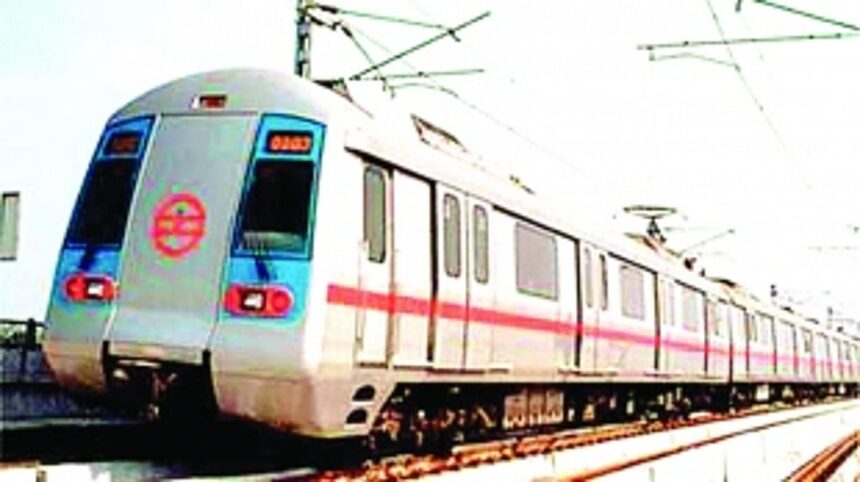
And when I travelled on it, I saw more: the double security on the boarding and disembarking platform, the use of electronic payment methods by only approaching the machine’s magnetic card; frequent reminders for the correct behaviour of the users, etc. It is now about 400 km long, connecting to Noida and Gurgaon Metros.
My clear conviction, at the end of my short trip of about 10 stations, was that metro is the best means of mobility for the big cities in India: fast on dedicated track, punctual, for large number of people, where one travels in the comfort of efficient air conditioning.
Afterwards, when trying to find out to whom the concepts of efficiency, comfort and polite behaviour should be attributed, I found that at the top of the Delhi Metro organisation was Eng E. Sreedharan. I was positively surprised with the fact that both the 1st as the 2nd metro phases had been prompted about 2.75 years ahead of schedule and within budgeted costs.
I explored the professional background of Eng Sreedharan. He graduated in Civil Engineering in India and became famous, first, when working in Railways in December 1964, he was assigned to rebuild the Pamban Bridge, which links the town of Rameswaram to the mainland Tamil Nadu, destroyed by a tornado. Railways bosses set a deadline of 6 months; Sreedharan shrunk it to 3 months and the bridge was operational in 46 days!
He thus gained experience in project management, with innovative solutions, without compromising quality or safety. He then received the Railway Minister’s Award.
In 1970 he was in charge of the design and planning of Railways’ Kolkata Metro, India’s first metro. Sreedharan laid the foundations of modern infrastructure engineering, working on it until the year 1975.
He then worked at the Cochin Shipyard from 1979 onwards. When he was appointed its MD, the Shipyard soon launched its first vessel MV Rani Padmin. Afterwards he was appointed GM of Western Railways and upon his retirement in 1990 (at the age of 58) he was invited to become the CMD-Chief Managing Director of Konkan Railways (K-R), built on a Build, Operate and Transfer (BOT) basis. This line at the western side of India, from Mumbai to Kochi, crossing Goa, is located in the very hilly area of the Western Ghats and has 93 tunnels, with a length of 82 kms; over 150 bridges along the 760 km long Konkan Railways. Completing this complex railway line, in seven years, on time and on budget, was considered a remarkable achievement.
With a track record of numerous successes, he was invited to be the MD-Managing Director of Delhi Metro Rail Corporation, by then CM, Sahib Singh Verma. By 1997 all components of the project were completed, on schedule or even earlier. The first phase of the Metro (with 3 lines) ended in 2005, well ahead of schedule and within budget.
Everyone who knew him recognises that he “had the rare ability to isolate projects from political pressures and influences, making commitments for the fast execution of projects, even anticipating the deadlines.” He wanted to retire in 2005, but his responsibilities were once again expanded to complete the second phase of Delhi Metro. And he did it very well, having finished this 2nd phase also well ahead of time, in 2011.
The Delhi Metro had and has a strong impact on the Indian people as it is a transport with all the conditions that make it suitable for the big cities of India. And while the works to expand the Delhi Metro continued, new “Metros” in other cities were successively launched, some of which are already operational today.
City after city had been nurturing the idea and project of its “metro”. Sreedharan was a Consultant for several Metros, to give them his experience and set the pace of the work.
Today, the “Metros” operate in these Indian cities:
• Delhi – Delhi Metro Rail Corporation (DMRC), approximately 400 kms
• Mumbai – Mumbai Metro Rail Corporation Limited (MMRC)
• Bengaluru – Namma Metro
• Hyderabad – Hyderabad Metro Rail
• Chennai – Chennai Metro Rail (CMRL)
• Kochi – Kochi Metro Rail Ltd
• Jaipur – Jaipur Metro Rail Corporation Ltd (JMRC)
• Kolkata – Kolkata Metro Rail Corporation Ltd (KMRC)
• Lucknow – Lucknow Metro Rail Corporation (LMRC)
• Noida – Noida Metro Rail Corporation Ltd (NMRC), linked to Delhi
• Gurgaon – Rapid Metro Gurgaon, linked to Delhi Metro
• Nagpur – Nagpur Metro Rail
It is impressive how a single person can change a panorama of inefficiencies and corruption. The competence and determination to proceed with integrity, to serve the community, has the strength to impose by itself, with a great sense of liberation.
In any part of the world, it is the poor section of society that suffers the most from delays in infrastructure works. They do not have the means of mobility they deserve; in addition, unjustified delays demobilise investors due to the visible, relaxed and corrupt environment, failing to create wealth and the desired jobs, much needed for the poor social strata, who make a living from their daily wages.
(The author is Professor of AESE-Business School,
Lisbon)