ALBERTINA ALMEIDA
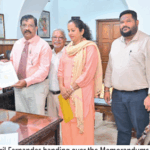
Much has been writ ten about the Arpora nightclub fire disas ter. Ever since, following the massive outrage and a call for accountability, the govern ment constituted a committee to fix responsibility and the High Court also sought the same. The report has been submitted but the govern ment has only selectively re leased elements of the report. The High Court of Bombay at Goa took suo motu cognisance and appointed Advocate Ro hit Bras de Sa as amicus cu riae and he was required to submit a Memorandum. But we have seen that there have been orders which have been violated, or retrospectively applicable laws enacted to circumvent the operation of the orders, or non-obstante clauses have been introduced in legislations or existing non obstante clauses used despite other legislation that conflicts with those planning and safe ty regulations. The question now is: Who will bell the cat? The Magisterial Inquiry Report is not in the public do main. Only a press note with selective details has been released. Much like the Jha Commission Report, it seems. It may be recalled that the Jha Commission was asked to fix responsibility in respect of the deaths of workers follow ing the collapse of the Ruby Residency at Canacona in 2014, and had submitted a vo luminous report. It would be worth getting the government to make the report available in the public domain, with an Action Taken Report in respect of the recommenda tions. We can also then see whether those recommenda tions were implemented and if implemented whether they were effective. A review of the news re ports accessible indicates that one of the recommendations made was that the engineer should be required to give a certificate that the construc tion is compliant with the proposal that was submitted. But ingenious as these entre preneurs are with committing gross violations, engineers can now prepare reports which are filled with silences, even though those violations are visible to the lay naked eye. For instance, if a proposal indicates existence of a cer tain width of the road access to the building or building complex, for the purpose of fire brigades accessing the complex, it can be seen that engineers may conveniently not state anything in this re gard. And, what is worse, the authorities find a loophole and can wash their hands off stating that the engineer has issued the completion certifi cate. Who will bell these cats? The matter does not end there. When authorities commit violations or crimes, they seek umbrage under the immunity provisions. The immunity provisions are perhaps as they should be, as an honest non-amenable government officer could be barraged with police com plaints only because they are a spoke in the wheel of overall corruption. But the point is: The police can seek sanction to prosecute the concerned officers, if there are non-com pliances and a well estab lished prima facie case, upon inquiry. They conveniently do not. This is where also ac countability needs to be fixed. On the police for not seeking sanctions. We know of cases where no sanctions have been sought and consequently, con veniently, not even an FIR has been registered or the police have not sought sanctions and prosecuted resulting in the accused going scot free. Who will bell the cat here? To the best of my knowl edge, the Jha Commission Report, set up under the Com mission of Inquiry Act, has not been released in its totali ty. Now who is responsible for this? Can it be mandated that this information comes with in the purview of section 4 of the Right to Information Act? We have to take into account the vulnerability factors. For the person who asks for infor mation under the Right to In formation Act. For the person who makes the complaint. Can one expect migrant work ers who are themselves vul nerable because of a lack of proper system for their regis tration, to complain?Who will bell the cat here? Here is where the Memo randum submitted by Adv Ro hit Braz de Sa does kick in. He has set out the various parties on whom the responsibility should be fixed in the Birch by Romeo Lane fire case, and also set out the legal frameworks. It is a well written report within the limits of what his brief cov ers. Though the issue of labour and social security complianc es needs more elaboration and attention. The Memorandum throws up the issue of non-obstante clauses, that is clauses in a law that over ride the provi sions in other laws. Even as this is being written, we see that the non-obstante claus es in antiquated colonial laws are being taken advantage of to override present day legislation. A part from the gross violations even of the law as it is, the Railways have been taking advantage of the non-obstante clauses, to ride roughshod for land acquisi tion, without seeking people’s participation in the decision making, with respect to the Railway project that forms part of the coal hub plan. Goyant Kolso Naka at the public meeting held in No vember 2025 loudly and clearly exposed the inconsist encies with respect to carry ing the coal project through in terms of transportation. But are people supposed to be burdened with filing petitions in the High Court in the face of these gross violations? The Chief Minister had the audaci ty to say they haven’t changed anything. But all their conduct or failure to take action or re port to the Central Govern ment, given the double engine Government that they are, gives away their complicity. Then why do people have to be constantly watching even during the night for the au thorities’ nightly infractions and crimes. The malaise is much more than nightclubs. Who will bell the cat? Lastly, there is need for a formal inventorisation of land use. There has been a call for this in the past. With respect to salt pans, as a matter of fact, the Goa 1556 publica tion ‘As Dear as Salt’ authored by Dr. Reynah Sequeira has mapped the salt pans in Goa – functional and non-functional – as at the time of her Ph. D. re search, of which the book is a follow on. Services of academ ics must be used for the peo ple’s cause. But can academ ics research such areas now? Can they speak freely about their research? Who will bell the cats here? Finally, yes, WHO WILL BELL THE CATS? Perhaps only a large scale people’s movement, where every per son worth his salt needs to come out. In the meantime, thank goodness for suo motu petitions, and suo motu cog nisance by Human Rights Commissions. At least some light there. We need to have more: sharper and brighter light. Light which will aid the powerful and not ride rough shod on the marginalised mi noritised sections of society. (Albertina Almeida is a lawyer and human rights activist)