Ring out the old, ring in the new,
Ring, happy bells, across the snow:

The year is going, let him go;
Ring out the false, ring in the true.
Ring out false pride in place and blood,
The civic slander and the spite;
Ring in the love of truth and right,
Ring in the common love of good.
Lord Alfred Tennyson
Tennyson’s phrase “Ring out the old, ring in the new” implies the ‘ringing out’ of the negativities that he saw in the world and the “ringing in” of more positive times. This was Tennyson’s elegy from ‘In Memorium’ dedicated to Arthur Henry Hallam, his sister’s fiancé who died at the age of 22.
Auld Lang Syne it is an eighteenth century Scottish ballad by Robert Burns, later set to the music of a folk song. It’s traditional to sing the lyrics to bid farewell to the old year at the stroke of midnight on New Year’s Eve, in English speaking countries around the world.
As kids we may have participated in the tradition of the burning and beating up with coconut fronds of the ‘Old Man’, at midnight. This effigy was filled with straw and fire crackers, of an old pant and shirt donated by another obliging old man of the village. It’s an old Goan tradition of burning the negativity of the old year, symbolised by the burning of the straw-stuffed Old Man!
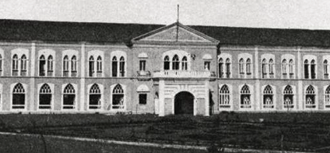
New Year conjures different images to different people. To me it’s a remembrance of my school English literature teacher Ms. Urmila Banerjee, who every January, had a classroom brainstorming session of what “ringing out and ringing in” of Lord Tennyson’s poem meant to each one of us. She had the quality of eliciting, the most well-articulated and truthful responses from her students. The art of moving on and the importance of positivity were ingrained in me many years ago in school by Ms. Banerjee. Today J. B. Petit, Mumbai is acclaimed as one of the top schools not only in Maharashtra but in the country. Robert Burns’ ballad is always sung by the foreign guests to welcome the New Year when our family attends a New Year’s Eve celebration. Every person I’m sure reflects for a few fleeting moments, images of the year gone by and makes ‘New Year’s resolutions’, hoping for a much more fruitful year ahead.
Christmas or New Year Days are also used to make bold political statements. This year Ukraine celebrated Christmas on 25th December for the first time, distancing itself from Russia where Christmas is celebrated on 7th January. The Ukrainian Orthodox Church, which was a branch of the Russian church, announced in 2022 after the start of the Russia-Ukraine war that it was breaking ties with Moscow and considered itself autonomous.
Throughout history, people have developed different calendars—some based on the movements of the sun and moon, and others based on numerical systems. Today, we mainly use three types of calendars Solar, lunar, and lunisolar. Calendars, helped to determine the precise beginning and end of seasons, and to plan common future events. A solar calendar is based on the revolution of the earth around the sun, making one complete revolution as one year. The lunar calendar measures the cycles of the moon’s phases, each month begins on the new moon and ends on the next new moon. Many cultures around the world still use lunar calendars to find the date for important religious holidays like Ramadan, Rosh Hashanah, the Chinese New Year and Diwali.
A lunisolar calendar is based on the movements of both the Moon (luni) and the Sun (solar). A year has twelve months, each either 29 or 30 days long, determined by the phases of the moon. The length of the year is based on the sun, like the solar calendar. Just before the time of Pope Gregory XIII, the calendar being used was the Julian calendar named after Julius Caesar. The word calendar comes from the Latin kalendae meaning ‘first day of the month’ a day to settle their debts, which were recorded in the accounting books called calendaria. I recollect my mother always wanting a calendar with big numerals each year, to calculate her household bills on the first of each month.
The Julian calendar worked well over the years, but as centuries passed, the calendar date and the season of the year seemed to be getting out of sync. The original goal of the Gregorian calendar was to correct the date for Easter, which was getting further and further away from the spring equinox. With help from astronomers and mathematicians; they figured out that the Julian calendar was miscalculating the length of the solar year by 11 minutes. The 11 minutes added up year after year, and by the 1570s, Pope Gregory XIII and his peers realised that their calendar was off by 10 days! These days were updated with effect from Sept. 1752 in England. The Gregorian calendar is only off by 26 seconds every solar year. It will eventually add up to make us lose 1 day by the year 4909!
The Pope officially established January 1st as New Year’s Day in 1582 replacing 25th March as the legal New Year. This was in honour of Janus, the Roman God of beginnings and the month’s namesake. The Gregorian calendar is the most widely used calendar in the world today for non-religious administration around the world. A common year is a standard Gregorian calendar year of 365 days divided into 12 months, and only 28 days in February. The next leap is February 29, 2024. The Gregorian calendar was first adopted in Italy, Poland, Portugal, and Spain in 1582 and today by 168 countries as their official calendar. Only four countries have not adopted it: Afghanistan, Iran, Ethiopia, and Nepal. In Europe’s Protestant countries however for many years, people feared that the new calendar was an attempt by the Catholic Church to silence their movement.
Although China uses the Gregorian calendar, they use the traditional Chinese calendar for holiday, so they celebrate the New Year on a different day each Gregorian year. Common years in the Islamic Calendar, which is purely a lunar calendar, have 354 days divided into 12 months. The Islamic month of Ramadan begins as soon as the new crescent Moon has been sighted.
Indian Calendar is both solar and lunisolar with regional variations used in India and the Indian subcontinent. Two kinds of lunisolar calendars are used in the Indian system, the Amanta in which the months run from new Moon to new Moon, and Purimanta, in which the month runs from full moon to the next full moon.
Change takes time and progressive change takes more time. It took almost 200 years before England and the colonies switched over when an Act of Parliament introduced the new calendar in 1752 along with the US and Canada; Japan in 1872 and some countries, such as Russia, Greece, and Turkey, switched calendars as late as the early 20th century. May, 2024 ring in times of tolerance; truth and brotherhood, enshrined in the most sacred document committed to all the people of our great nation– the Constitution which can never get out of sync to be replaced!
(The writer is an author and researcher in the history of Goa)