SOTER D’SOUZA
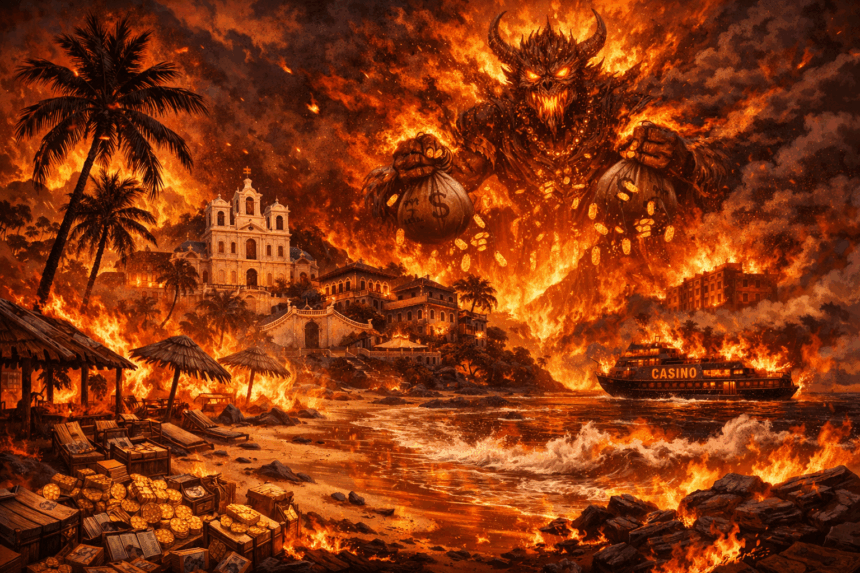
The festive cheer in this month of December was disrupted by the after math of a devastating fire at the Birch by Romeo Lane, a popular nightclub in Arpo ra, leading to loss of 25 lives and injuring several others. Sad, though not at all shock ing, given the extent of brazen lawlessness and lunacy which now drives tourism in the North Goa coastal belt. Those who were made to pay the price with their lives for the profit hungry sharks were un fortunately the less privileged migrant staff who worked for a living. With all the negative publicity that Goa’s tourism has been receiving for over a year, the scale of this latest tragedy is one which the in dustry could ill afford during the peak season and amidst the on-going aviation crisis. This tragic incident marked the darkest day in Goa’s tour ism history. The news about this horror spread across the globe like wild fire, but was not enough to wake up the concerned agencies in time to prevent the accused Luthra brothers from taking the early morning flight to Phuket. Their extra dition process from Thailand, now celebrated by the gov ernment agencies, has meant an extra burden on the pub lic exchequer, and so will all the judicial processes to nail the culprits. Remaining si lent all this time, the govern ment agencies that were are now trying to save face in the event of judicial intervention in the Birch tragedy. In a cor rupt system, even a tragedy becomes an opportunity for bribery with all the circus of sealing establishments for lack of mandatory clearances. The response from the government and the citizens remains reactionary rather than proactive. The public de bate has sunk into the regular dysfunctional pattern of mud slinging and scapegoating, the “Tu, Tu, Main, Main” of a decaying society. What plays out is nothing but a merry go-round and beating around the bush to deny the complex ity of the problem. The dirty money has penetrated far too deep for this society to have the moral courage to admit the truth and acknowledge its contribution in this miserable state of affairs. One wonders how many citizens beating their breasts over Goa’s de struction have actually been left undefiled by the corrupt system, whether directly or indirectly. Are the cash-for job and cash-for-vote deal ings, or even the ‘mhaje ghar scheme’ for masking illegali ties, any different from night clubs buying their way to get a cover-up for the omissions and commissions? The public’s habitual re actionary outburst is the de sired behaviour that any dark manipulative political system enjoys. Politicians fan the flames and fuel the outrage by levelling accusations against each other to muddy the wa ters for selfish gains. For the media, it is an amplification of the version of events, a race for ‘exclusive’ scoops, in an information ecosystem built on speed and sensationalism. Much is being talked about the ‘Delhification’ of north Goa’s coastal belt and the bluff about “Na khaunga na khanedunga” of national-lev el political leaders who turn a blind eye to the corruption in Goa. But had there been no casualties in the Arpora fire tragedy, would this incident have received media attention beyond a day or two? Unfortunately, the Goan po litical debate has been sweep ing the root cause of the prob lem under the carpet. Putting it bluntly, the rotten political system in a democracy is a re flection and creation of none other than the foolhardiness of citizens. The corruption, law lessness, environmental deg radation and immorality that are shouted out are only symp toms of an underlying disease. The systemic rot begins with citizens rewarding dark per sonality traits in politicians with power to make laws and govern, by mistaking them to be signs of charismatic and strong leadership qualities. Such personalities given posi tions of unchallenged power are at the root of the broken social and political systems. The dark manipulative tac tics of those in positions of au thority over a period of time, whether in politics, religion or the workplace, are known to generate low self-worth or self-esteem, confusion in de cision-making and distrust in the citizens, which ultimately destroy social cohesion. The citizens adopt dysfunction al patterns of thinking and behaviour as coping mecha nisms, and they only end up enabling the manipulative authorities to keep control. The citizens have to be kept ignorant about the reality if the manipulative authority is to remain in control. This is why the outsiders are pre ferred to locals by the corrupt political system so that shady deals remain hidden from the public glare. This is also why the tourism industry prefers migrant labour because they are vulnerable to exploitation and any vulgarity are under wraps. The extreme greed for wealth and material gain which has swept the para dise of Goa cannot be looked at in isolation from the men tal health of citizens. It is all about societal addiction, no different from addictions to alcohol, drugs, and other in toxicating substances. Just as much as wealth is required to support chemical dependen cy, so is it an obsession with those suffering from addic tion to political power and other lifestyles. Wealth gives political power and vice ver sa. Goa needs to tackle what are called ‘Process Addictions’ to cleanse its rotten political system and resulting spiritual bankruptcy in society. If the romance of 2012 and 2014 with the ‘parivartan’ and anti-corruption crusades have any lessons to teach us, mere ly changing leadership with out learning to recognise their dark manipulative tactics will result in nothing more than jumping from the frying pan into the fire. As long as the ef fort to cleanse Goa’s political system does not also analyse its political leadership and cit izen responses from a mental health perspective, the new brooms in governance can never be expected to sweep clean. The situation can only get filthier. (The author has worked with community initiatives related to Drug and Alcohol Abuse Preven tion, HIV/AIDs Prevention, Panchayati Raj, Anti Corruption, Environment Protection and Social Justice.)