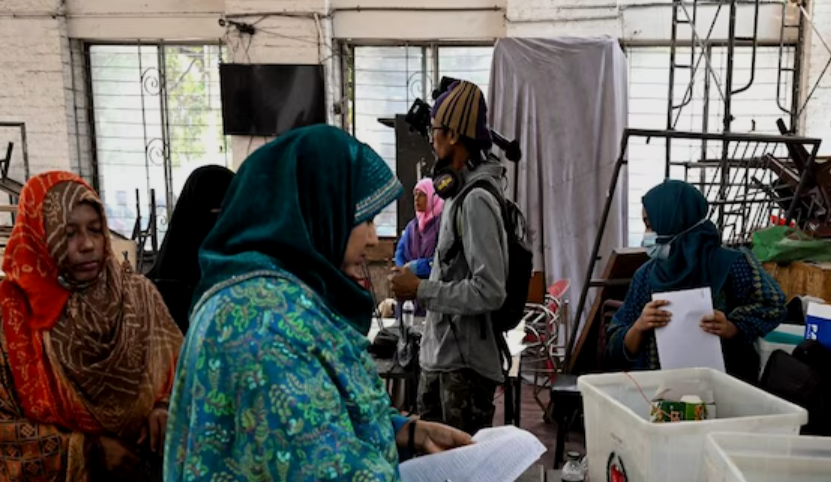
Bangladesh goes to the polls today in a landmark parliamentary election, nearly 18 months after the fall of former Prime Minister Sheikh Hasina’s 15-year rule following massive nationwide protests.
The period under an interim administration has been marked by continued demonstrations, the rise of hardline Islamic groups, sporadic violence against minority communities, and a noticeable shift in foreign policy, with Dhaka moving closer to Pakistan and China while ties with India cooled.

With a new, democratically elected government expected to take charge, many political observers believe the Bangladesh National Party (BNP) is poised to return to power. Following the recent death of party chief Khaleda Zia, the BNP is now being led by her son, Tarique Rahman, who is widely viewed as the frontrunner for the post of prime minister.
The BNP’s principal challenger is the Bangladesh Jamaat-e-Islami, a hardline Islamic party that was once allied with the BNP. Although analysts anticipate a BNP victory, they also suggest that Jamaat-e-Islami could record its strongest-ever showing in a general election.
After Sheikh Hasina was removed from office last year, interim government Chief Adviser Muhammad Yunus dissolved her Awami League and barred the party from contesting the elections, dramatically reshaping the country’s political landscape.
Today’s vote is widely seen as a critical test for Bangladesh’s democracy and a potential turning point in restoring political stability.
(This story is published from a syndicated feed)