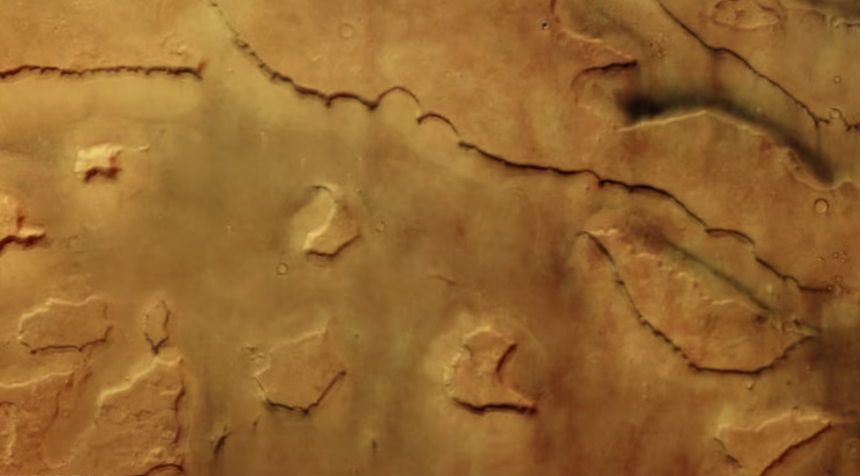
The European Space Agency (ESA) has unveiled remarkable new images of massive dust devils swirling across Mars’ Mamers Valles, offering fresh insights into the Red Planet’s dynamic weather patterns. The photographs were captured by the Mars Express spacecraft, which has been studying the Martian surface since its launch in 2003.
The newly released images reveal dozens of towering dust devils moving through one of Mars’ extensive canyon systems. Scientists say these atmospheric whirlwinds indicate wind speeds significantly stronger than previously estimated by existing climate models.

According to the ESA, dust devils are formed when sunlight heats the Martian surface, causing warm air near the ground to rise rapidly and spin, lifting fine dust particles into the atmosphere.
Describing the phenomenon, the ESA noted that while Martian dust devils resemble those found in Earth’s dry and arid regions, they are vastly larger in scale. These colossal whirlwinds can soar up to eight kilometres in height, travel several kilometres across the landscape, and attain speeds of up to 45 metres per second, making them among the most impressive weather events on the Red Planet.
The latest observations from Mars Express continue to enhance scientists’ understanding of Mars’ atmosphere and climate, providing valuable data for future exploration missions and research into the planet’s evolving environment.
(This story is published from a syndicated feed)