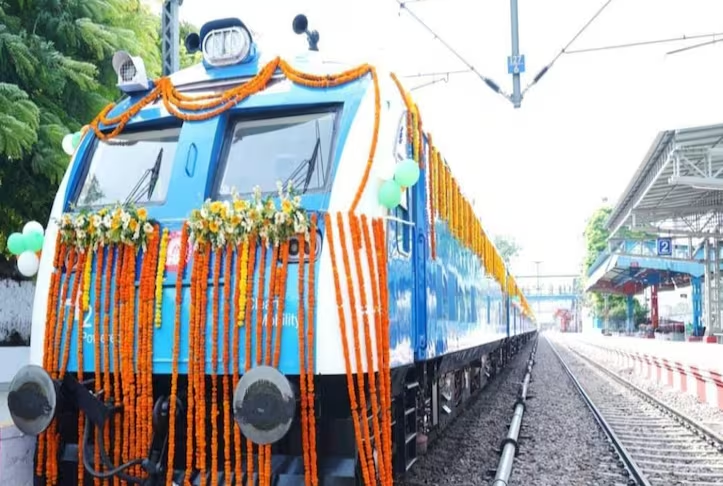
India has entered a new chapter in sustainable transportation with the launch of its first hydrogen-powered train, flagged off by Prime Minister Narendra Modi on Friday. The pilot project will operate on the 89-km Jind-Sonipat route under Northern Railway in Haryana, making India one of the few countries to adopt hydrogen fuel cell technology for passenger rail services.
Unlike conventional diesel trains, the new train generates electricity through hydrogen fuel cells, emitting only water vapour as a by-product. The initiative also includes dedicated hydrogen storage and refuelling infrastructure, paving the way for cleaner railway operations in the future.

The 10-coach train is powered by a 1,200-kW hydrogen fuel cell propulsion system and has been approved for a maximum operational speed of 75 kmph, while its design speed is 110 kmph. It can accommodate around 2,600 passengers and has been developed from the design stage to prototype manufacturing under the pilot project.
The train will connect Jind Junction, Gohana Junction and Sonipat, while stopping at several intermediate stations, including Jind City, Pandu Pindara Junction, Bhambhewa, Butana Halt, Khandrai Halt, Rabrah Halt, Mohana and Barwasni Halt.
Calling it a significant milestone, Prime Minister Modi said India has joined a select group of countries operating hydrogen-powered trains, highlighting the government’s commitment to adopting clean technologies in the railway sector.
Globally, Germany pioneered hydrogen-powered passenger trains with the Alstom Coradia iLint, while Japan, China and the United States are also developing or operating similar services. India’s pilot project is expected to assess the feasibility of hydrogen-powered rail transport and support the country’s long-term goal of reducing carbon emissions while modernising its railway network.