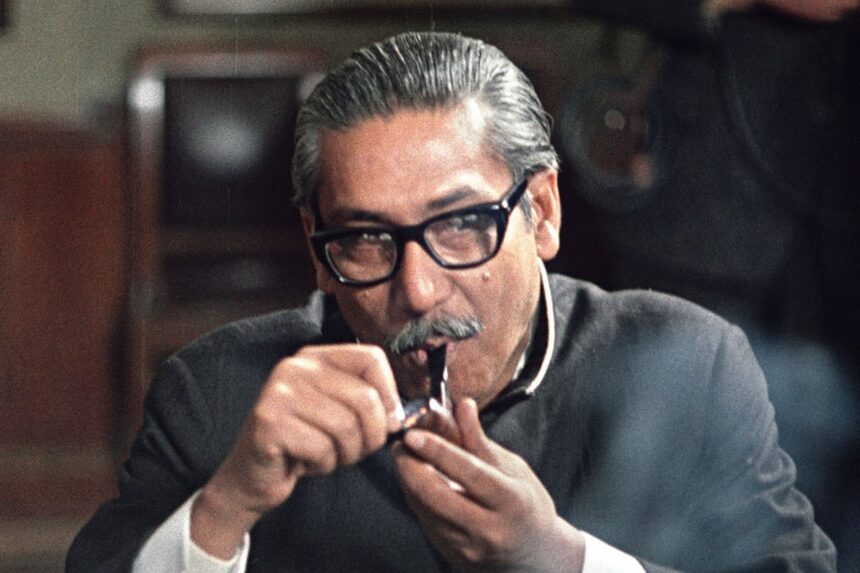
On the night that would change the course of South Asian history, Sheikh Mujibur Rahman displayed a level of composure that has since become legendary. As Pakistani soldiers arrived at his Dhaka residence to arrest him during the military crackdown known as Operation Searchlight, the Awami League leader made an unexpected request. He asked the soldiers to wait because he had forgotten his pipe and tobacco.
The incident took place in the early hours of March 26, 1971, when the Pakistan Army launched Operation Searchlight to suppress the growing Bengali independence movement in East Pakistan. Mujib, whose Awami League had secured a sweeping victory in Pakistan’s 1970 general election, had become the leading voice demanding greater autonomy for the Bengali population.

According to an interview Sheikh Mujibur Rahman gave after his release from prison, later reported by The New York Times in January 1972, he knew exactly why the soldiers had arrived. Before leaving, he embraced his wife and children, fully aware that it might be the last time he would see them. As he was being escorted to a waiting military vehicle, he suddenly realised he had left behind something he considered essential—his pipe.
The request caught the soldiers off guard. They allowed Mujib to briefly return inside his home, where his wife handed him his pipe along with a pouch of tobacco. Moments later, he walked out calmly and surrendered himself, beginning what would become nearly nine and a half months of imprisonment in West Pakistan.
While the episode may appear minor, historians and those close to Mujib have often described it as a reflection of his remarkable self-control in the face of uncertainty. The pipe was far more than a smoking accessory. Friends, colleagues and biographers frequently noted that it had become one of his defining personal trademarks. Whether attending political meetings, spending time in prison or representing Bangladesh before world leaders, Mujib was rarely seen without it. Erinmore tobacco was also said to be his preferred choice.
Following his arrest, Sheikh Mujibur Rahman was flown to West Pakistan, where he was held in solitary confinement and later subjected to a secret military trial. He faced serious charges, including waging war against Pakistan, and was reportedly sentenced to death. However, the execution was repeatedly postponed as the conflict unfolded.
Meanwhile, the Liberation War continued in East Pakistan, eventually leading to the creation of Bangladesh in December 1971 with India’s military intervention playing a decisive role. Changing political circumstances after Pakistan’s defeat paved the way for Mujib’s release in January 1972. He returned to a newly independent Bangladesh, where he was welcomed as the nation’s founding leader.
Over five decades later, the story of Sheikh Mujibur Rahman asking armed soldiers to wait while he collected his pipe continues to be remembered alongside the larger events of Bangladesh’s independence movement. While his speeches and political leadership helped inspire millions, this brief and deeply personal moment has endured because it reveals another side of the man—calm, composed and determined, even when confronted with an uncertain future.
History often celebrates decisive battles and powerful speeches. Yet sometimes, it is the smallest acts that best capture a leader’s character. Mujib’s decision to return for his pipe has become one such enduring symbol, representing dignity and resolve on one of the darkest nights in Bangladesh’s history.