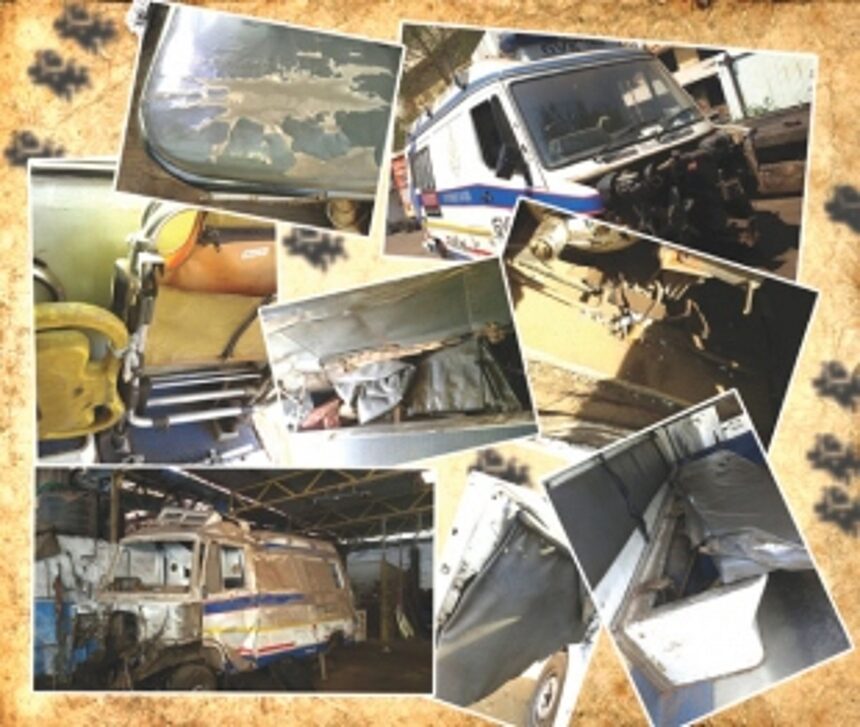
Unstable stretchers and shaky seats should not find place in an ambulance, but in the 108 emergency service they are quite common. While the service did begin with good intentions, and was lauded publicly, over the years it has lost its shine as is evident from the recent strike by employees of this public private partnership company. Disgruntled employees and overused ambulances have taken the service from being good to bad.
A surprise inspection by the RTO on one of the on the road ambulances revealed a host of problems. The report signed by S R Parwadkar from the Bicholim RTO and dated February 10 this year, after a surprise check and driving test said, “Accelerator lever pedal found missing, MV (motor vehicle) requires proper brake setting as it drags leftwards, MV requires wheel balancing and alignment, driver cabin foot step broken partially, rear doors require attention in locking mechanism, patient stretcher found in damaged condition, EMT seat damaged in its foundation and non functional and external body shell is in shaky condition and requires denting and painting.”
This is not an exception. Yet another ambulance intercepted in Collem found side indicator lights not working and latches of doors not functioning. In both cases, the driver was ordered to rectify the defects immediately.
EMT specialists working in these ambulances narrate instances of stretches that are usually held in place to the side of the inside of the ambulance, of crashing on top of the patients themselves.
When the service first began in 2005, with then Health Minister Vishwajeet Rane pushing it forward, 15 Goans were selected and trained professionally by EMRI at a cost of Rs 45 lakh.
“Today there are untrained people in the ambulances. We cannot afford to play with the lives of the people. We had trained professionals who were terminated from their jobs. 15 students were selected based on merit and were well oriented in their jobs; they are unemployed today. We spent Rs 50 lakh to train these Goan children, we even signed a bond, but the government terminated their services,” said Rane who initiated the service during his stint as health minister.
A reliable source that worked with the Department of Health Services (DHS), that oversees the services, said the success of the service was evident within months of its starting. “Within a matter of six months, the number of fake calls was considerably reduced. One thing the department forced was replacement or refurbishment of ambulances every two years,” said the source.
Attempts at contacting the GVK EMRI Head of Operations, Raj Kadecha were futile and no other official was willing to comment.