Elsa Angel Rose
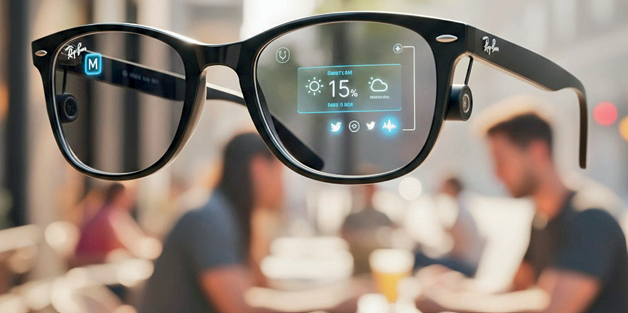
AI glasses made by meta is the most popular one in the market estimated to make up more than 80% of all AI or smart glasses sales. The glasses are made in partnership with EssilorLuxottica and offers the stylish look of Ray Bans, with features including invisible camera in the frames, small speakers in the arms, and in the latest version lenses that can show the wearer some information. Soon Meta won’t be the major player in the market, Apple is reportedly working on its own smart glasses, which could arrive as early as next year. Snap has also announced that it plans to launch the latest version of its smart glasses, called Specs, later this year. Meanwhile, Google is preparing to re-enter the smart glasses market more than a decade after the widely criticised Google Glass. THE GROWING CRAZE FOR META AI GLASSES IN GOA “I have been using my Meta Glasses for more than a year now, and for me, it’s absolutely worth it. As a media professional, it’s the ultimate POV setup. It’s great for shooting BTS content without having to worry about framing, setting up, or mounting any sort of action camera. When it comes to the actual camera on the device, the image quality is very close to that of a smartphone. The value for me is in the perspective it allows me to capture,” said Dattaraj Bodke, a professional automotive and action sports photographer from Panjim. These smart glasses are gaining immense popularity in Goa. According to the action spots photographer, “It’s picking up popularity mostly due to the sheer availability in the market and the heavy advertising, unlike normal cameras these can be purchased in almost any store that sells glasses and can be optioned with prescription lenses.”

For users of AI glasses, convenience is the most attractive aspect of them, the convenience and the resulting ease with which things can be done. A swathe of media professionals, including content creators, videographers, photographers, and others, are increasingly purchasing the glasses. “”They let me capture moments from my own point of view, more like BTS (behind-the-scenes), without having to hold a camera, which is especially useful when I’m travelling, exploring locations, or working. Having said that, I don’t see them as a replacement for my professional cameras or drones. A dedicated camera still offers much better image quality, lens options, and creative control. The glasses help me capture spontaneous, hands-free moments that would otherwise be missed,” said Joyston Costa, a drone pilot and cinematographer from Margao. But it wouldn’t be accurate, and would rather be wrong, to say that it is only media professionals who buy smart glasses. Tech enthusiasts, travellers, and anyone who is chasing convenience in life are infatuated with the device. “I was introduced to the Meta glasses by a friend. The motivation to buy them was how handy they were in day-to day life. While driving my car, I wouldn’t have to look at or use my phone. I can directly pick up calls from the Meta glasses. Ordinary users who enjoy travelling, documenting family moments, or simply trying new technology are finding them useful. So, while creators may have adopted them earlier, I think the audience is gradually becoming much broader,” said Filbert Fernandes, a businessman from Raia who owns a pair of Meta AI glasses.
WHY AI GLASSES ARE BEING CALLED “CREEPY GLASSES”
Meta’s AI glasses appear to be the be-all and end-all for users seeking practicality. But the glasses have received mounting flak over their privacy and safety features. Any media captured using the AI glasses is automatically transferred to the user’s phone’s photo app and deleted from the glasses during the import process. With the user’s permission, the Meta AI mobile app accesses the phone’s photo app to display the imported content in its Gallery. If the media is deleted from either the Gallery or the phone’s photo app, or if permission to access the photos is revoked, the content will no longer appear in the Gallery. This means Meta and its third party contractors may have access to at least some of the content users record, while it remains difficult for users to know exactly where that footage goes, who can access it, and how it is ultimately used. Some videos are reportedly used by Meta to train its AI systems, with at least some of this content also undergoing human review. An investigation by Swedish newspapers found that workers were reviewing and annotating camera footage, including sensitive videos containing nudity, sexual activity, and people using the bathroom. Meta told a news platform that this practice is in line with its terms of use and is carried out for AI training purposes. There have also been complaints about how women are being recorded without their permission by strangers wearing the Meta Ray-Ban AI glasses. For this particular reason, criticism has been even more fervent for Meta, with many regarding the glasses as “creepy glasses.” The device has a white LED light (a mandatory privacy feature of Meta) that turns on while recording, helping indicate when the camera is in use. “There’s no off switch for the LED light, it’s been there since the first generation, and since the second one, covering it just kills the camera. However, it only works if a stranger is looking at your face, in decent light, from close enough, and already knows what a small blinking LED on someone’s glasses means. In a bar or a metro station, none of that is true. It’s a signal built to satisfy a regulator, not to actually inform the person in front of you,” said Raj Kunkolienkar, AI consultant from Panaji.
CAN USERS BYPASS THE RECORDING INDICATOR?
An important question that arises is whether it is possible to disable or moderate the white LED light. The AI expert explained, “When covering the LED with tape stopped working two versions ago, people escalated to physically destroying the LED, and there was a small cottage industry selling that as a service. Meta pushed a mandatory update on 8 July that detects the tampering and shuts the camera off, and they’re now banning the sellers and going after them legally. So the modded pair is a shrinking problem. The bigger one is a legit pair that doesn’t light up by design. The FT reported in July that Meta’s prototype ‘super sensing’ glasses are meant to run continuous capture with the LED off, and that executives don’t want it lit. Meta hasn’t confirmed that, but that’s the version I’d actually worry about, because there’s nothing to tamper with when it ships that way.”
USING AI GLASSES RESPONSIBLY “For the wearer, remember you’re not just wearing a camera, you’re wearing a Meta account. The lens is the small part; the exposure is everything that leaves your face and gets processed somewhere else, so assume anything you capture is data before it’s a memory. For everyone else, there’s very little you can do. You cannot audit a stranger’s glasses and you shouldn’t have to. Currently, the entire burden is sitting on the person being recorded, which is exactly backwards, and no setting fixes that. That one gets fixed by norms and regulation, not by a menu,” —Raj Kunkoleikar, AI consultant, Panaji