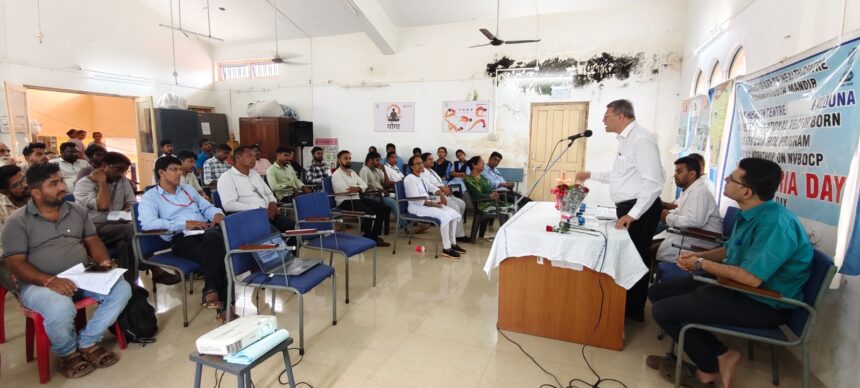
Aldona Primary Health Centre (PHC) organized an awareness workshop on vector-borne diseases for panchayat sarpanchs, ward members, and local residents ahead of the monsoon season, stressing the importance of prevention under the message that public participation is key to controlling diseases like malaria, dengue, and chikungunya. The workshop focused on preventive measures against mosquito-borne illnesses, especially during the monsoon when stagnant water becomes a major breeding ground for mosquitoes. Addressing the gathering, Aldona MLA Adv Carlos Ferreira highlighted the need for public responsibility in maintaining cleanliness and preventing disease outbreaks. He said people continue to recklessly dump garbage along roadsides despite the presence of CCTV cameras and warned that such careless behavior must stop. “The responsibility also lies with the people. Each one must train others and become an example so that together we can keep our village clean and green,” Ferreira said. Health officials from the Bastora Health Centre explained that the advocacy workshop was conducted to prepare communities before the onset of monsoon and to spread awareness about diseases such as malaria, dengue, and chikungunya. Kerkar from Bastora Health Centre said the main objective was to ensure people remain healthy and free from vector-borne diseases by eliminating stagnant water around homes and compounds. “We often think only construction sites are prone to malaria, but breeding can happen in our own houses and gardens too. People must regularly inspect their surroundings and alert neighbours as well,” he said. Dr Rupali Vernekar, Homeopathic Physician, said prevention of diseases like malaria and dengue is entirely in the hands of the people. She urged residents not to ignore symptoms such as fever, weakness, sweating, and shivering and advised them to visit health centres for blood tests instead of self-medicating. “Earlier, people noticed clear symptoms, but now sometimes only fever appears. People simply take tablets and ignore it. Instead, they should come for proper testing so malaria does not spread further,” she said. Sanitary Inspector Prasad Gawas stressed that public support is crucial to reducing malaria cases during the rainy season. “People must check their compounds and gardens regularly. If stagnant water is found, it should be emptied immediately to prevent mosquito breeding,” he said. Extension Educator Mihir Khorjuvekar said health staff alone cannot prevent vector-borne diseases and called for support from elected ward members, schools, panchayats, contractors, anganwadis, and the wider community. “Prevention of vector-borne disease starts with me. Each person must take responsibility instead of waiting for someone else to act,” he said. Head Nurse Assuciana D’Mello said the workshop also focused on educating participants about how diseases spread and how mosquito breeding takes place. She said awareness must spread beyond individual households and emphasized that communities must work together to keep the entire village clean and safe during the monsoon season
Aldona PHC holds awareness workshop on Vector-Borne diseases ahead of monsoon