As the rainy season draws near, so does the threat and the activity for prevention of vector borne diseases in Margao town and the surrounding areas. The South Goa District Administration was given a shaking up during the rains of 2015 as hundreds of cases of dengue, malaria and other such diseases came to light in Sao Jose De Areal and Margao areas.
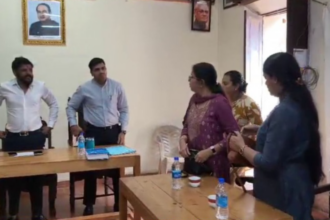
As a part of the annual sensitization activity against vector borne threats the Margao Health Centre had an advocacy workshop for various major institutions of Margao including Kadamba Transport Corporation, Konkan Railway, MMC and others. Margao town which has 25 municipal wards and a total population of 90,213 has nearly 130 abandoned and unused wells which have been termed as a threat of vector borne diseases.
The residents of Margao have already petitioned the government and courts to look into the matter of wells getting contaminated. It is to be noted that both the health department and the municipality had conducted inspections of these wells. A PIL has been filed with the court against the MMC, sewerage department, Margao Urban Health Centre and Chief Secretary where residents have expressed major concerns about the health and well-being of the residents living in close proximity to the areas where untreated raw sewage has been released causing health hazards and a public nuisance. “Our drinking water well is now contaminated and has some substances floating on the water. We have seen some black oily liquid in the well also. This well was being used by residents when the PWD water supply broke down,” read a complaint filed before the Health Department and the Goa State Pollution Control Board (GSPCB) highlighting the contamination of the well with raw sewage.
The vector borne threat from water stagnation in vehicle tyres and drains is contained by the Information Education and Commission activity team of the Health Centre. However, the rooting out of the major threat from the wells has been a difficult task for them as they have been expecting the help of the local administration for quite a while now.
While delivering the lecture at the workshop, Health Officer Anju Kharangate said, “There are 130 wells in Margao which we have recently surveyed and found to be definite threats. It is proposed to remove them by burying them completely. We need the assistance of the MMC to carry out the burying of the wells.” She went on to add that in the meantime, they have been carrying out regular anti-larval activity in sensitive areas.
An often ignored threat of vector borne diseases lurking in the city is at tender coconut stalls. During the summer, a lot of people stop and have the water from a coconut and the shell is discarded in the open by the vendor. They are unaware that this waste tops the list of the spread of vector borne diseases. There are several tender coconut shells dumped in the open near Ravindra Bhavan, Borda, Gogol and other areas.
The team from the health centre is spraying anti-larval solution in all these areas and has sought the help of the civic body to clear these areas.
Health and medical officer have also been carrying out Information and Communication activity around the town. School children were given questionnaires and were asked to check for mosquito breeding sites in their own homes.
More importantly, information was imparted at hutments and other sensitive areas to prevent water stagnation on tyres and plastic covers. This has been taken positively by people.