There is a bridge in Quepem, that connects Paroda and Avedem that gets submerged every monsoon. The existing 60 m long bridge was built after liberation as there was no access between the two villages.
Locals refer to this annual occurrence as the ‘Padd’dde Buddlem which means Paroda is flooded. After a single spell of rains, the water level rises above the bridge and the low lying area situated on the banks of River Kushavati gets submerged, disrupting the lives of the villagers of Avedem and Paroda and paralyzing traffic in the area.
While the bridge comes under the jurisdiction of Avedem pancahyat, the village is surrounded by Paroda, Xeldem and Assolda villages along with the Quepem municipality.
Because of the flooding, in the past, all vehicular traffic was diverted via Cuncolim, which was the only link between Quepem and Margao, a diversion of more than 20km. After the Assolda – Chandor Bridge was built, the distance was cut short drastically, and much to the people’s relief, as this also provided a shorter alternative route. The distance between the two areas is only around 50m but the villagers have to travel more than 7 km via Quepem or 16km via Chandor, when the bridge gets submerged under the flood water. Locals tell you that the submergence of the area has worsened due to siltation and lack of dredging to excavate the river channel. With Chandor falling under Cuncolim constituency, MLA Rajan Naik said that the much delayed proposed construction of a parallel bridge should get the official sanction soon and that work would be executed shortly.
It is to be noted that the PWD had proposed the construction of the parallel bridge a few years ago to ensure that vehicular traffic along the Quepem – Margao route wasn’t affected during the rains. In July, 2013 the then chief minister Manohar Parrikar visited the flooded site at Avedem and Paroda during the monsoon season and had assured that he would construct a new link at the same site by raising the height of the bridge by five metres within six months. In June 2010, the then Congress government had announced that they would be floating tenders for the same bridge and the delay then was attributed to awaiting technical clearance from the PWD Chief Engineer. At that time, the PWD in its report had stated that the existing bridge, being narrow was also prone to accidents owing to the considerable density of traffic. In 2005, a forum was formed taking into consideration the dilemma faced by villagers during the flooding and a resolution was passed to construct a new bridge around 150m away from the present one as that was identified as the best location. Thus, with the number of assurances in the past, locals are taking the latest announcement with a pinch of salt.
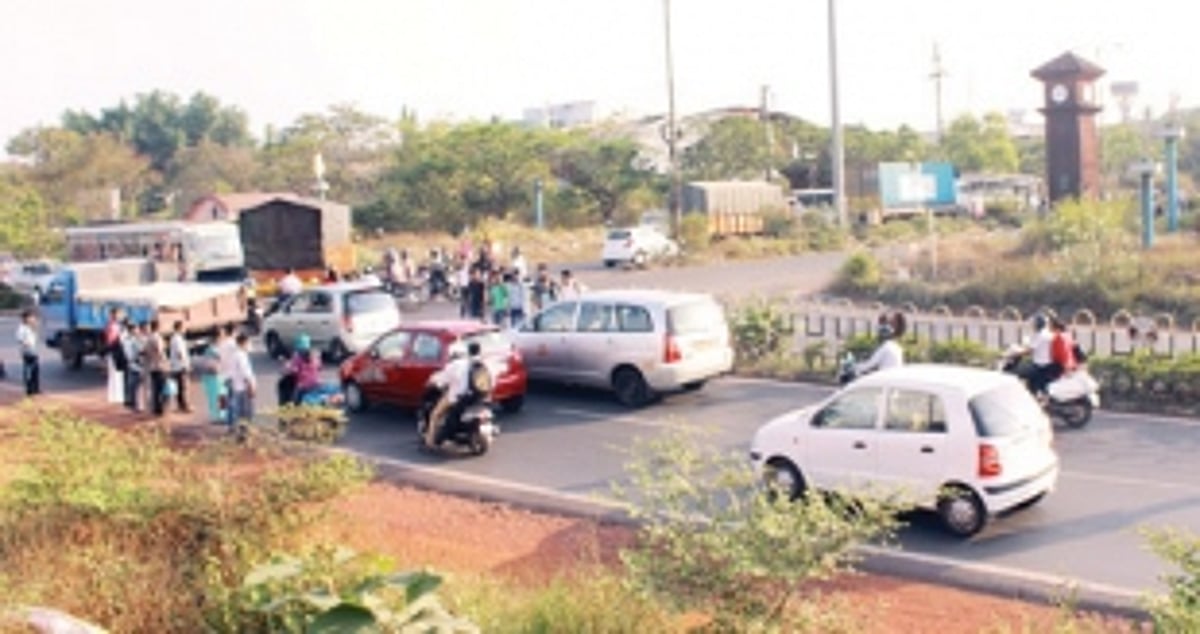
Locals also pointed out that there are two schools in the village and during the floods, students and teachers are the worst affected. The area also has three banks and a market but during the floods, access to these areas is difficult. They elaborate that as the existing bridge is very narrow, in normal conditions as well it is tough when there are vehicles crossing in opposite directions at the same time and thus the new bridge is of extreme importance. They also complain about the dilapidated conditions of the existing bridge such as the damaged and weak railings.
“The Rs 14 crore project will entail filling of the low-lying land to raise the level of the road to an adequate height designed to prevent flooding of the area during the monsoons. Pipes will be laid to drain the rain water into River Kushawati as part of the anti-flooding measures,” said Naik. According to sources, the project will be executed under the disaster management plan of the central government. Sources added that the plan for the parallel bridge envisages it to be constructed 200m upstream of the existing bridge and that the approach road towards Quepem will be linked to the main road through Cotambi. The span of the bridge will be 78m with a carriageway of 7.5m width and will have pile foundations, added sources.