MARGAO: The farmers in Benaulim are fighting against the odds to keep an age-old tradition alive in the village, despite the myriad number of setbacks they are facing due to the construction of the Western Bypass that is presently underway right near their fields in full swing.
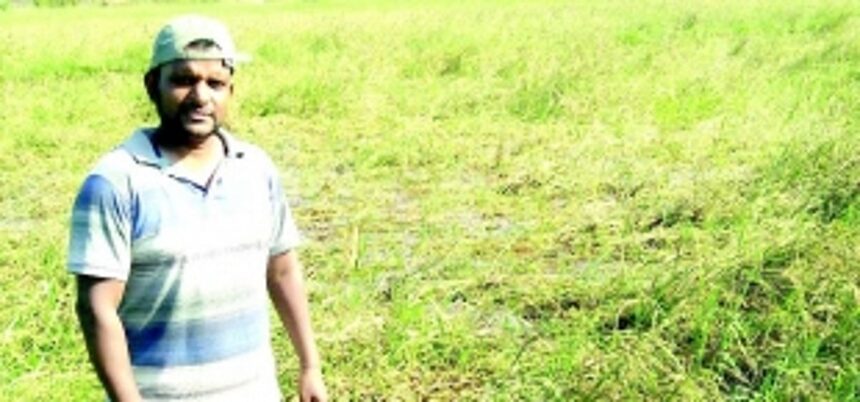
In the case of one particular farmer, Raymond Costa, who took the initiative of cultivating black rice in his fields, is still running from pillar to post to get compensation for the damage caused to his black rice crop the previous year.
The disheartened young farmer has already contemplated discontinuing the black rice crop this year due to last year’s poor yield caused by waterlogging. The excessive rainwater last year damaged the crop, affecting the stalks and overall yield. Costa, who was beaming with pride during the pandemic when his black rice yield was a success, has had his dreams crushed by the bypass work.
Regarding compensation for his damaged crops, Costa has been informed by the Salcete Zonal Agricultural Office (ZAO) that his file has been sent for processing to the District Agriculture Office.
Incidentally, Costa has also lamented that farmers, not just in Benaulim but pan-Goa, have not received the promised support price for the Rabi crop last year.
This is significant; at present, Costa and other farmers from Benaulim are preparing to get their fields ready for the Rabi season. Costa, who also grows the Joyti rice variety, will be transplanting seeds with the assistance of Fr George Quadros’ team.
Here too, Costa pointed out that their most recent Jyoti paddy harvest also got affected by the problems plaguing their fields, such as flooding due to the bypass work.
He added that the Jyoti rice yield of the previous year has been far better.
The resolute farmers from this Benaulim stretch are still cultivating their fields even as construction activities unfold nearby. While acknowledging the challenges brought on by the bypass construction, farmers express determination to continue farming despite the increased hardship.
They express sadness over the waterlogging issues, emphasising that it reinforces their longstanding claim that the bypass project suffers from poor planning.
The farmers highlight the adverse effects of waterlogging, noting that due to rising water levels during rains, sluice gates had to be opened at multiple locations, causing damage to their fields. When it has flooded and the catchment area has overspilled, the soil becomes too soggy and takes time to come back to suitable conditions.
Besides flooding, they have to deal with dust issues due to the mud-filling activity, so much so that they have found it difficult at times to assess when it’s the right time for harvesting as the colour of crops had changed due to the dust.
Against this backdrop, the farmers are frustrated for being taken for granted. The farmers, who along with the locals, have demanded for years that the bypass be constructed on stilts and not via embankments as done presently, have had their pleas ignored despite the annual flooding that has occurred in the last few years.
They also point out that the bypass road is being built at a higher angle compared to their fields, so the issues of water accumulation will only increase in the next monsoon.
At the last gram sabha, the Benaulim panchayat had informed the locals about certain problems they had faced in their attempts to file a petition before the High Court, but the panchayat had assured the locals that it is going ahead with this legal fight, which is being seen as the last recourse for the village to stop the under-construction bypass work.
Incidentally, the solution being offered by PWD of building additional culverts has not satisfied the locals, who emphasise that these new culverts will meet the same fate as the existing culverts, and there will be flooding which will damage their fields again.
Unseasonal rain leaves Salcete farmers worried
The unseasonal rain in the first week of January, along with strong winds, has left farmers from Salcete taluka worried. The farmers who have been cultivating watermelon, pulses, and vegetables have expressed concern over the potential yield impact.
However, Salcete Zonal Agricultural Officer (ZAO) Shariff Furtado said that there was no reported crop damage and assured the farmers growing watermelon, pulses and vegetables that they can seek compensation in case of any crop losses.
According to farmers, they now have to remain vigilant due to unpredictable weather patterns, which have disrupted their planning and damaged their crops in the recent past. Traditionally, they pointed out that cultivation and harvesting cycles have been aligned with well-established weather patterns and the monsoon period. However, the recent change in climate has led to increased uncertainty, as they have no choice but to navigate through these challenges and salvage the most they can.