Victor Hugo Gomes
The Goa Chitra and Goa Chakra museums in Benaulim strive to preserve the tangible heritage of this country for posterity. A totally self-funded project, these museums showcase to the world the ingenuity of our ancestors and their indigenous wisdom. These efforts are the result of the hard work of a team of dedicated persons who work tirelessly and fiercely along with me and the management in the hope that the museum will one day draw the attention of the benefactors of this land and conceptualize into a centre for cultural and ethnographic studies. The aim is that future generations will have a space in which their ancestry is preserved and kept alive so that their search for their roots will not go in vain.
In this process the makers of the museum work with total dedication even at the expense of their own trials, stretching their resources and energy to accommodate this vision. Today we pay a special tribute to one such team member who played a pivotal role in preserving Goa’s heritage and who in the last years of his life dedicated it totally and selflessly in preserving and restoring every implement on display at the Goa Chitra and Goa Chakra museums.
For the last 16 years of my 25-year-journey with Goa Chitra, he worked closely with me, in assembling every implement that now stand as a testimony to his skill. His methods and techniques were totally based on his own proficiency in understanding material like metal and wood. He would assemble an implement with such accuracy as if it was he who had created it. He knew the age-old method of joinery – putting wood together without nails but through interlocking. He knew how wood would expand and what would make it breathe and how to balance the metal with the wood.
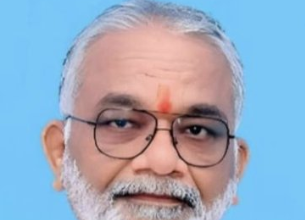
Without knowing it, he played the role of a great custodian of our heritage only because of a relationship that has no name but one of love, respect and dedication. Such was the Sikh, Jashwanth Singh, fondly called Chacha by us. Every visitor to the museum will remember him as the face of Goa Chitra as he would let them pass by, giving them the sense that their heritage was well protected.
A poet at heart, Chacha could not sit idle. He would create small artifacts that would balance the beautiful landscape; birds on tree tops, nests with beautiful eggs which only when you realized later they were made of wood you would know it was Chacha’s hand at work. Everything he experienced he penned down as poetry and on the ekktara (which he made from a coconut shell) Chacha would sing the sad melody of his life that had faced many trials and disillusionments. He lost much of his family during the partition of 1947. He lost his wife and family thereafter and had no biological family to turn to except the one he decided to adopt. We were his family and he was ours. There was no written contract or agreement or time when it took place but in a way we grew on to each other.
A pious man, Chacha prayed every day, to give him strength to battle his one weakness that in the end finally killed him. His battle with alcoholism in his later years was difficult as the memories of his past would haunt him. He tried very, very hard, having months of sobriety between bouts of terrible drunkenness and hospitalization. But every year, some time before January 26 and around August 15, Chacha would hit the bottle for a couple of days and then fight it, but as age caught up with him so were his withdrawals – very difficult to tolerate and such was the case with him on the January 23, 2015, when his heart gave up and he died of a heart attack. He left without saying good bye. We miss him terribly today and feel his void in ways that words cannot describe.
(The writer is the Curator – Goa Chitra & Goa Chakra Museums)