PONDA: Chief Minister Laxmikant Parsekar said it was high time Goan students, especially those of Goa Engineering College (GEC), came out with “top-class creative work” in the technical fields. He stated that Goa had made tremendous progress in technical education despite being a small state, but lamented that it still had to rely on outsiders for undertaking development projects.
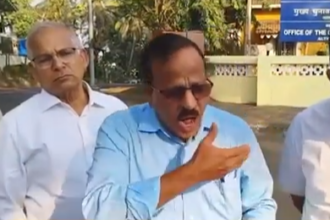
Parsekar was speaking after laying the foundation stone of a boys’ hostel – which will be constructed under the centrally-funded AICTE scheme – and a tree planting event at Goa College of Engineering, Farmagudi.
“Despite an advance in technical education, when a question of initiating development works comes, most of the time we have to invite consultants from outside the State. I am not against non-Goans, but when around 1,400 students opt for technical education in GEC, I expected that we would not need to search for consultants for constructing bridges, buildings and work related to technical matters,” said Parsekar, adding that infrastructure for technical education had developed several-fold compared to infrastructure for medical education in GMC, which was struggling to admit 100 – 150 students. He also said there was a lot of scope for research in the technical field.
He credited the growth of technical education and infrastructure to Goa’s first chief minister Dayanand Bandodkar. He said, “The first CM started this college with just 60 students. He made a provision for the education of future generations by acquiring around 12 lakh sq mts land at Farmagudi plateau.”
Parsekar urged the students to think outside their school syllabus and use their ideas to help society. He said, “When GEC was started at Farmagudi, the area was barren. Bandodkar sowed the seeds of education in Goa at a time when education was the privilege of a few people.”
PWD Minister Sudin Dhavalikar informed the students that the college premises were a water-harvesting spot around 300 years ago. Their forefathers collected water from the surrounding areas and created huge ponds. He added, “Following in the steps of our forefathers, the time has come for students to create new techniques to conserve and harvest water to meet the needs for agriculture and other purposes.
Vanamahotsav was later celebrated.