ZACCH FRANCIS MORAES DINIZ

MARGAO: What began as an internet-fuelled response to perceived insults directed at India’s youth has rapidly evolved into one of the country’s most talked-about political movements, and young Goans are watching closely.
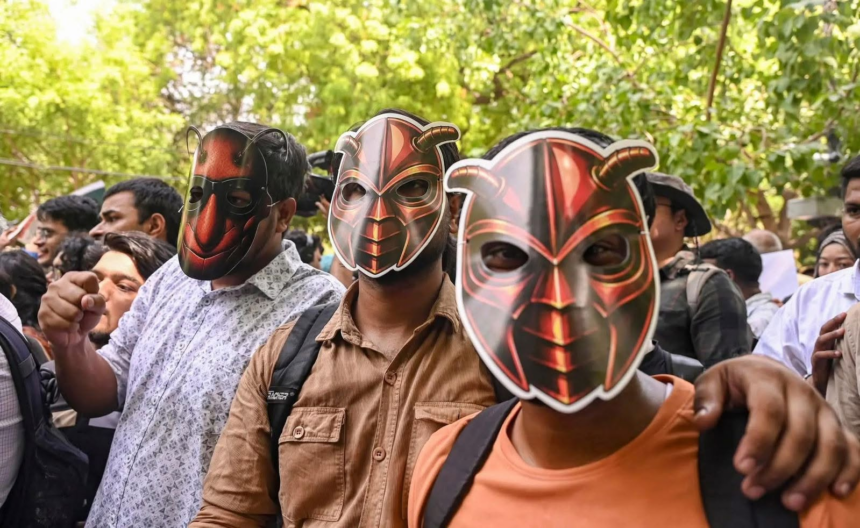
The Cockroach Janta Party (CJP), founded by social media personality Abhijeet Dipke, has transformed from a viral online campaign into a movement drawing national attention. On Saturday, Dipke arrived in New Delhi to lead the group’s first major protest at Jantar Mantar, where supporters gathered to raise concerns over issues including youth unemployment, education reforms and examination controversies.
Among Goa’s Gen Z, reactions range from enthusiastic support to cautious optimism, but nearly all agree that the movement has tapped into frustrations felt by many young Indians.
Nikolai, a 22-year-old MBBS student from Margao, believes the movement reflects a deeper sense of disillusionment among the country’s youth.
“I definitely support it. These types of movements are the only hope the Indian youth have other than leaving the country,” he said, adding that corruption and blind political loyalty have become major concerns for young citizens.
Others view the movement less as a political force and more as a symbol of youth resistance.
“When the Cockroach Janta Party initiative first surfaced, it would have been easy to dismiss it as just another fleeting internet trend,” said Aaron Furtado, a 23-year-old media executive from Navelim.
“Looking closer, it represents something much more significant: a direct, collective refusal by the youth to accept being talked down to or dismissed.”
Furtado, however, cautioned that the movement’s long-term relevance would depend on whether it can evolve beyond social media engagement and transform its popularity into meaningful action.
“The real test lies ahead. It would be a missed opportunity if this energy fizzles out into just memes and hashtags,” he said.
The movement emerged after controversial remarks comparing unemployed youth to cockroaches sparked widespread criticism online. Rather than reject the label, supporters embraced it, turning it into a symbol of resilience and collective frustration.
Since then, the CJP has built a substantial online following and recently held its first press conference, outlining concerns regarding the country’s education system, particularly examinations such as NEET and JEE.
Jhea Viegas, a 19-year-old computer engineering student, said the issues raised by the movement deserved attention.
“The party highlighted several important issues, particularly the failure of the country’s education system,” she said.
At the same time, Viegas stressed that support for any political organisation should be accompanied by scrutiny.
“A healthy democracy thrives when voters remain informed, question those in power and hold all political parties accountable.”
For some young Goans, the appeal of the movement lies in its ability to draw politically disengaged youth into public discourse.
“When the Cockroach Janta Party first started blowing up online, I honestly dismissed it as just another wave of propaganda,” said Jayden Viegas, a 22-year-old seafarer.
“But as it grew, I felt a genuine sense of optimism seeing the youth finally breaking their silence, getting actively involved in politics and calling out the clear faults in the Indian system.”
While he remains undecided about the party itself, Jayden said he was interested in seeing whether the movement could offer substantive solutions beyond its viral popularity.
That sentiment was echoed by André Da Silva, a 22-year-old MBA student from Madel, who described the movement as a reflection of frustrations that have been building for years.
“The inception of the Cockroach Janata Party represents a long-festering frustration within the youth of the country,” he said.
“The youth is seeking change and an evolution of the status quo.”
Yet Da Silva also urged caution, saying it remained too early to judge the movement’s long-term intentions and ability to deliver meaningful change.
Not all reactions were measured.
Jadyn Pereira, 23, from Cuncolim, pointed to what he sees as unprecedented youth unity.
“The sheer existence of the CJP, a youth-driven movement, is remarkable,” he said.
“A demographic that can’t agree on skinny jeans or baggy cargos is uniting against the largest political party in the world. It shows just how frustrated the youth are.”
Similarly, Noah, a 23-year-old engineer, argued that the rapid support received by the movement was itself a statement on public sentiment.
“The amount of people that instantly showed support for the Cockroach Janta Party reveals the kind of job our government is doing,” he said.
Others focused less on politics and more on the conversations the movement has generated.
“I support the movement because it has highlighted concerns that a lot of young people face today,” said Ojal Gaitonde, a 21-year-old master’s student from Mapusa.
“It has opened up conversations about education, opportunities and the future of youth in this country.”
Whether the Cockroach Janta Party ultimately develops into a serious political force or remains a symbolic protest movement remains uncertain. However, among many young Goans, its emergence has already achieved one thing: reigniting discussions about the challenges facing India’s youth and their role in shaping the country’s future.
As the movement takes its first steps beyond social media and into the streets, many will be watching to see whether it can convert online enthusiasm into lasting political impact.