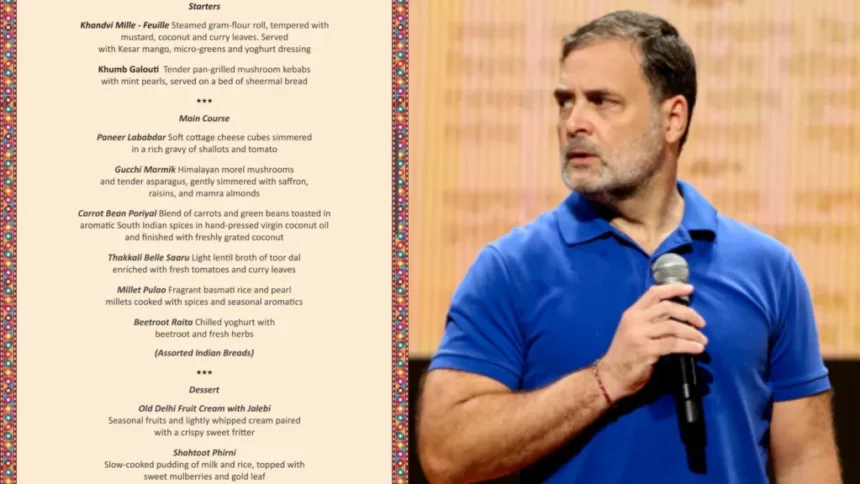
Following the conclusion of the BRICS Summit hosted in New Delhi, Congress leader Rahul Gandhi sparked a public conversation regarding Indian dietary habits. His comments came directly after Prime Minister Narendra Modi hosted an all-vegetarian dinner for visiting BRICS leaders and international delegates at Bharat Mandapam. Reacting to the menu choice on his social media platforms, Rahul Gandhi stated that roughly 80 percent of Indians are non-vegetarian, while also praising Indian non-vegetarian cuisine as “delicious”.
Expert Perspective & Context Analysis

From a political and cultural perspective, food choices in Indian diplomacy frequently carry symbolic weight. Serving an all-vegetarian menu at a high-profile international gathering like the BRICS Summit reflects the host government’s intention to highlight traditional Indian vegetarian heritage on a global platform. However, opposition leaders often use such occasions to emphasize cultural diversity and challenge dominant cultural narratives.
Rahul Gandhi’s assertion regarding national dietary statistics shifts the focus from diplomatic hospitality to domestic representation. By emphasizing that a significant majority of the population consumes non-vegetarian food, he aims to counter the perception that vegetarianism is the sole defining characteristic of Indian cuisine. This debate underscores how everyday culinary traditions regularly intersect with national identity and party politics in contemporary India.