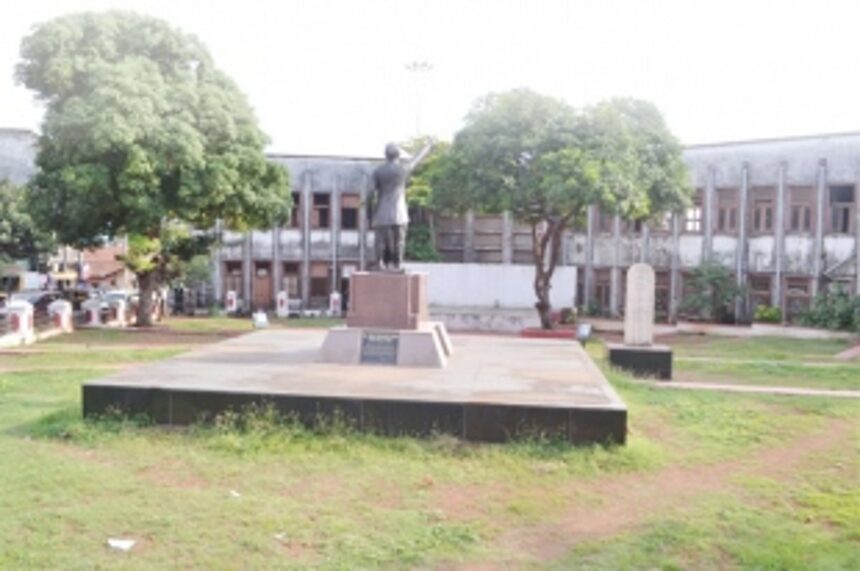
The momentous Lohia Maidan is currently being used for cultural gatherings and public meetings and the ground has become an integral part of Margao’s political history. There have been calls for the government to step in and ensure there is a stronger thrust on its upkeep and general maintenance, given its significance in the history books.
It was on the evening of 18th June, 1946 that Dr Ram Manohar Lohia addressed a meeting in Margao and this day marks the beginning of the revolution which eventually culminated in the Liberation of Goa on 19th December, 1961, from 451 years of the Portuguese rule. June 18th is celebrated every year since 1980 as Goa Revolution Day to commemorate the clarion call given by Dr Lohia, a nationalist and veteran freedom fighter to the people of the state to unite and fight against the colonial regime at Margao at a place now called Lohia Maidan. There is a life size statue of Dr Lohia at the ground to celebrate his memory and an office for the freedom fighters that thoroughly coordinates with the Margao Municipal Council and are the reason why the ground still has some semblance of dignity.
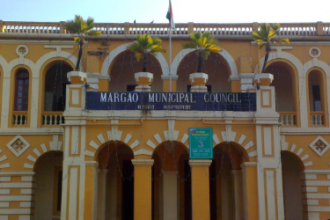
However, local residents point out that it’s been years since the statue was unveiled and decades since the ground was last renovated. Locals also credit late Anastasio Almeida, a veteran freedom fighter from Velim who had painstakingly ensured the building of the wall surrounding the maidan. At that time, the beautification was a necessity as the ground was badly managed and had been reduced to a public urinal site, a garbage dump and field for cattle to graze in. “The ground is maintained by the Margao Municipal Council who allocate funds for security, daily cleaning and annual grass cutting and also give it out for rent. But there is so much more that needs to be done,” said former MMC chairperson Savio Coutinho. Coutinho added that there was once a lawn on the grounds which added greenery and appeal but the MMC had failed to maintain the same. “There are tiles on the ground steps where the public sit during meetings. These tiles have become loose and the mud has caved away. Anyone can slip and fall during these meetings,” added Coutinho.
Activist Sidharth Karapukar has organized several public meetings at the maidan and emphasized on the need to have functional bathrooms that are not locked permanently.
“There are a lot of old people or some from the organising team who require to use the bathroom but it is always locked. These bathrooms need to be maintained. We get that it can’t be open generally but they can add additional charge when they rent out the ground,” added Karapukar.
Ashwin Tavares who recently organized a cultural event at Lohia Maidan also questioned why the electricity department could not provide major power supply for these functions. “The charge is INR 100 a day but we have to spend around INR 8,000 a day for the generator,” added Tavares.
Another major demand is for the shifting of the kitchen premises at the back of the maidan that is being run by a restaurant opposite the municipal garden but repeated appeals to get the structure evicted have failed. Locals have complained that the structure is an eye sore and dilutes the sanctity and purpose of the ground deserving no place at the maidan.
While the MMC officials added that they ensure that the ground is cleaned even after public meetings where organisers fail to clean the area of litter, they added that it was up to the higher authorities to sanction funds for the beautification and to meet the other infrastructure related demands of the people. One of the key demands is that the statue is cleaned and kept in good shape and does not suffer from wear and tear from the varying weather conditions.