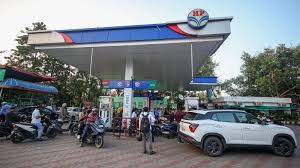
The Centre on Monday reassured citizens over India’s fuel availability amid rising tensions around the Strait of Hormuz, while also repeating Prime Minister Narendra Modi’s appeal to reduce petrol and diesel consumption.
During an inter-ministerial briefing, Sujata Sharma, Joint Secretary at the Ministry of Petroleum and Natural Gas, urged people to conserve fuel by using metro services, public transport and carpooling wherever possible. She also encouraged greater use of railways for transporting goods and asked citizens to adopt electric vehicles whenever feasible.

Sharma said the government has taken multiple measures to ensure uninterrupted fuel supplies across the country. She noted that India’s crude oil inventories remain stable and refineries are operating at optimum capacity despite the ongoing Middle East crisis.
“There are no reports of dry-outs at petrol pumps or LPG distributorships,” she said, adding that domestic LPG supply continues without disruption. According to the government, more than 1.26 crore LPG cylinders were delivered over the past three days against 1.14 crore bookings.
The government also clarified concerns regarding the Strait of Hormuz. Opesh Kumar Sharma from the Ministry of Ports, Shipping and Waterways stated that India does not pay any tax for ships passing through the strategic route.
Meanwhile, global crude prices have continued rising sharply due to the conflict in West Asia. Brent crude crossed USD 104 per barrel on Monday, while WTI crude neared USD 98 per barrel.
State-owned oil companies, including Indian Oil Corporation, Bharat Petroleum Corporation Limited and Hindustan Petroleum Corporation Limited, have reportedly suffered losses exceeding Rs 1 lakh crore over the last 10 weeks while shielding consumers from global fuel price spikes.