In his over two decades of public
life, he had his moments, and of course he displayed his unmistakable style. In
the murky world of politics, he sometimes swam with the current, and at other
times swam against it. He had an answer to every question, a solution to every
problem and never did he hesitate to make it known. At times it may have not
been the best of solutions, but that didn’t stop him from attempting to enforce
it, even doing so instantly at times. Like the ban on mining operations.
Hours after the Shah Commission
report was tabled in Parliament in September 2012, Manohar Parrikar who had led
the Bharatiya Janata Party to a historic simple majority just months earlier, banned
mining operations in the State. Weeks later the Supreme Court also banned it,
and from there the sector never really recovered. But that decision didn’t
place as much as even a tiny little question mark over his leadership and his
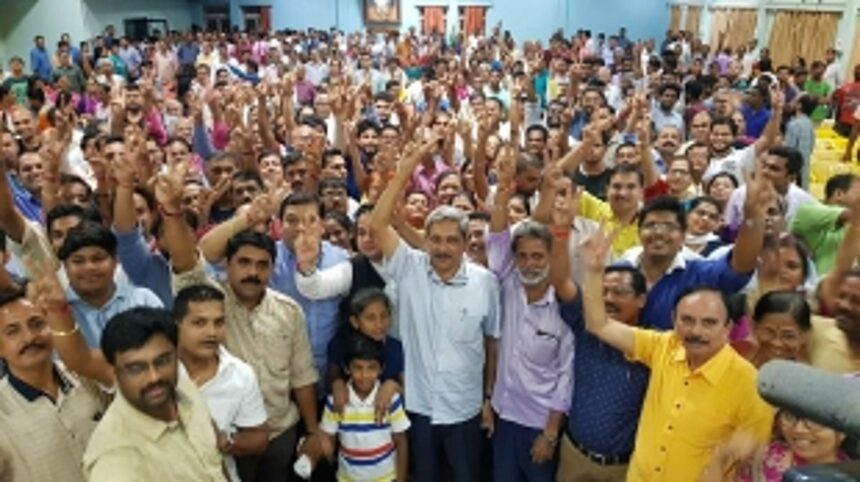
vision. For his friends and his admirers – and there always were plenty of them
– believed that their Chief Minister, their Bhai, would find another solution
and not let them down.
And why would they doubt that he
had a solution up his sleeve? Manohar Parrikar was a Chief Minister who not
just talked, but also delivered. He walked the talk, and he did it quite often.
And he was able to do so for he did his homework thoroughly, the hours of the
day and the night merging into one when he placed a task before him.
Bureaucrats arriving at the State Secretariat for a day’s work would find that
the Chief Minister had put in quite a few hours at his desk already and still
had the energy for the rest of the daylight hours ahead. While they were
fatigued by the end of the evening, Parrikar was ready for another stab at
finding a solution to a stubborn issue that refused to go away.
It was 1992, Parrikar was the
reticent Lok Sabha candidate that BJP had fielded in North Goa and nobody had
heard of him till then. He wasn’t expected to win and he didn’t win. A BJP
candidate winning in Goa appeared to be a distant dream. But, he didn’t turn
his back to politics, and two years later he walked into the Legislative
Assembly and from then on dominated Goan politics for the next two decades. In
1999 he became the Leader of the Opposition and soon a household name in Goa,
and almost synonymous with the Bharatiya Janata Party. Such was his hold over
sections of society that people in Goa voted not for the BJP but for Parrikar. It
was his face on every BJP pamphlet, poster and banner. It was sometimes even
bigger than the Lotus symbol, for that’s how tall he stood in the party. A fact
that the party is well aware of, and which is why it has had such a difficult
time in finding a successor to fill his very large shoes, or even to meet his
ability to take quick decisions.
Parrikar always worked fast. His
decisions have the trademark quality of speed that no politician in Goa has
matched. Whether all the decisions worked in his favour or of the party or of
the State could be a matter of debate. But that didn’t slow down his speed of
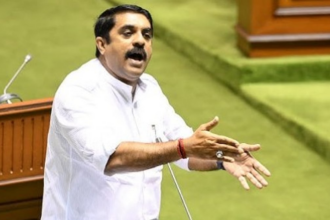
work. Recall his posture in the Assembly hall, where he sat on the edge of the
chair or perched on the armrest, ready to spring up to attack the government
when he was in the opposition or defend his government when he was leading it.
He was the same in his political career, alert to opportunities, ready to snatch
them when they came his way, turning defeat into victory and walking away, the
naughty smile on his face telling his opponents that they had been caught on
the wrong foot and that they would have to spend hours in preparation if they
were to best him.
But there were times when he showed
a streak of callousness. Like the time he cancelled the Good Friday holiday,
only to back down on it in face of the criticism that came fast at him. And he
was adept at changing his stand walking the tightrope of issues balancing both
sides of the argument depending on which side of the Assembly floor he was on at
the time. He vociferously opposed the offshore casinos when his government was
not in power, and resolutely backed them when it came to be his time to sit in
the Chief Minister’s chair. He did the same with the Regional Plan 2021
opposing it and then when in government resurrecting it.
There is no Manohar Parrikar now.
This time he hasn’t gone to New Delhi to take up a new task from where he will
fly down every weekend. This time it is the final goodbye that Goa bids him. As
the smoke from the funeral pyre clears, all that will remain are memories of a
Chief Minister who led from the front, a politician who knew his business, a
man who called the shots in Goa never concerned with the pot-shots that were
taken at him.