He added that such an exercise would go a long way in enhancing maritime security in the Indian Ocean for the benefit of the global maritime community.
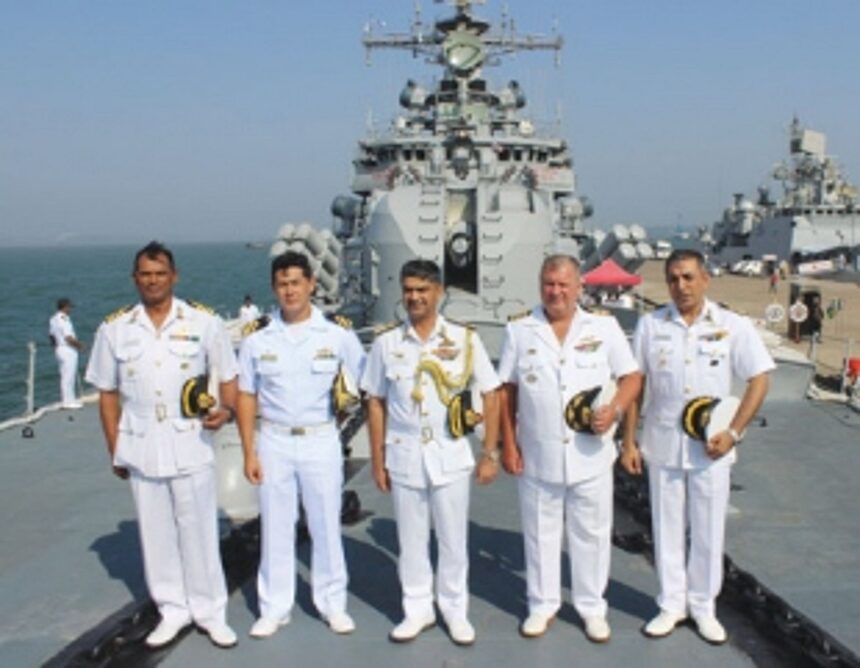
Bahl was addressing newsmen onboard INS Mumbai along with Commander Alessander Felipe Imamura Carneiro from the Brazilian Navy and Capt M A Boucher from the South African navy on Monday.
“Naval cooperation between Brazil, India and South Africa epitomizes the strong long-term strategic relationship between the three democracies and vibrant economies. The scope and complexity of IBSAMAR has increased steadily and in its fifth edition in 2016, IBSAMAR has matured into a complex trilateral exercise involving ships, aircraft and special forces from the three countries. Such an exercise, which started in 2008, has been the most visible manifestation and convergence of democratic values, economic interests and maritime cooperation,” said Bahl.
IBSAMAR-V started on February 19 and the Harbour Phase was completed on February 22. The Sea Phase will start on Tuesday and will end on February29. This is the first time that IBSAMAR is being conducted in Indian waters; the previous editions were held at/off South Africa.
The thrust of this year’s exercises at sea will be on anti-submarine warfare (ASW), surface firings, air defence, visit board search and seizure (vbss), flying operations, search and rescue, and tactical procedures.
The Indian navy will be represented by ins Mumbai, an indigenous destroyer; ins Trishul, a stealth frigate; and INS Shalki, a Shishumar class submarine. Additionally, various fast-attack craft, Sea Harriers and MiG-29K fighter aircraft, Dornier Maritime Patrol Aircraft and integral rotary wing helicopters are expected to participate in the trilateral exercise.
The Brazilian Navy is being represented by naval ship Amazonas, and the South African Navy is represented by naval ship SAS Spioenkop, with integral helicopters and embarked Special Forces. Both the foreign ships are returning after participating in the International Fleet Review held in Visakhapatnam from February 4 to 8.
“The primary aim of this exercise is to increase interoperability amongst the three navies as well as develop common understanding and procedures for maritime security operations. Similarly, the scope of such an exercise includes wide-ranging professional interactions during the Harbour Phase and a diverse range of operational activities at sea during the Sea Phase,” said Bahl.
He added, “The current edition is another significant step in strengthening mutual confidence and inter-operability as well as sharing best practices between the Indian, Brazilian and South African Navies. The exercise will also go a long way in enhancing maritime security in the Indian Ocean Region for the benefit of the global maritime community.”