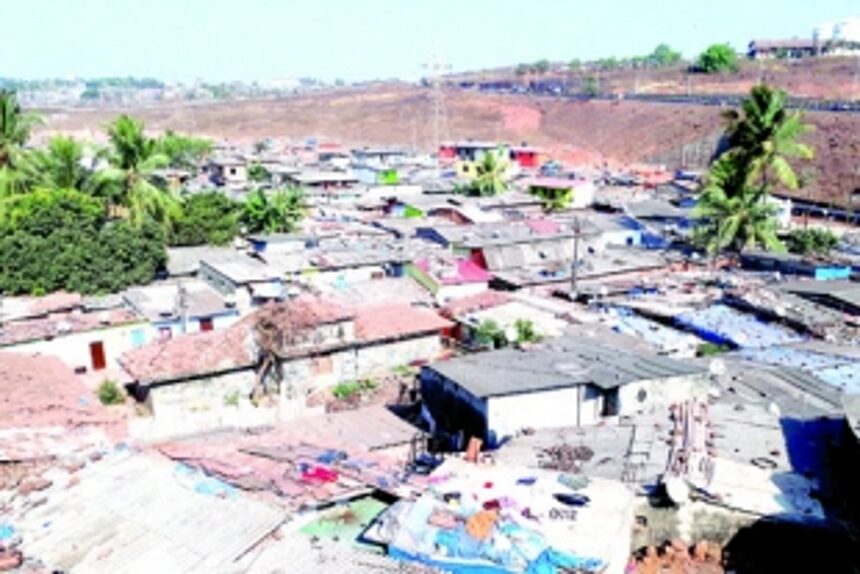
PANJIM: Mormugao taluka, which has Goa’s major port, accounts for almost 90 percent of the slum population in the State followed by Margao and Ponda together accounting for the remaining 10 percent, reveals the Economic Survey report 2016-17.
The report states, “Mormugao has the highest slum population of 23,625 persons, accounting for 90 percent of the total slum population of the State.” The Economic Survey states that slums form an integral part of urbanisation.
Actvists and NGOs attribute the concentration of slums in Mormugao to the port. “Mormugao taluka has a higher slum population as migrants usually flock to the region due to employment opportunities, especially at the port.”
Speaking further activists said, “The condition of most of the slums in the State is very poor. People who stay in these slums are exposed to various health hazards along with other dangerous diseases as the surroundings are not clean.” According to activists, the slums have become a hotbed of tuberculosis (TB) infection.
Activists also blame politicians for ignoring the plight of the slum dwellers. “Politicians have so far treated slum dwellers as vote banks. They are not bothered about their health. The number of slums in Goa is on rise as per the government’s own record and the failure to provide housing to the poor will lead to more slums,” they said.
The Slum Area Improvement and Clearance Act, 1956, defines slums where dwellings are in any respect unfit for human habitation, by reason of dilapidation, overcrowding, faulty arrangements and design of such buildings, narrowness or faulty arrangements of streets, lack of ventilation, light, sanitation facilities or any combination of these factors.