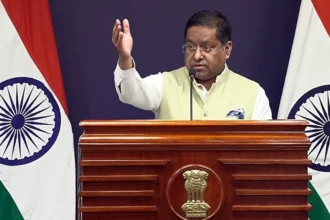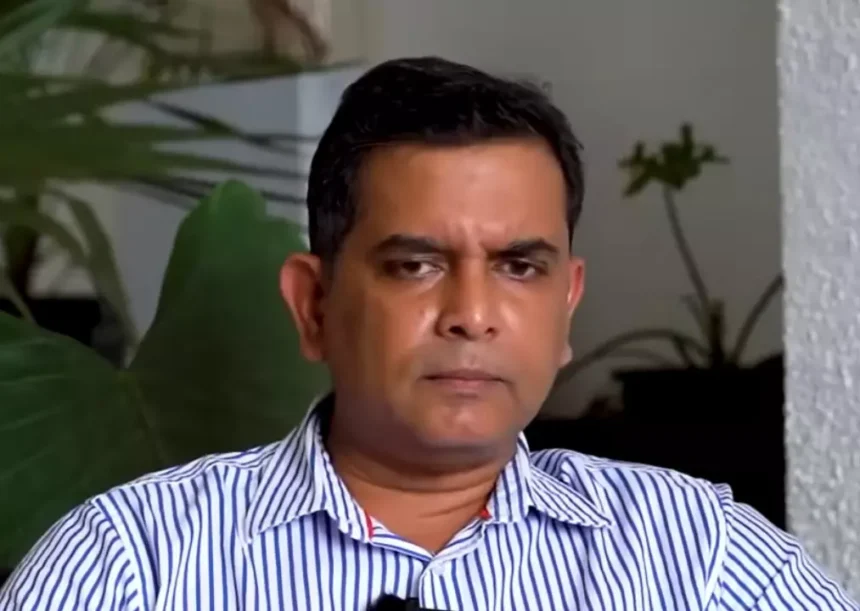
After the Aam Aadmi Party (AAP) recorded a poor performance in the Zilla Panchayat (ZP) elections, remarks made by its then Goa president Amit Palekar while he was still in office have drawn attention for his unfiltered assessment on what went wrong. In comments made to a local news channel – hours before he was relieved as the State president Palekar openly acknowledged that the party’s political approach in Goa had failed and argued that an alliance with like-minded Opposition parties was unavoidable if the BJP was to be defeated.
“I know it could be some-thing that the party may not like, but the party needs to understand Goa’s genetics,” Palekar said. “They have tried to give an alternate politics, but somewhere, that model has failed. I am going to give my suggestions to the party leadership. It is for the party to decide thereafter… what is the way ahead.”
On whether those suggestions would include an alliance with Opposition parties, Palekar was categorical.

“There is no other way out… than a joint Opposition alliance. It could be with like-minded parties or whoever wants to come together. To defeat the BJP, you have to come together,” he said.
Palekar added that such an understanding could not be left to the last minute. He said Opposition parties would need to come together within the next two to three months, arrive at a broad understanding by March, identify which party was strongest in which constituency and chart a coordinated strategy. He said candidates should then be finalised at least five to six months before the elections to allow sufficient time for groundwork and coordination against the BJP’s organisational strength, financial resources and use of government machinery.
It is to be noted that Palekar made these comments when he was the sitting State president and had described his views as feedback he intended to place before the party leadership, even as the party has since sought to move past the ZP setback. Palekar offered a candid assessment of decisions taken ahead of the elections, particularly on candidate selection, describing the late announcement of candidates as a “100% mistake”. He said these included instances where individuals who had joined the party at a very late stage were announced as candidates, creating confusion within the party and surprise among its own base. While clarifying that he was not solely responsible for candidate selection, Palekar said he had signed the lists as party president but that the decisions were taken by the committee. He acknowledged that these late calls did not work on the ground. Citing Taleigao as one example, Palekar said similar patterns were visible across ZP constituencies in. both North and South Goa, where the party’s vote share dipped post the ZP elections despite having built momentum earlier. Palekar said the AAP leadership needed to examine constituency-level data to understand why voters disengaged, expressing confusion over outcomes in areas such as Benaulim and Velim, where the party has its own MLAs, and in Chimbel, despite road works, im-proved medical facilities and welfare medical clinics. He pointed to Xeldem, where over a thousand people benefited from their medical clinic, yet electoral support remained low.
“If voters do not want this, then what do they want?” he asked.
While acknowledging that a large section of voters did not back AAP in the ZP elections, Palekar described the outcome as disappointing but said he was not dejected, stressing that dejection would imply the end of the road, which he did not believe to be the case. According to him, many voters had made up their minds well before polling day that only a united Opposition could pose a credible challenge and that a vote for AAP, by itself, would not end up defeating the BJP. Palekar also alleged that fear-mongering and political engineering by the BJP influenced voting behaviour, particularly in constituencies linked to the Mhaje Ghar scheme. He claimed voters were led to believe their homes were illegal and that only the BJP could protect them.