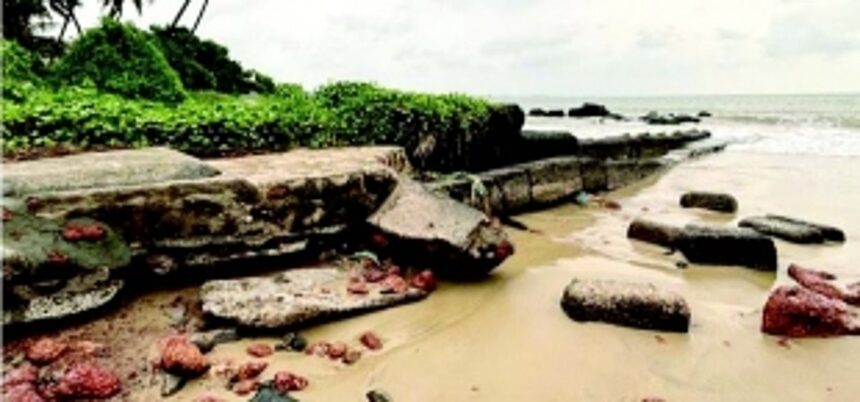
VELSAO/MARGAO: A group of traditional fishermen gathered at Velsao Beach on Wednesday, to protest against the alleged release of chemical effluents into the sea via two pipelines from a fertiliser factory situated nearby. The fishermen, along with Velsao villagers, raised concerns about the traces of ammonia found in the Pale-Velsao bay and the Poie rivulet nearby, which they believe is linked to the death of fish and crabs along the coast.
“The fish are dying due to the pollution. We found traces of ammonia in the rivulet. The factory, Paradeep Phosphates (formerly Zuari) releases one pipe right into the ocean and the second underground pipe comes through our property. The pipes are about 500 metres into the sea. If we had united and taken some action last year, these fish would not have died,” alleged local fisherman Alister Pinto.
Meanwhile, Goenchea Raponkarancho Ekvott (GRE), a federation representing 80,000 traditional fishermen, has written a strongly worded letter to various authorities, including the Goa State Pollution Control Board (GSPCB) and Goa State Disaster Management Authority (SDMA), demanding immediate action against Paradeep Phosphates Ltd. They alleged that the company’s operations have led to a significant increase in fish mortality in the water bodies and the sea at Velsao. GRE demanded that the consent given by GSPCB to the company be cancelled, and that the SDMA provide the affected fisherfolk compensation under the disaster management provisions.
In the letter, GRE President Agnelo Rodrigues pointed out that fish mortality is often an indicator of degradation in aquatic ecosystems, and the release of untreated or improperly treated industrial effluents can severely impact aquatic life.
A similar letter was sent to GSPCB by Goencho Ekvott, the first complainants in the fish mortality crisis. GE emphasised that these rich fishing grounds are not only a source of sustenance for the local OBC and ST community, but also an important breeding ground for salt and brackish water marine life.
The letter signed by GE founder Orville Rodrigues and GE Chairman Creson Antao mentions two possible causes – industrial effluent discharged through a viaduct into the sea, and wash down from the plant’s yard contaminating the sea, rivulet and groundwater in Pale village.
The organisation also fears the fish mortality could be due to arsenic poisoning leading to further degradation of land and sea resources.
“Every year there is death of fish, it is not only happening this year. These pipes have been laid by Zuari Agro right from the start. At that time, in the village of Belem, the entire ground water was polluted, and the factory had to lay a pipeline to supply clean water to villagers. People working in the fields used to get boils,” Pinto recalled.