GUILHERME ALMEIDA
teamherald@herald-goa.com
How many inspections would it take for the government to implement Mission Cleanup River Sal and restore the pristine glory of Salcete’s life line?
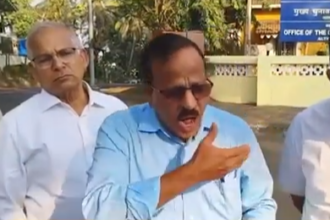
This question has come to the fore as Monday’s inspection has not changed the ground reality of the river ever since Chief Minister, Manohar Parrikar inspected the river on March 29, 2012 with Navelim MLA Avertano Furtado and Benaulim MLA Caitu Silva in tow after the 2012 Assembly poll brought about a parivartan that catapulted him again to power.
While Avertano and Caitu termed the River Sal condition as “pathetic and sorry”, the Chief Minister on March 29 , 2014 had not only made a similar observation, but had gone to the extent of saying that the river is worse than Panjim’s St Inez nullah.
That’s not all. If the inspection team on Monday came across a carpet of waste and water hyacinth, besides mangrove branches intruding into the river course, the Chief Minister had then mentioned that he could not seen his reflection in the river, indicating the horrifying conditions of the river.
Much water had flown down the river since the first inspection on March 29, 2012 and the inspection held on Tuesday, but sadly, the ground reality remains unchanged.
Take note, the Goa State Pollution Control Board (GSPCB) has inked an agreement with JICA to carry out remediation of the river Sal, but it would take a few more months before actual work begins along the river course. Says GSPCB Member Secretary Levinson Martins: “JICA is presently engaged in testing water samples from the river to ascertain the metal and organic content. A series of tests have been conducted at both upstream and downstream. Based on the findings, JICA would take up phase II, when it will take steps to remediate the river”.
While GSPCB’s agreement with JICA should hopefully help rid the river of the acute contamination, the government is facing an uphill task to plug the flow of raw sewage water finding its way in the river all along its course.
In this connection, Chief Minister, Manohar Parrikar has launched an ambitious project in Margao to pump raw sewage waste flowing through the two nullahs into the sewage treatment plan before the water is pumped out in river Sal. Officials in private admit that though CM’s anxiety to plug sewage water flowing into the river is understandable, they say only an elaborate sewage network can take care of sewage waste flowing into the river. “Sewage waste flowing into river Sal is not only centred at Margao. We have come across instances wherein sewage is discharged in the river at many points, including Cavelossim”, remarked an official, while calling for a holistic approach to address the burning issue.
In fact, officials accompanying the two MLAs during Tuesday’s inspection admitted in private that a dedicated Save River Sal Cell and a multi-pronged strategy, including allocation of dedicated funds for de-silting of the river and for underground sewage network would go a long way to save River Sal.
“The river is in a big mess. It should not happen that everything is forgotten after some days. The good thing happening is that the River Sal campaign has received the support of MLAs Avertano and Caitu Silva. Constituting a dedicated Cell to oversee River Sal campaign would certainly take the mission to its logical conclusion,” remarked a senior official.
Member Secretary Goa Bio-diversity Board Dr Nitin Sawant and Dr Antonio Mascarenhas said that piece meal measures will not take the campaign anywhere. “Let the exercise begin right from its source at Verna and slowly move downstream,” remarked Dr Mascarenhas said.
Incidentally, sources said that de-silting of the River Sal at the Khareband-Mungul and Nuvem-Mungul points carried out in mid-2000 had failed to have achieve its objective for want of a sustained plan of action.
Action plan to save Sal
Trim the branches of the overgrown branches of mangroves which have intruded into the river and reduced its width.
De-silting of the river to maintain the free flow of water, especially along the Nuvem-Mungul-Khareband course. The de-silting is expected to flush out the unwanted elements in the river, such as the weeds, plastic and rubbish dumped in the water body.
Forest Department to carry out trimming of the mangrove branches. Wherever possible, the department will re-plant mangroves along the river bank. A new variety of mangroves which grow erect will be planted along the river bank.
Joint meet mulled to designate a single agency to execute the work since the river runs through a course manned by Captain of Ports and the Water Resources Department.
To take care of sewage by expediting the laying of the underground sewage network in Margao and Navelim. Work to be expedited on the 22 MLD STP at Sirvodem-Navelim.
Fishy tale at Margao wholesale market
A little distance away from the Purumentachem feast fair at the Old Market – around half a kilometre to be precise – the hustle and bustle at Goa’s lone wholesale fish market at Madel, has not stopped with the fishing ban already in force from June 1.
The reason is not far too seek. While mechanised fishing vessels have dropped anchor at the fishing jetties across Goa from May 31, there was no dearth of fishing coming into the state from across the borders via Karnataka and Maharashtra.
Though curtains has now come down on the mechanised fishing activity along the west coast because of the inclement weather, activity at the wholesale fish market isn’t going to slow down during the next 50 days. For, the fish merchants have promised to make available fish at reasonable rates from the country’s east coast – from the states of Andhra Pradesh and Tamil Nadu.
Leading fish merchant, Maulana Ibrahim said that truck loads of mackerels and sardines have already left the two southern states on Tuesday and will descended at the wholesale fish market in the wee hours of Wednesday. Besides, Andhra Pradesh and Tamil Nadu, fish is also expected to come in from Kerala, especially fish netted by the motorised canoes. “Goans need not worry about the availability of fish during monsoon. Both Andhra Pradesh and Tamil Nadu has reported good landing of mackerels and sardines. If the trend continues, there will not be dearth of fish on the plate of Goans in the days ahead”, Ibrahim said.
Ibrahim continued: “Goans can be rest assured of the river fish such as Mordoshee and Shovte netted at Malwan, Degvad in Maharashtra and Karwar in Karnataka. River fish is mostly available around June end or early July after a first few days of Monsoon”.
In fact, it is not uncommon to find white pomfrets from the coast of Odhissa and Bengal landing at the wholesale fish market during this part of the year.