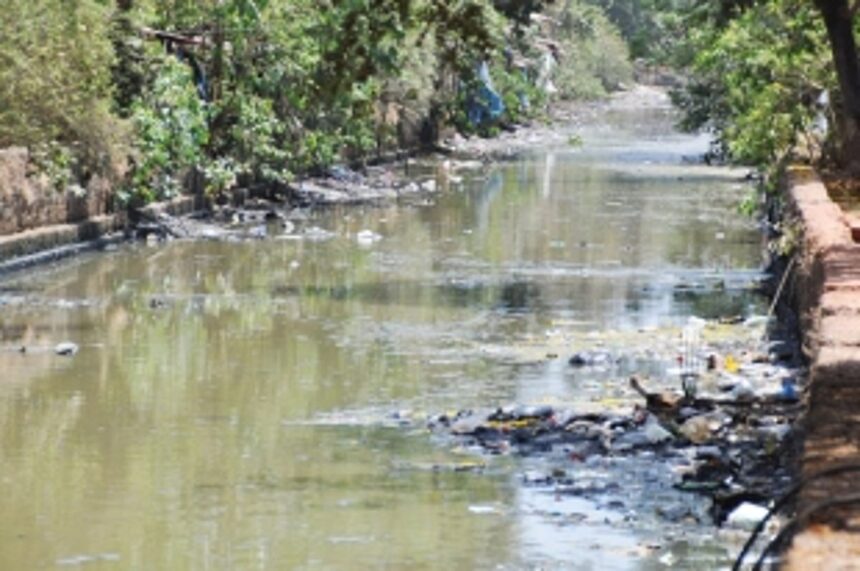
The creek that meanders through St Inez and Panjim to empty out its waters into the Mandovi is polluted and the reason is the people.
“It is certain that the creek is in bad condition and there are four main reasons for this. The existence of dwellings along the side of the nullah is the main cause for the creek being so polluted,” Goa State Pollution Control Board chairman Jose Manuel Noronha said.
Passersby too play a significant role in the garbage and unwanted material that floats on the surface of the water. “People passing along the entire stretch of the water body have the habit of throwing plastics they may have in their hands directly in to the creek. This is not only a bad habit but adds to the existing condition of dwellings polluting the water,” said Noronha. Raw sewage is also released directly into the water without treatment.
Residents along the creek have constantly complained of the smell of and the litter in the creek. Despite various campaigns individuals and the municipal authorities have undertaken, there seem to be little change in the visual and general well being of the creek.
Though it was recently reported by some media houses that GSPCB had released a detailed study of the creek, Noronha insisted that the study was still being put together. No report has yet been presented to the government, he said.
Apart from official figures to quantify the extent of the damage to the creek with numbers to the biochemical and chemical oxygen demand, e-coli and coliform bacteria, Noronha acknowledges the dire state of the water body.
Reports have in the past have highlighted the issue of the polluted water body with directives being issued to hotels, eateries and colonies that have set up in the neighboring areas to deal with sewage. This time however, the GSPCB chairman said they would take to strict implementation after the latest report is presented to the government.
“Yes in the past we have issued directives that haven’t really worked, but this time we will make sure there is strict implementation of the rules,” he said.
His main contention is with settlements that have emerged in the area that are illegal. “There are a lot of these illegal settlements that have no sewage connection, because they are illegal. It becomes difficult therefore to address this issue in the right manner,” said Noronha.
Samples from several locations along the creek have already been collected by the department which is currently in the process of tabulating the data. The final report is expected in the next two days.