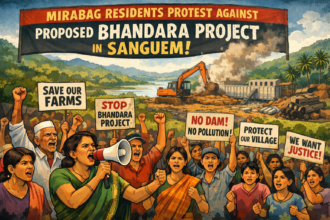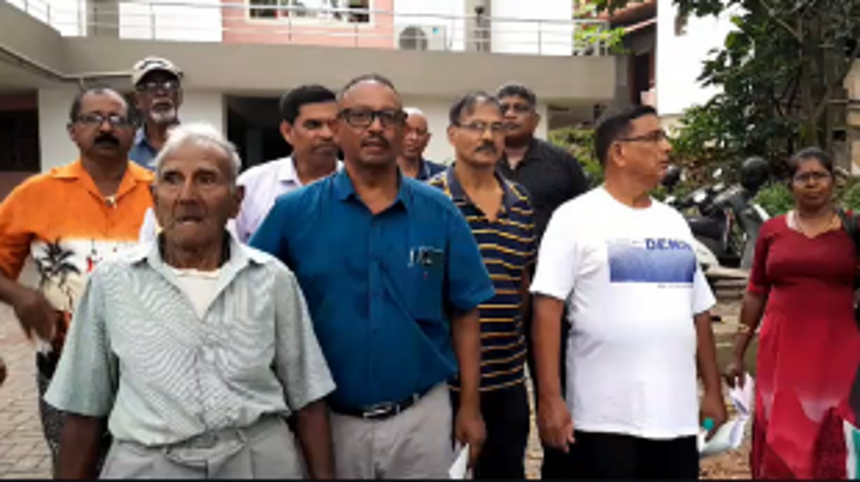
Residents of Raia, Loutolim, and the surrounding areas took to the streets in a demonstration of discontent, marching towards the Land Acquisition Office in Altinho, Panjim this Friday. Their purpose was to formally submit objections against the proposed land acquisition for the new Borim bridge. This move comes in response to the issuance of notices for land acquisition, sparking renewed resistance from the villagers who have steadfastly opposed the project.
Emphasizing their demand, the protesters called for the immediate withdrawal of the land acquisition notification for the Borim bridge. Their primary concerns revolve around the construction process, particularly the plan to build the bridge on stilts and columns. The villagers fear that this approach would necessitate the development of an approach road for transporting construction materials. Such a road, they argue, would inevitably lead to the filling of Khazan lands and the destruction of vital agricultural fields.
The discontent within the community has found a formal expression through the unanimous resolution passed by the Loutolim gram sabha. In the wake of extensive protests within the village, the gram sabha firmly rejected the land acquisition for both the new Borim Bridge and the associated bypass road. One of the major points of contention raised by the villagers is the perceived lack of consultation with the panchayat or the local community in project discussions.
Furthermore, the protesters criticized the government for what they perceive as a lack of transparency and community involvement. They expressed particular concern about the environmental impact of the proposed project, highlighting the Coastal Regulation Zone (CRZ) areas that may be affected. The alignment recommended by the Public Works Department (PWD) and accepted by the Union Ministry of Road, Highways, and Transport has drawn sharp criticism from the villagers, who feel that their voices and the potential environmental consequences have been overlooked in the decision-making process.