Are residents of Gaondongrim and Cotigao distrustful of PWD water supply or are they simply following an age-old practice to avail of potable water?
The two villages in Canacona taluka have been heavily relying on natural water sources like wells and springs for drinking and cooking purpose, giving the impression that PWD water supply has been woefully inadequate in those areas.
However, PWD officials have insisted that residents of Gaondongrim and Cotigao have been following traditional practices, despite the availability of PWD water, either through pipelines or tankers.
According to local sources, residents of Ziltawadi-Gaondongrim village continue to rely on water from a nearby rivulet for drinking and cooking purpose, a practice followed by residents throughout the summer months.
“Whenever tap water does not reach certain parts, water tankers are dispatched to meet the demand of residents in Gaondongrim and Cotigao, the two hilly terrain villages in the taluka,” said a PWD source.
According to PWD Junior Engineer Deepraj Madkaikar, those residents who have domestic taps receive water supply according to availability of water. “But arrangements are in place to provide water to all homes in these two villages through water tankers,” he said.
“The PWD pumps water from bore wells or open wells in the localities and supplies it domestically to those who have tap connections in the twin villages,” Madkaikar added.
Admitting claims that several residents draw water a nearby river despite having access to PWD water supply, another PWD officer said: “Many residents in these localities continue to follow a traditional habit of using these natural water bodies likes wells and springs to meet their needs.”
“While almost all these people routinely avail of water supply from PWD water tankers to wash their clothes, water their plantations and even for their cashew distilleries. However for drinking and cooking purpose, there fall back on traditional water sources.”
“The situation is such that many residents refuse to avail of domestic taps and instead, prefer to rely on natural water sources for their potable water requirements,” the source added.
The residents justify their unusual preference to avail of potable water from natural water bodies.
“Most settlements of our villages are located on river banks or river fronts, and we are accustomed to using water from these natural resources through the ages. Even though we are happy that the government supplies us water through taps or tankers, we use fresh water we drive from pits/wells for cooking and drinking during summer and spring water during monsoons,” says a local, Prem Gaonkar.
Adds another resident of Ziltawadi: “There is no specific reason for our habit, but we believe that the naturally drawn water is purer than the one supplied through water tankers.”
There are others, however, who use both types of water for their daily activities.
Claiming that the practice is prevalent among many residents of Gaondongrim and Cotigao, a local, Narayan, states, “If we cook rice with the PWD supplied water, it gets spoiled within a short time. People here generally cook early morning and use the same cooked rice even at night.”
“Besides, the taste of water drawn from natural sources is much better than the PWD-supplied water, which is treated with chlorine,” Narayan added.
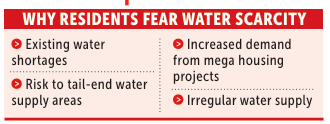
Prashant Gaonkar, another resident of Ziltawadi, added: “PWD water is always in short supply and comes only on alternate days; we have no option but to fall back on our natural resources to meet our daily necessities. We, however, use both type of water as and when available.”