Pete Judd’s memories of Goa take him back to the 1980’s when he along with his German friend, Thomas Gehrckens and a 350 cc single cylinder classic Royal Enfield Bullet they called The Silver Bullet took them to places in Goa. Today as he releases his book, he says things have certainly changed.
“The bureaucracy, the filth, and the dirt, the heat and dust, the dodgy hygiene and the idiosyncrasies- ‘Indiosyncracies’ if you will- the unimaginable and indescribable beauty, the sheer extremes of fabulous wealth and abject poverty, the religions and the colours swirling all around- these were all part of India and from the very first moment I arrived there in 1980, I was captivated. India, and later Goa itself, was a revelation. And I reveled in it!” he writes in his book Happy Valley Daze: Tales of Goa Gone.
Back in the 80’s when the construction boom wasn’t as rampant and plastic didn’t account for most of the state’s garbage Judd describes Goa as “a reunion”. Meeting with old friends and living susegad in the village of Anjuna.
The book published by Goa based Cinnamon Teal takes a candid look at life during the 80’s and how the 90’s became a time of change. It was recently launched at the Goa Art and Literary Festival (GALF) being held at the International Center, Goa.
Judd along with his friends found Goa and surrounding areas of Karnataka and even Kashmir journaling the little comics India had to offer. The book comes as a result of his many written notes on each of his trips around India. The need for a book, was to keep the memory of his friend Gehrckens alive while still showing a side of Goa that is today difficult to find.
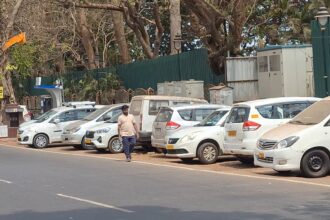
Speaking to Herald Review at GALF, Judd says he would rather remember the funny instances that the serious ones. His mind quickly races to the taxi strike of 1986 when one taxi driver protesting at the Daborlim airport decided to ride the airplane’s staircase to Panjim.
“It was extremely hilarious to see an airplane’s staircase in the middle of the road. The next day’s newspaper even carried a picture of the vehicle parked on a street in the city,” he says.
Another instance he writes in the book in the entry titled The Tandoori- Jan/ Feb ’92. The entry talks of how a taxi accidentally ran over a chicken in Mapusa where the owner of a general store from Anjuna was passing by. He brought it to the restaurant Judd and his friends were at, The Knock Inn.
“And then he came over and asked if the tandoor was still hot, so we divided it up and put it in the tandoor….We noticed two charming and respectable English girls who had just arrived and were studying the menu…and one of them asked…”What’s the chicken like here?” and we all burst out laughing… “Yeah it’s very good- just make sure there’s no Pirelli marks on it!”
These are the sort of instances that Judd says made Goa enjoyable. “There was always something funny happening,” he says.
In Goa even to this day, the author has chosen Anjuna as a place of residence. “The atmosphere in Anjuna is just very different. Anjuna and Goa on the whole is like a reunion. Like stepping into an old shoe,” says Judd.
Looking at the current state of affairs however, he believes Goa is heading for doom. “Back in the 80’s there was one collection of garbage a week, and even today, there is still one collection a week, but the people have increased, the hotels have increased. The rate at which development is taking place, I won’t be surprised if Goa falls into an economic crisis with all the buildings they put up and no one investing in them.”
He points to a place near the Anjuna police station that had a natural pond back in the 80’s. Today, he says, it has a colorful fountain that plays music and a couple of bars around. It’s completely ruined.
Judd who grew up in London worked many jobs before settling for the world of designer fashion. He still enjoys travelling and would rather just be a tourist visiting Goa than settle in the state for good.
Review Bureau