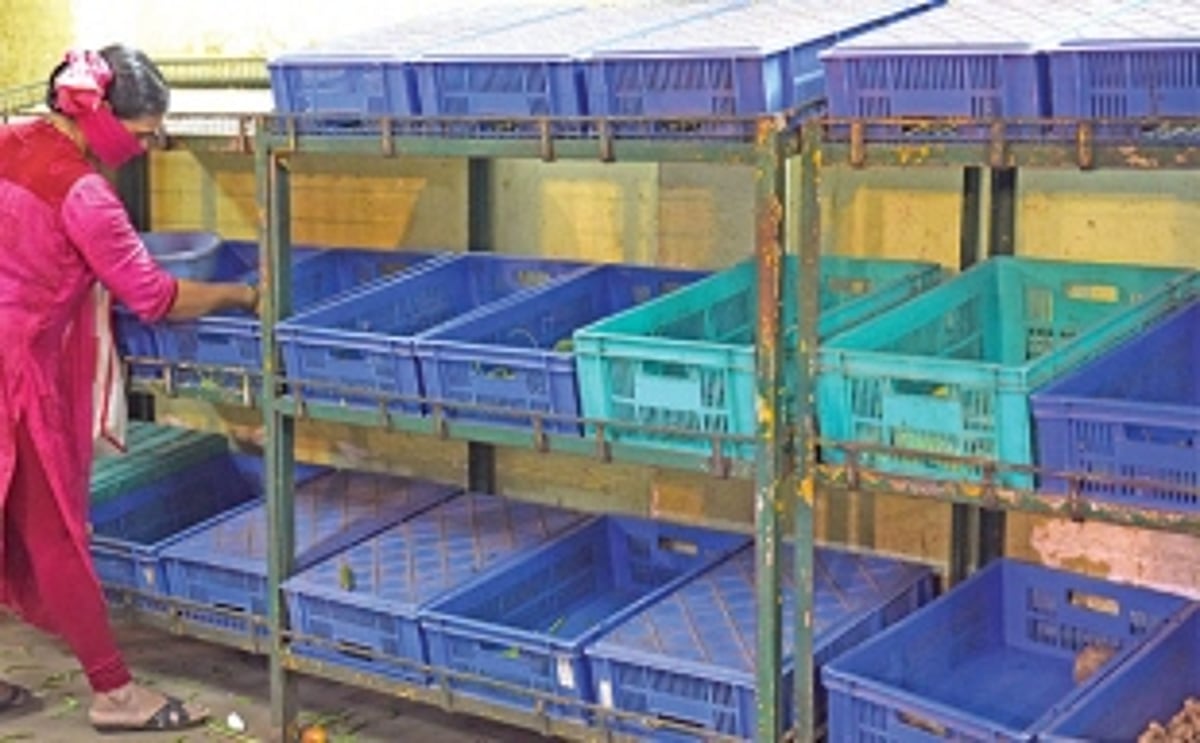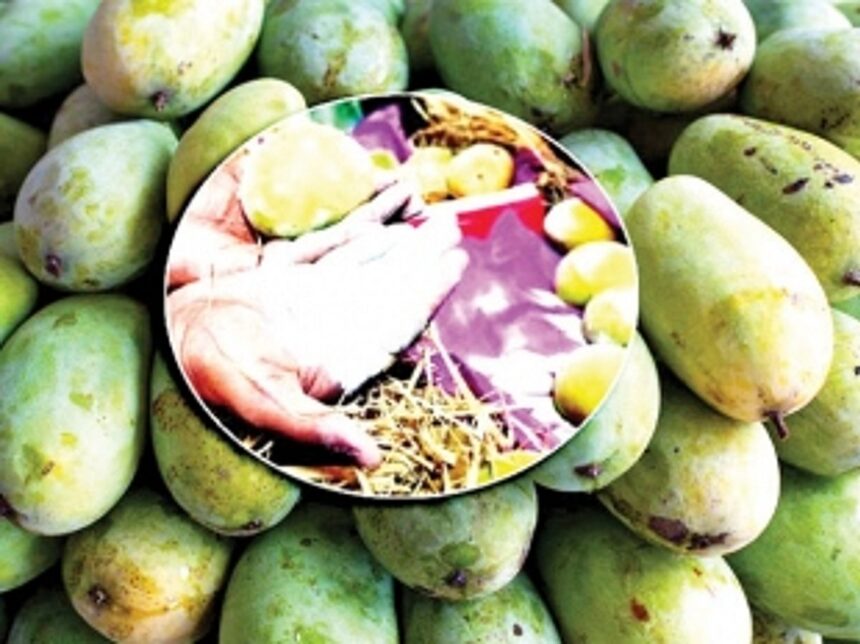
During the raids conducted by the Directorate of Food and Drugs Administration (FDA) over the last month, 200 kgs of banana, 220 kgs of chickoos, and 100kgs of other fruits including strawberries were seized and destroyed in various raids held in the major cities. The government is also considering putting in place a dedicated system pertaining to investigating fruits and vegetables
The government has also warned, all ‘high-value’ restaurants operating along the coastal belt in the State to obtain the FDA licence within a month or face shutdown and also to ensure that the fruits and vegetables procured by them are of the best quality.
As per the FSSAI act 2006, FDA has filed complaints against the defaulters before the JMFC and penal action has also been initiated.
”It is necessary for us to take such pro-active steps. Lakhs of rupees of bananas and apples have been destroyed during the recent action, as they were found to have been ripened using calcium carbide and other chemicals, which is dangerous for the health,” Minister for Health Vishwajit Rane told HERALD.
The Minister added that adding such chemicals is hazardous and causes cancer, which is on the rise in the State. “It is our duty to ensure safe and quality food is consumed by the people,” he added.
Rane further stated that FDA has been a given free hand to act in accordance with the law for the safety and good health of the people.
Locals call for thorough checking
One of the raids conducted by the FDA, which the Health Minister recently shared on social media, was in Margao. This raised alarm bells as Margao is considered to be a hub, from where fruits are distributed across South Goa and with summer approaching, the demand for seasonal fruits like Mangoes increases. Questions were raised about the lack of prior checks on the source and quality of fruits sold in Margao.
The use of the banned calcium carbide in these artificially ripened fruits also was a cause of worry for locals, given the major health problems it poses.
Locals like Mandar Alve from Margao and Priyesh Madkaikar from Sanguem called on the FDA and authorities to continue their action and for it to be throughout the year and not just through sporadic raids. They have also called on better checks from the source of such fruits to wholesale markets to the retail stores.
‘Public vigil can help too’
However, there are other locals who believe that the authorities are not taking the issue seriously and that it is the locals themselves who have kept an eye. For instance, locals from Canacona, recall how locals had caught vendors for adulteration of fruits and had taken the matter in their own hands as the FDA’s approach was found to be wanting.
“Canacona falls to the extreme south of Goa and some good 60km from FDA office in Bambolim, we have hardly seen FDA officials coming on their own, to check for adulteration of food items. They come only after we intercept fruits with chemicals, we need a FDA sub-office in Canacona otherwise the situation is going to be worse in coming days added Anil Bhagat another concerned local.
Some blame was also put on migrants for using such tactics as locals claimed that the Goan vendors still use the age-old methods for storing and selling fruits.
Locals have also questioned why authorities have not banned the sale of calcium carbide and other substances given that the same is easily available at hardware stores and other outlets.
“They can implement a similar law which bans sale of acid over the counter,” said Canacona-based activist Diogo Da’Silva, who added that records should be maintained of both the seller and the buyer along with information about what it will be used for.
“It is not only that Mangoes, Bananas, Papayas, chickoos,, dates and tomatoes are artificially ripened which is hazardous to human health but the use of inedible wax spray used to coat apples, lady fingers dipping in synthetic green colour and addition of red oxide to chilli powder is equally harmful” Da’Silva added.
Experts say that calcium carbide is a dangerous and corrosive chemical and its consumption in minute quantity cause several harmful effects to human health.
It has cancer causing properties and contains traces of arsenic and phosphorous hydride into it and consumption of fruits ripened with calcium carbide causes stomach upset because the alkaline substance is an irritant that erodes the mucosal tissues in the stomach and disrupts intestinal functions, experts say.
Some yes, but not all are not doing it: Vendors
One of the biggest grouses vendors have about the action against artificial ripening of fruits and vegetables is that a label is put on them and their credibility is eroded in the market, just because some vendors are committing the criminal acts.
Vendors felt that it was wrong to generalise and blame all as many of them are morally conscious and think of the customers first. Vendors from Vasco for example, spoke about how they only take a small stock of fruits and vegetables to the market, due to the lack of space and also because they do not want to cheat the customer. “We buy and sell fruits that have been ripened the traditional way as we do not want to risk our business by going for artificial methods,” said a vendor.
Some of the vendors from Vasco added that they
Buy their fruits from Verna and Kolhapur, wherein they chose to store their fruits in the deep freeze by keeping them in minus temperature.
“We get all the fruits from our supplier agent. We have around five to six supplier agents who provide us with fresh fruits,” the vendor added.
Better to be safe than sorry
Around fifteen banana vendors operate in mapusa sub-yard out of which one shop of one vendor was sealed and his banana stock was destroyed after FDA found him possessing liquid suspecting to be Ethephon which he may have used for ripening of banana.
However it is learnt that Banana vendors in Mapusa sub yard use the traditional method of ripening of bananas wherein they stock the bananas in a room and further light agarbattis or dry cow dung and cloths the room. This process creates heat in the room and help the bananas ripen. This process takes almost eight to ten hours to get the bananas fully ripened.
Sources blamed neighbouring states use the same Ethephon liquid for ripening of bananas wherein they dip the bananas into the wate,r which also contains the chemical liquid which helps in ripening the bananas within short time where else the traditional method of ripening of banana takes more time and hard work.
“Now since the market is down, the sale of Bananas has come down from 25 to 30 tonnes per day to 15 tonnes per day. We were looking forward to have a cold storage chamber facility here, which wills costs more than 50 lakhs rupees. We had talks with different companies however when they produced their brochures, we came to know that these companies use the same Ethephon chemical spray in the chamber for ripening of bananas. So we kept those purchase plans on hold. We have also asked the agriculture department to have a training program or any such program wherein they can explain the vendors the best method of ripening of bananas,” Amey Natekar, Member of the Goa State Agricultural Marketing Board.
Bigger problem in markets of remote towns
Like in Canacona, locals from Cuncolim also feel that the problem of artificial ripening of fruits is not addressed fully and they worry that such type of fruits are still available in the market. Locals pointed to the situation of Sunday markets and felt that there doesn’t appear to be any mechanism to check the quality of fruits being sold. These are days when vendors from Belgaum visit the markets and locals have suggested that there should be checks done at the border itself or to create facilities to check the fruits that are stored at the various storage rooms. Locals also complained that the FDA has not visited the Cuncolim market adequately to create a deterrent and thus the errant vendors continue their trade unabated. Locals have further suggested the local authorities like the Cuncolim Municipal Council should initiate such movements against the artificial ripening of fruits and vegetables. They added that the authorities should at least to create awareness in the minds of the customers.
(With inputs from Shweta Kamat, Pratik Parab, Abel Barretto, Dhiraj Harmalkar, Vijay Dessai and Asmita Polji)