As Hungary closed is borders with Croatia to refugees in the backdrop of meeting refugees with water cannons, the world’s largest gathering of musicians and those connected with the music industry began in Budapest, on the banks of the Danube. The irony could not have been more powerful. The hostile rhetoric towards refugees from Hungarian Prime Minister, Viktor Orban was drowned by this international fair that brings together professionals from the world of folk, roots, ethnic and traditional music. As the government of Hungary completed the installation of the second of two razor-wire fences along its borders, the World Music Expo (WOMEX) held aloft the UNESCO dogma of Global Alliance for Cultural Diversity.
And musicians and those who make music their life and business responded in a manner that international diplomacy couldn’t. WOMEX director, Alexander Walter, stated:
“We clearly stand up against all forms of xenophobia, but this is only the least we can do. More importantly, it is our aim to set positive examples and stimulate mutual cross-cultural understanding through concrete, targeted and grassroots action. WOMEX impacts the city and region where the event takes place, as well as a global community through our international conferences and public concerts to be held in Budapest, and reported on all over the world. This year’s artistes, who come from 50 countries, demonstrate how essential diversity is: it is a building block of harmony. We feel signals like this are needed more than ever before.”
And this is serious conversation. Acknowledged as the most international hub of all professional music meetings worldwide in general, and as the most important annual gathering of the global music community in particular, the 20th edition of WOMEX brought 2,400 delegates and more than 320 artists from 90 countries altogether, to its 2014 host city, Santiago de Compostela.
“Amidst the turbulence and concerns of the past weeks, unprecedented numbers of Hungarian and international volunteers have showed their solidarity to refugees. Some of these efforts are triggered by musicians of various genres who came together to mobilise their fans, organised aid chains and were personally present in the crisis zones. We have witnessed several moments that show how music can change mind-sets, build trust and organise actual help. One of those moments has been the pop-up concert of Bea Palya”, said Balázs Weyer, of local organisers, Hangvetö.
Bea Palya was on stage at the WOMEX 15 opening, and played for and with refugees in a transit zone, within weeks of having delivered her baby.
Simon Broughton, co-editor of the Rough Guide to World Music and editor in chief of Songlines Magazine in his phenomenal TEDx talk on the Iranian island of Kish attempted to answer a fundamental question, “Can music save the world?”
He said, “It’s a provocative and surprising question, but one worth asking. Over the years I’ve been involved with world music, I’ve seen the way it can break down borders and bring people together. In my TEDx talk on the Iranian island of Kish, I talk about musicians I’ve met in Romania, India, Morocco and, of course, Iran.”
He spoke specifically of the musicians of rural Bengal in the Gorbhanga village who elevated themselves from poverty and changed their lives through music; thanks to the efforts of the UN recognized NGO, banglanatak.com.
And then he gave the final answer to the big question; can music change the world? He said, “We have been hearing John Lenon’s ‘give peace a chance’, since 1969. We may not have ended wars but if music can’t save the world, it can change it. Dialogues and discoveries can happen where we can change our humanity.”
And he ended with the most poignant thought of them all, “Music helps you to see the world; make new friendships. So go out and listen, and the more unusual it is the better the experience. You never know what walls it might break.”
Hopefully music will break those fenced between the borders of Hungary and Croatia and give the fleeing homeless the refuge of humanity.
But that’s not the only place in the world where music was bringing about change. For instance, Kosovo has emerged out of its war days and music is one of the instruments of healing, so much so that musicians and bands from Serbia (once its bitter enemy) are invited to perform in Kosovo, a land dominated by Albanians. In fact the European Union is funding a music project across the continent entitled ‘Culture for All’, headquartered in Kosovo. Rrseze Kryeziu Breznica, a musicologist based in Prishtina, Kosovo, told Herald during a long conversation by the river in Budapest, “We are now a multi-ethnic country and music plays a huge role in our lives. Even during the times of war, music was our best friend.” She went on to explain that there were indeed movements to stifle the music, expel musicians when the Serbs invaded, and led to the forcible stoppage of musical expression. But when the war ended in 1999, music was ‘rebuilt’ starting all over again through folk and jazz.
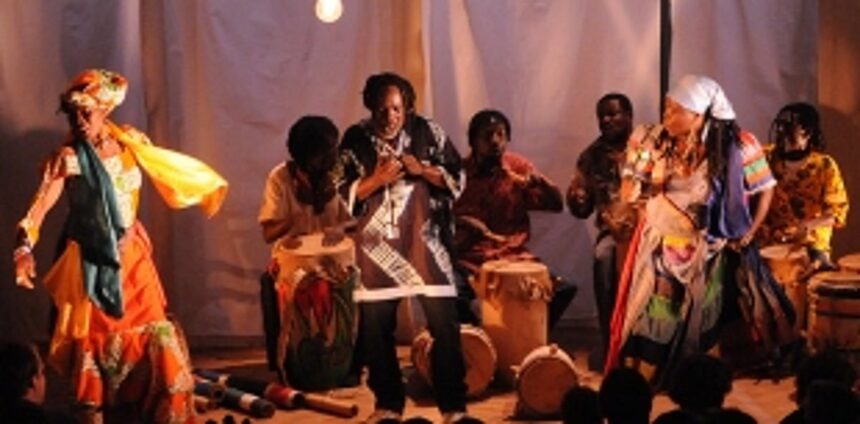
From the remotest corners of the world has emerged music, a natural companion of humanity. From the tiny village of Petite Riviere Bayonnais in Haiti comes a band called Chouk Bwa Libete, which performs voodoo music; delivering voodoo as a means of communication. They came to Budapest from the Amsterdam Roots festival where their music was described as a “natural drug”. They mainly use percussion; and guess where they get their drums and instruments- they make them in their village under the guidance of the village drum maker Charles Sime. They and their music are now marketed by the famous French label, Budamusique.
And to round up this stack (which is only a glimpse of how music is changing the world and fighting for freedoms) is singer and songwriter Tukkiman from Dakar (Senegal). He left his home in Dakar for Paris in 2006. He says, “Intelligent music kills emotion. Music needs to be raw and words have to place themselves in music. Tukkiman’s music is warm, generous and most importantly without borders.
“Tukki”, is also the name of his best album, meaning travel in his native language, Wolof; and Tukkiman’s most famous words underline so evocatively, how music is so beyond the big bands, promotions, marketing budgets and media wars that festivals with money have become. It’s about travelling to break barriers.
He says, “Everywhere can be home. Go live and become.”