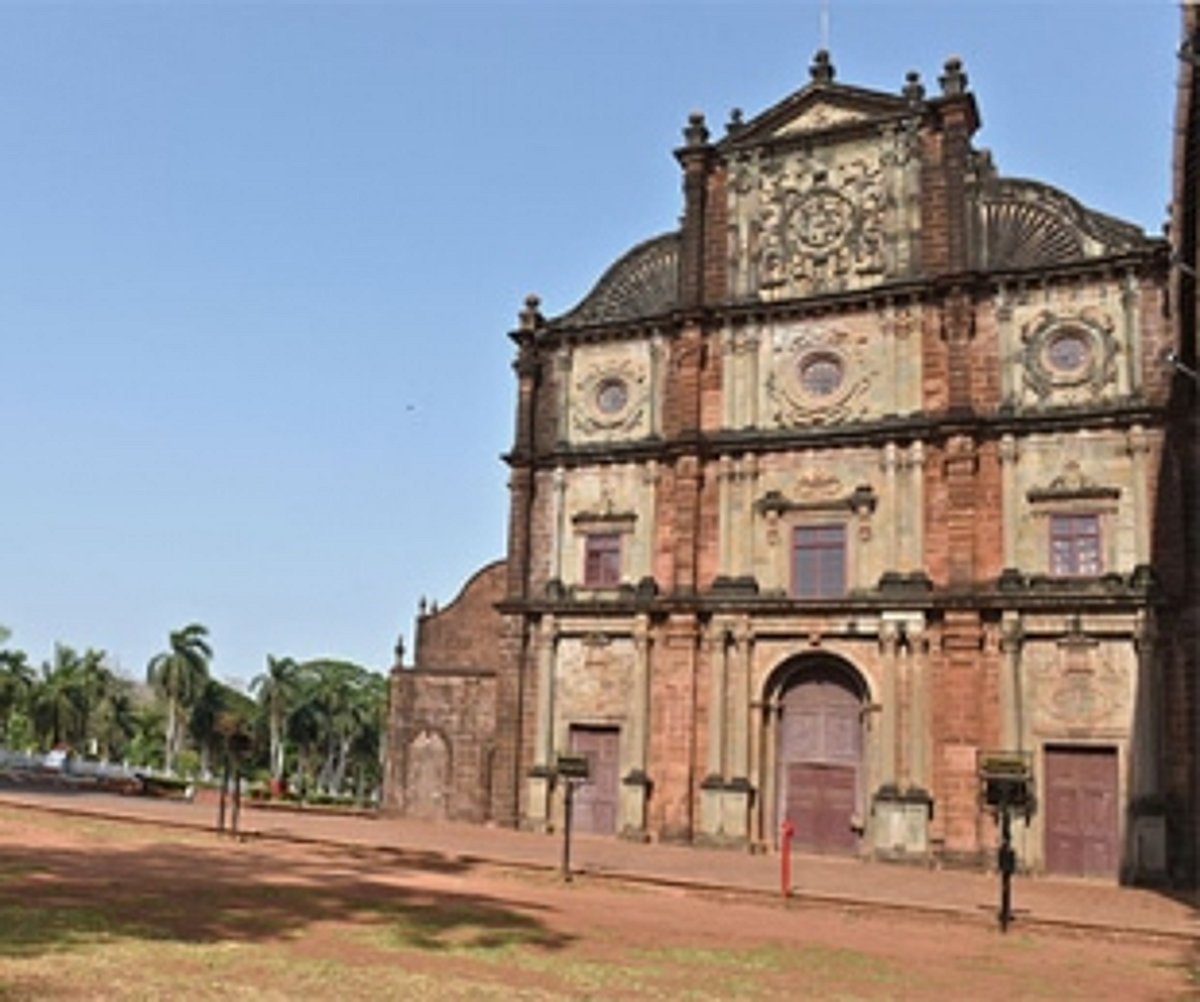
The recent disaster at the Basilica of Bom Jesus shows that even the
most important built heritage of Goa is not safe. The roof repairs that needed
to be carried out at the Basilica were about as routine as the roofing works
done on thousands of traditional Goan houses annually. The inability of the
Archaeological Survey of India (ASI) to execute a job this simple indicates a
problem that is not only organisational but, perhaps, ideological. However,
this was not the same ASI of the 1980s. Back then, it was the ASI that helped
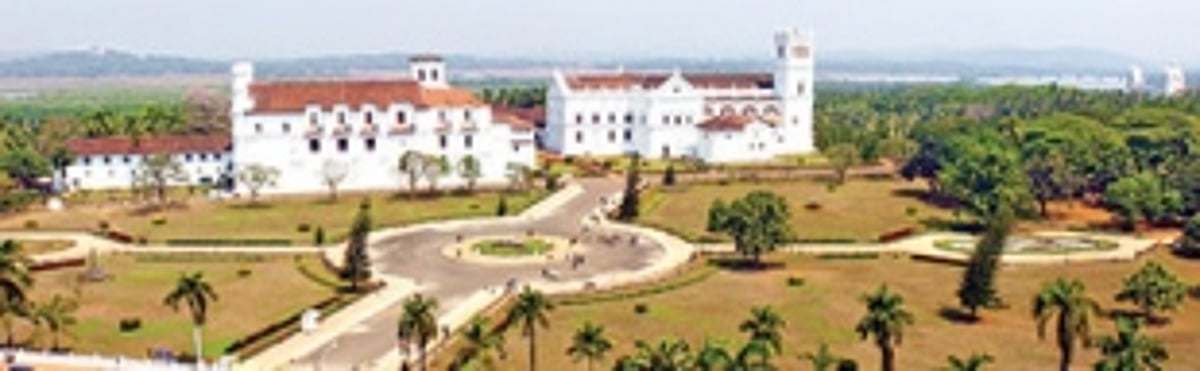
in getting the monuments of Old Goa listed as UNESCO World Heritage Sites
(1986). So how has the same institution – the supposed protectors of this
important heritage – failed so terribly in taking care of the repair of a
simple roof?
Being a central government agency, the ASI has repeatedly been
unwilling to engage substantially with local stakeholders. A case in point
being the offer to the Church by the Italian government to undertake the
restoration of the St Francis Xavier’s casket. This proposal was rejected by
ASI’s central office, maintains the Rector, even after the Church had made all
the arrangements for the restoration of the casket in Florence. The casket has
fine layers of fabric and wood interwoven with each other, and specialists are
needed to undertake its restoration in a special scientifically controlled
setting of a conservation laboratory. Instead, the ASI promised to restore the
casket in India where there exists no such conservation laboratory with them to
take on work of this nature. Once again, despite ASI’s assurance the work on this important Goan artefact has
not been undertaken, allowing the casket to deteriorate further.
To better understand ASI’s mistrust of local stakeholders one has to
look at the origins of this institution. Some of the first laws to protect architectural
heritage in British India were enacted in the early 1800s. As the conservation
movement grew in popularity, it led to the formation of the Archaeological
Survey of India in 1861. Through the ASI, the British colonial administration
began taking over the guardianship of architecturally significant monuments
across the country. The protection of these religious (Buddhist stupas),
cultural (palaces) and military monuments (forts) were seen as the responsibility of the
colonial administration. Implicit in the British colonial state’s takeover of
cultural heritage assets resulted in the sidelining of local stakeholders;
because the colonialists being colonialists were of the belief that these
monuments were somehow threatened by the incompetence, practices and decadence
of the natives. However, this undemocratic legacy is not ideally suited in
dealing with the rigours of conserving living heritage, especially when
monuments continue to be in use. The centralisation of the command in Delhi, a
legacy of a top-down approach from the British colonial period, continues to
haunt conservation work of living monuments, including those in Goa.
This has to change and Goa needs to reform the process of heritage
management,opening doors for greater role for the local community to
participate in maintaining Goa’s built legacies. The local community does have
this know how as it was people from the region who built these monuments in the
first place. Additionally, Goa has some of the best conservation contractors in
the country, like Agnelo Fernandes (Bico), but they are not used by the ASI.
Rather, as mentioned earlier, the ASI relies on issuing national level tenders
for jobs which can very easily be sourced locally. Reforms in heritage
management in Goa would mean empanelling of specialists such as artisans,
carpenters, gilders, polishers, tile-layers, silver smiths, metal workers,
masons, among others. In addition, these locally empanelled artisans and crafts
persons should, from time to time, be teamed up with national and international
specialists, to allow improvement of the skills and knowledge of heritage
conservation. Lastly, in the times after the COVID-19 crisis, heritage
conservation could become an important industry to generate employment for the
local community. It would also be a good idea to create conservation
laboratories in Goa, which could work on heritage related to this region.
Further, artisan-craft person- based training centres could be augmented with
investing in higher level educational courses, such as a Masters in
Architectural Conservation and Masters in Art Conservation, at the Goa College
of Architecture and the Goa College of Art respectively.
From the 1990s, the focus of tourism in Goa has shifted to the
promotion of beach tourism while failing to invest in maintaining and
protecting Goan built heritage. It is a false notion that it is solely beaches
that attracts tourists to Goa. The speciality of Goa is its cultural heritage,
as epitomised by its unique architecture. It is through a continuous investment
in the built heritage of the State that will ensure that Goa remains special, a
location for cultural tourism in the future.
Therefore, the cultural and environmental heritage of Goa is too
important to be left solely in the hands of Central and State institutions. It
requires an engaged and informed citizenry to take ownership of it. In order to conserve our built environment
for the future it is important for us as citizens to begin the process of
dialoguing with the other important established democratic societies of the
world and familiarising ourselves with
the laws, procedures and institutional frameworks they have successfully
implemented. An informed citizenry is in a better position to begin demanding these best practices for
our communities. Goa needs to put its historic built environments at the heart
of its planning system. Democratic reforms mean decentralisation of powers to
local planning authorities (LPAs) and making local area plans accessible to the
public. This encourages community participation and the overall improvement of
the built heritage through the promotionof community visits, opening up of
volunteering opportunities at heritage sites, and conducting the studies of
monuments among other activities. Together, these initiatives begin to foster a
public culture of caring for the built heritage in one’s free time, which in
turn helps build capacity on the ground.
There are clear signs that the State government has begun to understand
the need for community participation in protecting heritage. This can be seen
in the flexibility shown by the Department of Archives and Archaeology in
employing local specialists and allowing for local stakeholder in heritage
conservation. Take for example the restoration undertaken in the Church of the
Weeping Cross in Old Goa as well as theconservation of the Reis Magos Fort.
These projects have won a lot of praise for the policies adopted by the local
government department.
The public outrage, across the political spectrum in Goa on the
mismanagement of the Basilica of Bom Jesus, saved it from destruction. Moving
forward, more active participation of local communities is needed to protect
and maintain Goa’s monuments and traditional buildings, as these are not just
‘national’ secular heritage for tourists, but rather they continue to be our
lived heritage.
(Goa-based architect Fernando Velho completed his
postgraduate degree, Master in Architecture, from University of Michigan.
Vishvesh Kandolkar is an Associate Professor at the Goa College of
Architecture.)