The sirens were sounding. It was the was morning in Barnala, Punjab on December 3, 1971 when the first two fighter planes of the Pakistani army hit the Radar of the Indian Air Force and damaged its working. The planes came from a low level and hence the radar could not spot them. Radar had become inoperational since the planes had hit its antenna. “It would have taken a long time to fetch the parts back if they were sent to Delhi for repairs”, says Shreepad Prabhudesai, the Chief Technical Officer of the strategically important Radar who took a decision to bestow his faith in the Punjabi people whom he always considered to be good mechanics. They gave their 100 per cent and the Radar was made functional by evening. It was a great moment in the camp. If not for the decision taken by officer, history could have been written differently today. The radar worked continuously till December 17 that saw the victory of Indian army in the Pakistan war.
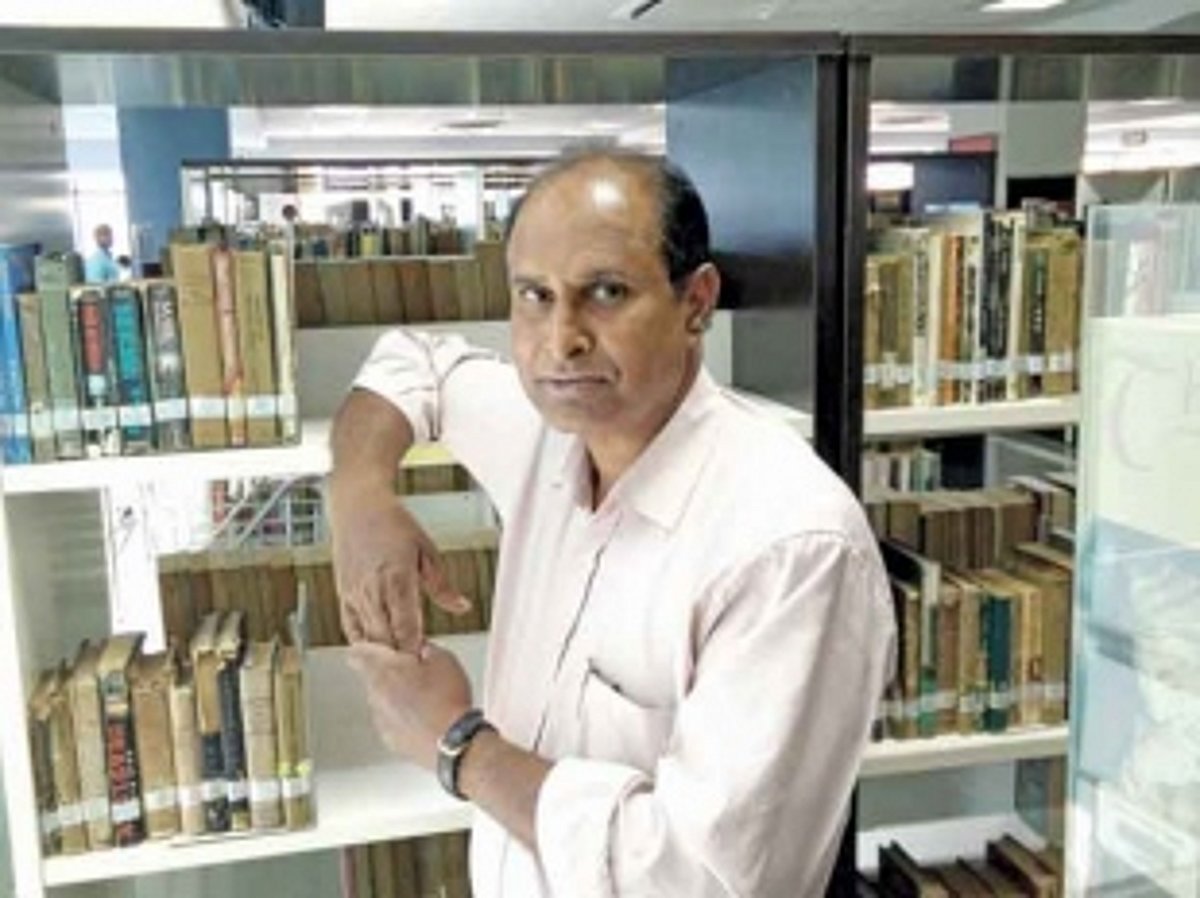
Shreepad Prabhudesai was born in the village of Loliem, Canacona. He was always a brilliant student. After completing his primary education in Marathi and then continuing in Portuguese medium, he later completed SSC from Hindu High school, Karwar. He then went on to complete his education in science from Fergusson College, Pune and passed B.E in Electronics and telecommunication in first class from College of Engineering, Pune.
“In 1951 I received the wrangler Paranjape Scholarship for highest marks in mathematics but could not avail the same because I could not fulfill the condition of continuing studies in pure mathematics”, he says. Prabhudesai later joined the Indian Air force getting a direct commission on the basis of his engineering degree in 1955. “My first posting was at Jamnagar on 12 SU Radar Station”, he informs.
Prabhudesai’s work was always appreciated by his superiors and he was sent for various trainings and advanced studies abroad. In 1973, immediately after the Pakistan war, he was sent on three-dimensional radar with Thomson CSF in Paris, France. “I knew French very well and was offered a job of translating French books. They offered to pay me a high incentive but I had gone there to serve my country, not for money, says a patriot Prabhudesai with pride.
And while Prabhudesai’s abilities continued to benefit the army, they were also passed down to the next batch. “I delivered instructional duties, training electronic engineers in Air Force Technical College for two tenures of three years each. The technology of electronic warfare is very well developed by the Indian Navy, he says.
Earlier, he was sent for Advanced studies Radar at the Marconi college in the UK in 1958 for five months and on tropo-scatter communication at the United States Air Force Training Institute for ten months in 1963-64. He took part in the Radome (contraction of radar and dome) installation on radar during Pakistan war. The installation is a structural, weatherproof enclosure that protects a microwave (e.g. radar) antenna.
Prabhudesai’s wife Susheela has always been his backbone throughout the journey. “When he got order to be posted at Barnala during the Pakistan war, I was very firm that I would join him along with my two sons. He had to report within 24 hours and it was a long journey,” she recalls. They set off from Lucknow in the morning and had to reach the next day.
“Everyone was sure that war will break out, but I wanted to accompany him,” Susheela recalls while narrating how they had to spend sleepless nights in the house once the war started.
“Our house was new and trenches were yet to be built. We hardly got food and had to eat whatever was available. Once the trenches were built we were shifted there. Though it was cold, we fell asleep for hours before being shifted back to the house,” she recalls.
“Life in the air force was often disconnected from the outer world. The letters that came to us were scrutinised. And though my husband often told me what happened at his job, many fauji wives were unaware of the ground reality and often expressed their concerns with me,” she says.
In 1978, Wing commander Prabhudesai took voluntary retirement for personal reasons and came back to Goa. With an aim to continue in the electronic industry, he started manufacture of printed circuit boards. “It could not keep pace with the fast development of the electronic industry and had to be modified in a mechanical industry, he recalls. An ardent love of Sanskrit language, Prabudesai also played an important role in disseminating the language in Goa after his return to his homeland.