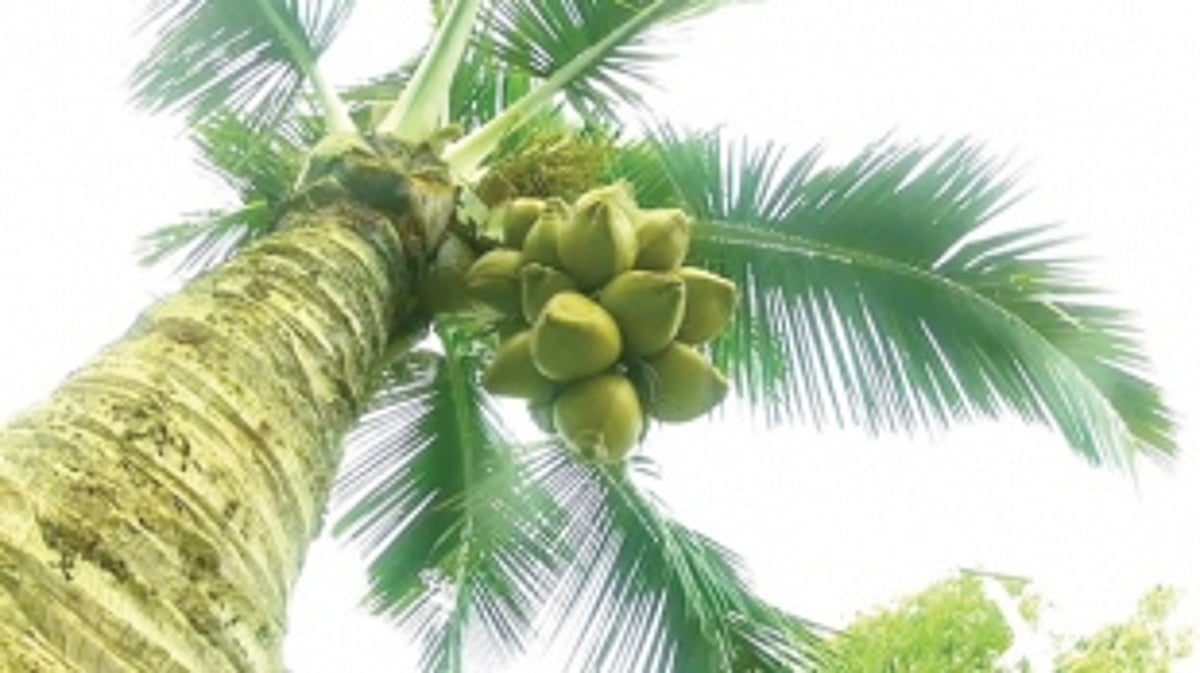
Coconut plantation owners are unanimous in the need for a radical change in maintenance of the tree by the owners and promotion of the coconut by the government failing which they fear they may have to go in for distress sale of the land.
Dinar Barros who has a plantation of around 1,500 coconut trees and gets an average yield of around 125 nuts per annum from each tree was of the opinion that the government has to act swiftly if the Goan coconut has to be protected and promoted.
On the other hand, Pravas Naik of Nanu Plantations who has around 5000 coconut trees producing on an average 200 nuts per tree, said the government has got sufficient schemes and incentives for the farmer but farmers have to change the manner in which they treat a coconut tree and start actually nursing the it (the trees)
Dinar stressed the need to check the import of coconuts from across the State which are affecting the local farmers. “The polished and smooth coconuts that we see on the roadside are because they are sprayed with all kinds of pesticides and insecticides,” he said pointing out that Goan nuts are shriveled because of coconut mite infection which actually came to the State through these imported coconuts.
Pravas, on the other hand, said import of nuts cannot be stopped and instead said farmers have to change their attitude to the tree. “The coconut tree has to be looked after like a child and not like our ancestors who would just plant it and wait for it to yield,” he said.
He suggested intercropping in coconut plantations with banana, pineapple, papaya, pepper, nutmeg, cocoa, cloves, cinnamon and cardamoms as he has done and which intercrop gives good revenue. Besides, he suggested adding value to the coconut by extracting oil or making vinegar, etc.
“We are preparing Kalparasa which is actually neera and from it then produce either coconut sugar or jaggery or vinegar which we sell through our own shop at Margao. He has also started preparing virgin coconut oil. Incidentally, while virgin coconut oil is sold at Rs 600 a litre, coconut oil is available for only Rs 180 per litre.
While Dinar wanted to get rid of the middle man who purchases the coconuts from the farmers and then sells the same in the market thereby making huge profits, Pravas was of the opinion that farmers should sell directly to the purchaser as they have been doing for the last so many years. “Today, people come to my farms to purchase the coconuts,” he said adding that they the take trouble to clean the coconut.
Both Dinar and Pravas agreed that farmers should be given the freedom to cut a coconut tree if it is not yielding and both stressed that this should be hassle free. “If the coconut tree is re-classified as forest tree it will be a trouble as we shall have to make number of trips to get the forest officer to inspect the land,” said Dinar.
However, Pravas was of the opinion that the coconut tree will not be re-classified as a forest tree as by nature it is a tree that is planted and not one that grows in the forest. “Who knows this better than the minister who is an agriculture graduate,” he said adding that unfortunately the coconut tree has been politicized.
Dinar pointed out that he does not get labourers to work on the plantation and added that even to dig pits to plant new trees he has to hire a shovel by paying Rs 800 per hour while he has to pay the pluckers at the rate of Rs 1500 per day, although the pluckers trained by the Horticulture Corporation charge only Rs 600 per day.
However, Pravas has his own staff working on a daily basis and they only pluck the coconut. “In fact, I have labourers who climb the coconut tree twice a day to extract the Kaparas,” he said and stressed the need for plantation owners to be passionate about the trees instead of treating them merely as a hobby.