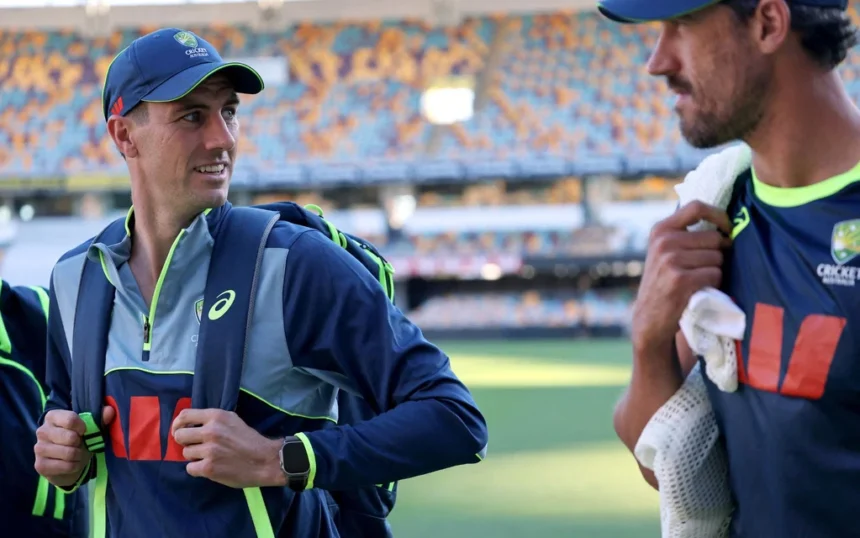
Cricket Australia is facing an uncomfortable situation after several senior players reportedly showed little urgency in signing their central contracts for the 2026–27 season. While delayed signings are not unusual, the current response indicates a much deeper issue developing in world cricket — the growing financial gap between international cricket and franchise leagues.
The issue is especially significant for white-ball players. Australia’s upcoming cycle includes 17 Tests but only nine ODIs and five T20Is, meaning the contract structure heavily rewards red-ball cricket. As a result, many limited-overs specialists now feel they can earn far more by prioritising leagues like The Hundred, ILT20 and SA20.

Earlier this year, Australia captain Pat Cummins hinted at the growing conflict between national commitments and franchise cricket while discussing Australia’s Bangladesh Tests clashing with The Hundred window. Reports suggest players could lose nearly A$675,000 by missing that tournament, making franchise cricket increasingly difficult to ignore.
| Category | Reported Amount |
|---|---|
| Total CA contract pool | A$21.9 million |
| Lowest base CA contract | A$360,645 |
| Test match fee | A$19,000 |
| ODI match fee | A$8,000 |
| T20I match fee | A$5,000 |
| Pat Cummins annual contract offer | Around A$4 million |
| Potential loss from missing The Hundred | Up to A$675,000 |
White-ball specialists increasingly prefer freelance model
Several Australian cricketers now believe freelance careers offer greater financial freedom and flexibility than long-term national contracts. Players such as Marcus Stoinis and Tim David have already avoided committing fully to central deals in recent years. Instead, they participate selectively in international cricket while maximising earnings through franchise leagues across the world.
Unlike the Board of Control for Cricket in India, which prevents active Indian players from participating in overseas leagues, other cricket boards struggle to financially compete with private franchise tournaments. Even CA’s decision to reduce contracted players from 24 to 21 in order to increase salary shares has reportedly failed to fully satisfy senior players.
BBL salary disparity adding to frustration
The growing frustration is also linked to Australia’s own Big Bash League. For years, Australian cricketers have watched overseas recruits arrive as platinum draft signings on salaries worth around A$420,000, while many established local stars continue earning between A$200,000 and A$300,000.
| League/Tournament | Approx Salary |
|---|---|
| Overseas BBL platinum players | A$420,000 |
| Top Australian BBL stars | A$200,000–300,000 |
| ILT20 offers to Australians | Up to A$500,000 |
| Dewald Brevis/Aiden Markram SA20 deals | Around A$1.3 million |
Players were hopeful that Cricket Australia’s proposed BBL privatisation plan would eventually raise salaries closer to global T20 standards. However, after resistance from state associations stalled the proposal, many players reportedly began exploring overseas opportunities more seriously.
The rise of SA20 and ILT20 has only intensified concerns. Australian players were reportedly shocked after seeing Dewald Brevis and Aiden Markram secure deals worth nearly A$1.3 million in SA20. With franchise leagues continuing to grow rapidly, Cricket Australia now faces a major challenge in balancing international commitments with the financial expectations of modern cricketers.