Ajit John
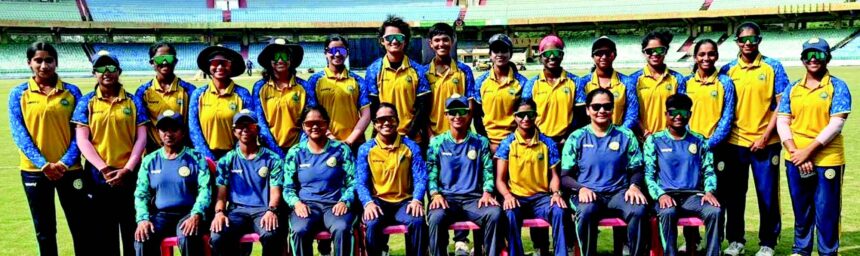
PANJIM: When India lifted the ODI Women’s World Cup trophy, celebration swept the nation. In Goa, however, the victory did more than spark parties – it opened doors and widened horizons for a new generation of girl cricketers.
The image of Harmanpreet Kaur holding on to the match-winning catch at midnight has become emblematic for many young players across the State. From school grounds to cricket academies, coaches say the win has injected fresh belief and urgency into female participation in the sport.
“This victory is a huge source of motivation,” said Goa Cricket Association (GCA) President Mahesh Dessai. “Young Indian players should learn from it. I especially want to congratulate Jemimah Rodrigues for her sensational knock and wish the entire team the best.”
Dessai said, “The triumph brings higher expectations for budding cricketers – and new opportunities. Now, more girls are imagining a pathway to higher honours.

Numbers on the rise
GCA Director of Coaching Prakash Mayekar described the moment as “next level.” Before the World Cup, the association had around 50-60 girls regularly playing; since the win that figure has climbed by nearly 80 per cent.
“Semi-final and final performances were wonderful,” Mayekar said, pointing to a crucial catch in the final as a turning point that inspired many. “It wasn’t just a victory on television – it was a call to action.”
Across the State, young players speak of the match with reverence.
U-19 cricketer Sejal Satardekar named Harmanpreet as her favourite player and cites the final catch as her favourite moment. “Especially that midnight moment after Harmanpreet’s final catch,” she said.
Sejal, a medium-pace bowler and batter who began playing from the Class V, encapsulates the new attitude: “Never think cricket is only for boys. With family support and self-motivation, you too can play for India.”
Stories of conversion
and commitment
Not every youngster has a long history with cricket. Sanvi Naik joined the U-19 squad just two years ago after switching from gymnastics following sports injuries. “I didn’t even know how to hold a bat at first,” she recalled. “But I never looked back.”
Vinavi Gurav, captain of a local women’s side, said facilities are improving but remain mixed across the State. “Indoor facilities are getting better. In Margao, there are three or four private centres. More players are coming through the system and parents are pushing their children earlier,” she said, noting a growing intensity in local competitions and camps.
Local and school tournaments are also feeding talent into the system. Coaches report that last year a few local tournament organisers entered U-19 teams in broader competitions, giving young players a valuable exposure.
Coaching pathway up
The GCA has moved quickly to bolster its coaching ranks. Dessai said former India player Neha Tanwar has been appointed to work with younger squads, while Pritam Gande – a seasoned domestic campaigner – looks after the U-16s. The association has also brought in experienced trainers to oversee fitness and tactical development.
“These appointments are already producing results,” Dessai said. “In the Ranji Trophy, our teams have been performing well. We beat Chandigarh by an innings and are competitive against Punjab.” He added that with the right guidance, Goan girls could soon follow in the footsteps of players like Shikha Pandey.
Match experience is being prioritised across age groups. The U-23 squad recently trained in Palay, Kerala, and camps and tournaments are scheduled through the season. “Daily practice is important,” Mayekar said. “Full credit to parents, who help girls balance their studies and sport.”
Hurdles remain but so does hunger
Coaches are quick to point out practical challenges. Players miss sessions during exams, travel and cost can limit access to top facilities. Yet across the State, the sense is that the World Cup victory has created momentum that will be hard to reverse.
“After coming so close in previous finals, the team wanted this badly. Their hard work paid off,” one coach said, noting that the national side’s dedication is now a roadmap for Goa’s girls.
Sejal’s ambition is simple and clear: “I want to wear the India jersey.” For many others, the dream is newly possible and visible.
A clearer path forward
Victories like this tend to ripple outwards. Even young girls who don’t yet understand every technical nuance of cricket now feel they belong in the game. Parents and educators are more supportive, clubs are recruiting and a broader talent pool is forming.
“If they can do it, so can we,” said a parent watching a late-evening practice session at a ground that is becoming steadily busier with girls in whites and training kits.
Under floodlights – or a single halogen lamp – a young batter takes guard, imagining the roar of a crowd and the scoreboard displaying her name. For Goa’s girls, the path is suddenly clearer and the dream, once distant, now looks within reach.