Life in Goa during the Portuguese rule was very different
from what we experience today but except for the hard facts in history books
and the tales told to us by our grandparents, our knowledge of yore is sketchy.
Though literature of that time still exists, the language barrier comes in our
way of enlightenment. To give a glimpse of that life, Dr Paul Melo E Castro
from the University of Leeds, UK, has painstakingly translated those beautiful
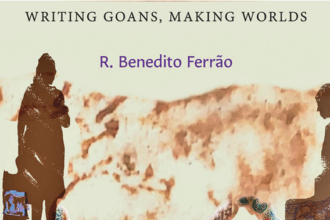
stories into English in the two volumes of ‘Lengthening Shadows’.
The two volumes contain 44 stories by authors Julio
Goncalves, Wenceslau Proenca, Francisco Joao da Costa, Soares Rebelo, Jose da
Silva Ceolho, Ananta Rau Sar Dessai, Vimala Devi, Telo de Mascarenhas, Epitacio
Pais, Laxmanrao Sardessai, Maria Elsa da Rocha, Walfrido Antao, Eduardo de
Sousa and Rosario Rodrigues.

Dr Paul’s father is Portuguese but he was born in Goa and
lived here until 1961. Paul grew up with lots of stories about Goa, mainly
through the eyes of a twelve-year-old. “After I finished my PhD, which looked
at representations of Lisbon under the Salazar dictatorship, I was looking for
a new and different project. I found Vimala Devi and Manuel de Seabra’s ‘A
Literatura Indo-Portuguesa’. It seemed that Goa had produced quite a lot of
writing in Portuguese but this writing had not received the attention it
deserved. I realised that potentially there might be a sizeable amount yet to
be rediscovered. I was keen to find out more about Goa in all its complexity. I
manage to get a Leverhulme postdoctoral fellowship to look into this issue from
Leeds, where I now teach, and began my work in earnest.”
Gradually, Dr Paul came to focus on the short story. He came
into contact with people in Goa over the internet. Frederick Noronha of Goa,
1556 showed interest in Dr Paul’s work after reading an article about Vimala
Devi’s book of short stories – ‘Monção’ – and mentioned that he would be
interested in publishing translations. “Given my interest in literary
translation and the peculiarity of Goa’s decolonisation, which has meant that
relatively few Goans can access the archive in Portuguese, this anthology
seemed a fun project and a useful contribution I could make,” explains Dr Paul.
Dr Paul has been working on the anthology for about 5 years.
He describes it as a complicated process. “Normally, the role of the translator
is to import into her/his own culture something different and enriching. With
these stories, it has often seemed that I was translating between two different
periods of a foreign culture. Certainly, I could never have done these
translations without a lot of help. Participants in various online forums
dedicated to Goa have been extremely helpful. Augusto Pinto has been
particularly generous with his help in interpreting recondite bits of Konkani
vocabulary and providing exacting comments on the translations.”
The main themes for the stories in the two volumes are the
changes in Goa, an often satirical look at attitudes in colonial society, caste
divisions, marriage, bhatkar-mundkar relations, elite decline, subaltern
experience and migration. As the stories range from 1864 to 1987, the overall
trend noticed by Paul is that the stories are more about Goa besides being
adventurous and experimental in language and narrative technique.
How is Goa special to Dr Paul? “There is my family
connection, but I’ve now spent so long trawling through Goan literature that
it’s a big part of my professional life too. A four-year project looking at
Goan literature has just been approved in Brazil, so it looks like I’ll be
connected academically to Goa for some more time,” concludes Dr Paul.