Over the last few weeks, there has been a lot of discussion about a plethora of films, from glowing
reviews about ‘Gully Boy’ in India, to talks about which among the nominated
Best Films for the Oscars are fully deserving of an award. During this time,
another film, which revolves around a Goan way of life, has been gaining
attention in the form of discussions and rave reviews that it is fully
deserving of. The film is already making rounds at some of the top
international film festivals and has even won awards. Social media, of course,
is abuzz with news about this documentary. The film in question is ‘Saxtticho
Koddo – the Granary of Salcete’.
“I had the privilege of being invited for the first screening of
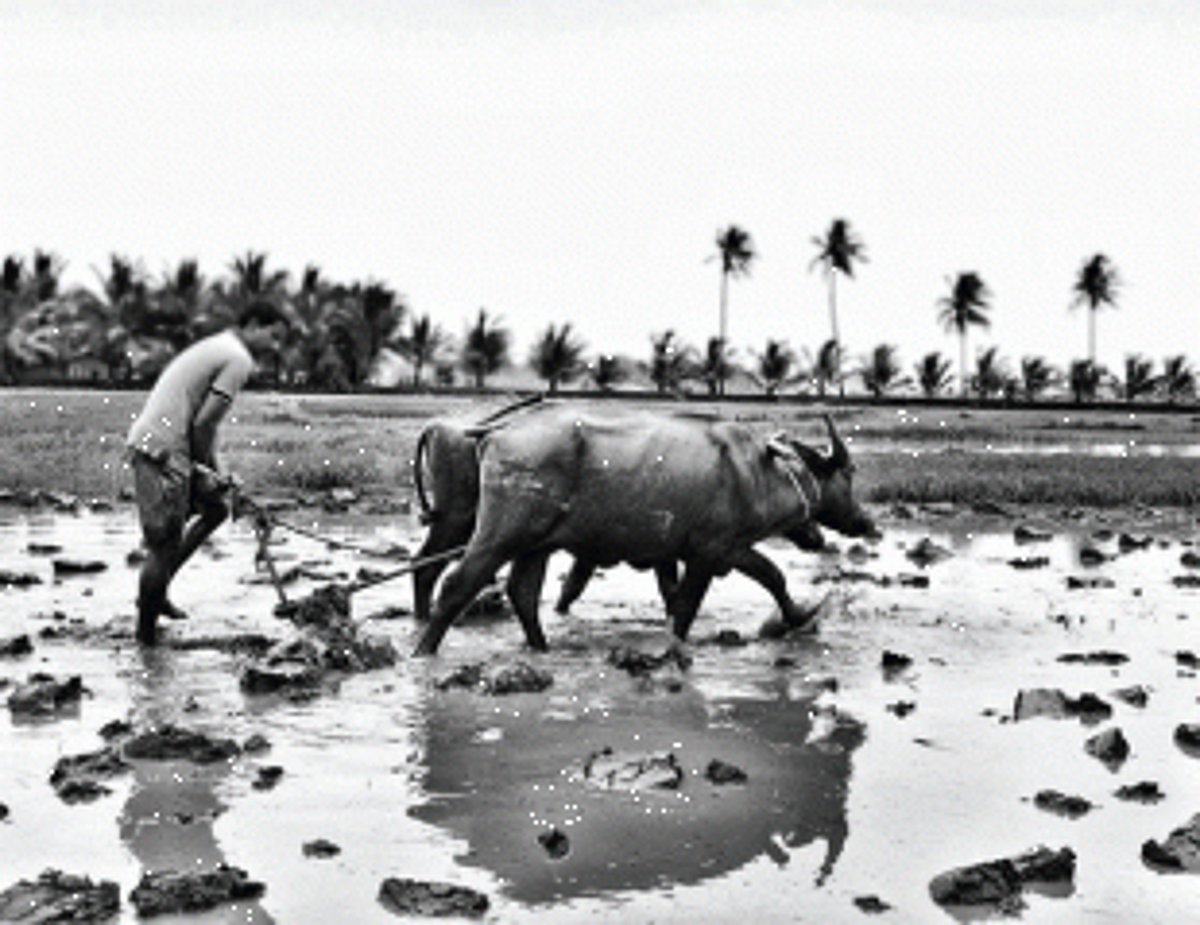
a documentary of the culture of rice cultivation in the village of Curtorim.
Immersing four years of his life, local boy Vince Costa, has thrown light on
the diminishing generation of Goan rice-workers, deftly weaving together their
stories, songs and imagery. While it is thought-provoking, it is not
disillusioning. Its essence is rustic and natural and will strike a deep cord
in your being, especially with its subtle humour. This is a documentary that
you wouldn’t mind watching again and again. I think every parent should bring
their children to watch it. It is heartening and has the power to inspire
because it’s about everyday people from familiar land. Every Goan parent must
watch ‘Saxtticho Koddo – the Granary of Salcete’,” says entrepreneur Hansel
Vaz.

This Tuesday, February 26, 2019, Fundação Oriente at
Fontainhas-Panjim is hosting a presentation/screening on Goan Communities and
Cultures on Documentary Films, where ‘Saxtticho Koddo’ (The Granary of Salcete),
will be one of the four films to be screened. This has been coordinated by the
Portuguese researcher Maria do CarmoPiçarra (ICNova – Universidade Nova de
Lisboa). It will be followed by a discussion with the participation of Dr.
Pedro Sobral Pombo (anthropologist, Goa University) and Vince. The event will
start at 6 pm.
The synopsis of the film as per Fundação Oriente reads as
follows: “Located in a valley, on the banks of the river Zuari, is the village
of Curtorim in Salcete, South Goa. Through the ages, this village has had
strong agrarian heritage and been synonymous with the vast production of rice.
The film journeys through Curtorim’s agrarian roots in an effort to go beyond
rice as a staple and explore how it is interwoven so intricately into Goan
identity. In a bid to be all-encompassing, it inspects the various
socio-economic and environmental dynamics that now affect contemporary farming
in Goa.”
Vince, in a recent Facebook post, stated: “The film is a tribute
to the agrarian culture of Curtorim, which through the ages earned the name
‘Saxtticho Koddo’ or ‘The Granary of Salcete’ for its massive production of
rice, and in a way to every Goan village and the agricultural communities that
keep our cultural heritage the way it is. I could say more and reveal the plot
but I’d rather let the film speak for itself.”
Vince spent four challenging years making this tribute to his
home village, whose agrarian culture has been big part of his life, right from
childhood up until today.
“A year after my daughter was born, I noticed a change in the
fields; some areas remained uncultivated and I was worried that what I’ve taken
for granted about Curtorim could disappear. So primarily it was my way of
capturing for her things about our agrarian culture, until I realised that I
had stepped into a vast area that needed documentation, at least for posterity
if nothing else,” say Vince.
Speaking further about the film, Vince explains that Curtorim
has been called the Granary of Salcete or ‘Saxtticho Koddo’ for a valid reason.
“As a village, we produced massive quantities of rice, held some of the best
native seeds in Goa and almost every person was connected with this occupation
in one way of the other. If we look at the etymology of the village name, that
too is connected to rice, but that’s a whole different story.
The village is very unique and is probably the only village in
Goa that is designed with rice cultivation in mind. We have seven lakes, which
actually are tanks, which means that we were water harvesting before it became
a buzzword. So with people so connected to the fields, a culture evolved and
from this rice became intrinsic to our identity. Be it religion, medicine or
music, it featured in different areas of our lives. So the film, in a way,
tries to encapsulate these various areas and gives the viewer a sense of place,
while championing the common man who works in the field every day, and also
outlining the challenges faced in contemporary farming today,” he adds.
The topic of this 37-minute film has also triggered a debate on
whether Curtorim can continue to hold on its identity in the face of other
villages losing their original charm and authenticity as they have transformed
into concrete jungles.
Vince argues that Curtorim has retained its identity because its
identity is so intrinsically linked to agriculture. He cautions that if farming
vanishes, we cannot expect the identity to stay around for too long. “Though
it’s the story of Curtorim, it is in way, it’s the story of other Goan villages
and in fact resonates globally since the issues affect farming the world over,”
adds the director of the film.
Vince is usually known for his music and has had a successful
career, coming out with original albums of his own. In this respect, this
project offered a new challenge to the artiste as he has done the direction and
cinematography for the film without prior experience in film making. “As an
artiste, I’ve spent more time in music and audio engineering than film and
photography. But once I started and the ball kept rolling, I really started to
enjoy the process. I feel it’s a very powerful medium to tell a story. I pretty
much taught myself things on the fly, and had mentors who pointed me when I got
lost,” Vince explains.
He further expresses, “We need people to tell the stories about
various areas of Goan culture that are fast disappearing. Now that I’m on the
other side of this massive undertaking, I would say that it’s not easy but it’s
well worth it. I would definitely encourage many more Goans to attempt it; we
need them, we need their stories.”
He acknowledges the fact that since the film has won the award
for Best Short Documentary at the Asia Independent Film Award 2018 and is a
part of the Royal Anthropological Institute’s Film Festival in Bristol in March
2019 as well as the Ethnogra Film Festival in Paris in April 2019, the world is
ready for such stories, even if it’s from a small Goan villages like Curtorim.
When asked to comment about the positive feedback his film has
received, Vince says that it’s always heartening when audiences connect with
the film and that it vindicates the work and inspires filmmakers to explore
other stories.
The
film is presented by RedMackerel. Gasper D’Souza is the editor of the film,
while Prashant Sharma is the colourist. Dunstsan Dias has done the Drone
Photography, while the sound editing and sound design was done by Tilak
Goswami.