“Women have been trained to be masculine though the natural energy of a
woman is networking and being nourishing, which is the Sacred Feminine. It is
time to re-look the feminine in men and women, how it was done in ancient
traditional art that focused a lot on the goddess but was later ignored in the
name of patriarchy,” says Miriam Koshy-Sukhija, the curator of the exhibition
‘The Sacred Feminine: Goddess and other Archetypes across Cultures’. The
exhibition is on display at Gallery Gitanjali, Panjim and Panjim Pousada till
April 30, 2018.
The beauty of this exhibition is that it has been a process. It
started with the artists getting inspired and influenced before self examining
their inner energies to produce what they felt connected to. Artists from Goa
and different parts of the world came together at an art residency held at The
Cajueiro Homestead, Valpoi from March 25 to 30, 2017. The artists who are part
of the exhibition are Aadhi Vishal, Apurva Kulkarni, Francis DeSousa, Praveen
Naik, Rajendra Usapkar, Rajeshree Thakker, Sanatan Saha, Sara Khalifi,
Siddharth Gosavi, Sonia Rodrigues Sabharwal, Swapnesh Vaigankar, Vasudev
Shetye, Veenita Chendvankar, Viraj Vasant Naik, Godot Laifungbam and Yolanda de
Sousa. Pushpanjali Sharma and Gautam Nima, and Priyal Woodpecker helped the
artists focus their works on femininity through their performances.

“The Cajueiro Homestead is a beautiful space with great creative
energy and I wanted to work on Sacred Femininity for a very long time. I put
these things together and wanted the artists to find the balance between
masculine and feminine energy. Women have been put down for so long and I
wanted to bring them to the fore. Not to say that they are superior but to
re-look and revoke what we have been trained to be,” says Miriam. The residency
featured Shantiniketan-based artist Sanatan Saha and Pune-based Iranian artist
Sara Khalafi. Somatic and Movement therapy was provided by performances by
Pushpanjali and Gautam. Each piece of artwork is accompanied by Priyal
Woodpecker’s poetic response to them. The documentation videos of the residency
are also available for viewing on the Audio Visual Setup at the gallery.
Also, visitors at the gallery are requested to offer flowers at
the foot of the panel to the Goddesses that they would like to honour or
invoke, especially if they are moved by any painting. They can also leave a
little note to the artist on the post-its provided. “Usually, when it comes to
an art exhibition, we have visitors who go through the paintings displayed and
spend more time looking at the ones they connect with before walking out of the
gallery. For this exhibition, I wanted people to connect with the work and think
about it. We have received a very good response with the flowers and post-it
notes so far,” she says.
Through the residency, the artists produced 36 paintings on
canvas and paper. “Many focused on women through mythology, Indian Goddesses
and the feAminine energy while the abstract artists brought out a different
side of femininity through their works,” says Miriam.
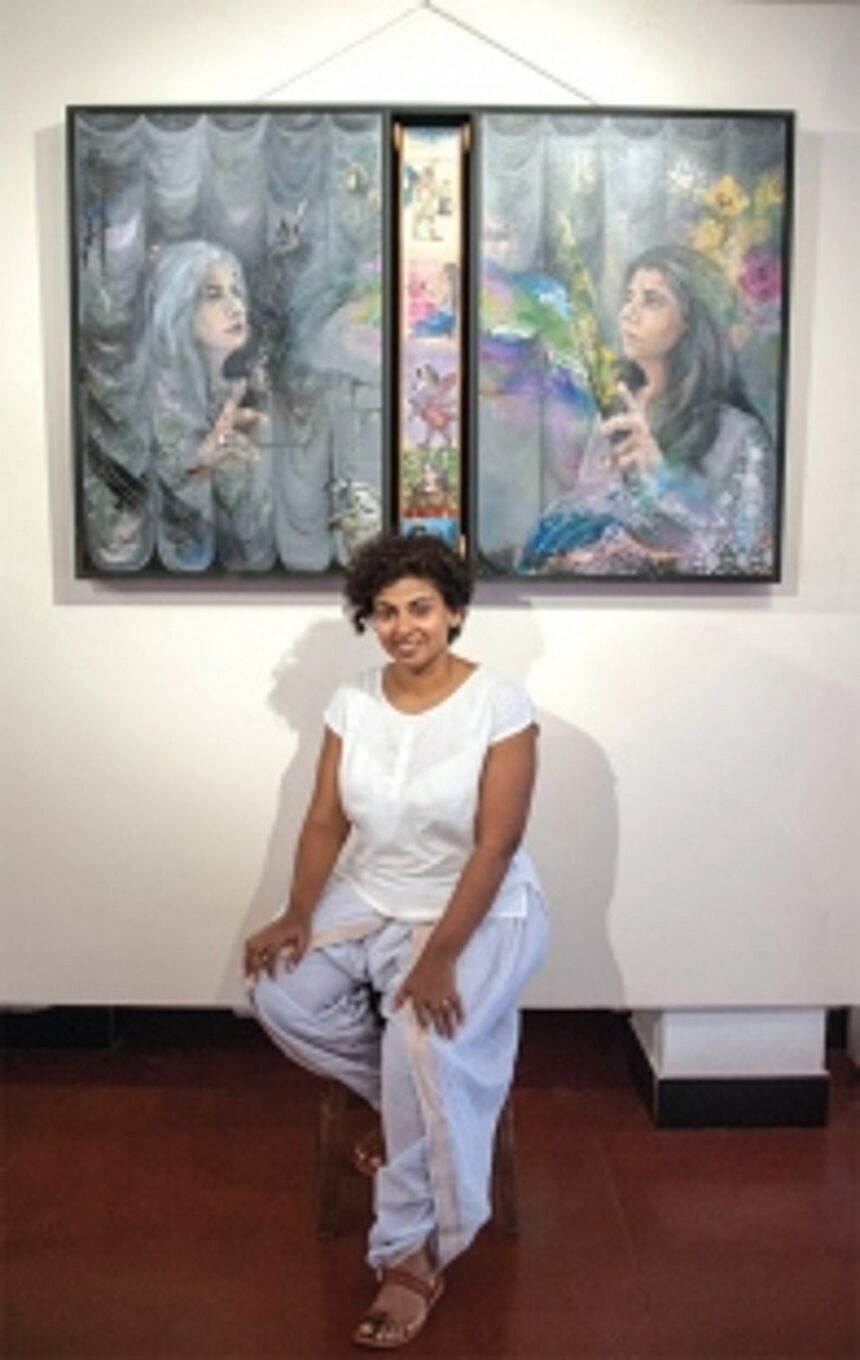
Francis DeSouza, Swapnesh Vaigankar and Siddharth Gosavi explore
divine energies through abstraction. Siddharth Gosavi was inspired to create a
meditative landscape that he calls Satteri, focusing on the indigenous practice
of revering termite hills, called Devisatt. Rajeshree Thakker, Viraj Vasant
Naik and Apurva Kulkarni have re-interpreted the myths through the prism of the
socio-political and the personal in their works. Godot Laifungbam invokes the
Greek Goddesses Artemis, Athena, Aphrodite, Hecate, Demeter, Persephone and
Hera in regional avatars, making them larger than life in ‘Situ’.
Praveen
Naik, Rajendra Usapkar, Sanatan Saha, Sara Khalifi, Sonia Rodrigues Sabharwal,
Vasudev Shetye and Veenita Chendvankar focus on various goddesses. Yolanda de
Sousa pays homage to the eternal unconditional love of the Mother Goddess
symbolised in Deusa Mãe, by the Mother of Mary. Aadhi Vishal explores the
duality and the balance between light and dark and the material and the
spiritual in ‘Shakti’.