In an attempt to enhance the aesthetic appeal of the city’s streets, experts at the Charles Correa
Foundation, together with the Corporation of The City of Panaji (CCP),
completed a research project called ‘Guidelines for commercial signage in
Panaji’.
As part of the project, the foundation invited ideas to design
signages for a select area along M G Road. The idea behind this was to
reconstruct the street and show people, especially those who run commercial
establishments out of heritage buildings along it, that the character of the
place can be enhanced by mere uniformity in design of the signages.

In this regard, a competition was organised by the foundation,
titled, ‘Re-imagining commercial signage in Panaji’, that was thrown open to
architects, graphic designers and town planners.
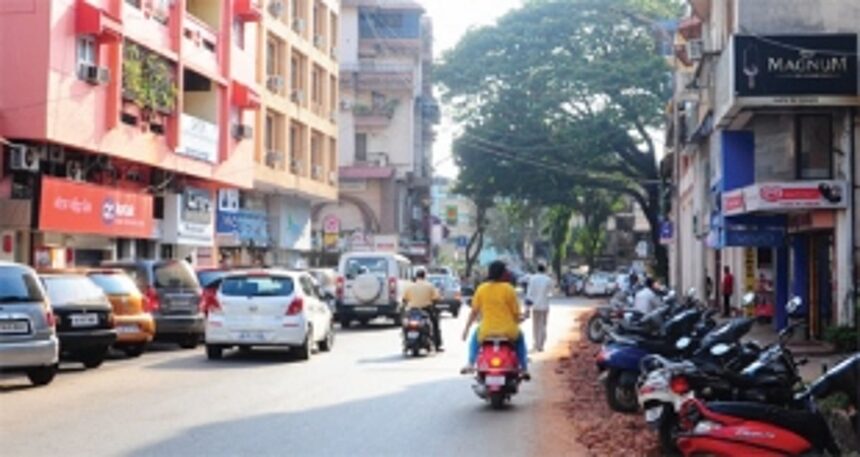
“Signage undeniably plays a vital role in image-making of a
city. Today in Panjim, unregulated signage is creating visual clutter, often
altering the façades of historic buildings and sometimes posing a threat to
pedestrians and motorists. This led us to initiate the project ‘Guidelines for
Commercial Signage in Panaji’, which is to be enforced in the Trade and
Occupation Bye-Laws of the City of Panjim,” says the Charles Correa Foundation
(CCF) on its social media accounts.
Besides using their own ideas, taking opinions of the shopkeepers
and examining the feasibility of the guidelines, through this initiative, they
hope to start work in Panjim, which has been selected as one of the smart
cities.
The participants had to design signage for a selected area, a
200-metre stretch of MG Road in the state’s capital, in a month’s time. MG road
was chosen as it has both, old and new buildings and the aim was to have
uniformity, eliminate clutter and look pleasing without being an obstruction to
the façade and altering the dynamics of historic buildings.
The regulations had four criteria, from evaluation and approval,
namely: maximum allowable area of signage based on area of shop; number of sign
types allowed per shop; location on building façade; and state of illumination.
Of the seven professional studios and a student-faculty team
from Goa College of Architecture that participated in the design competition,
The Busride Lab, Studio Amita Vikrant and students of Goa College of
Architecture (GCA), Altinho, bagged prizes. “Our winning entry for the CCF
competition envisioned a future with crafts integrated into the main-street
city façades of Panjim,” says The Busride Lab via social media.
“Our solution imagined an active ecosystem between street
vendors and brands, the city municipality and Goa’s traditional crafts
clusters, to create a partnership that would potentially result in a range of
soulful products and urban inserts, with signage being one of the many
by-products,” they add.
The awards were presented by Monika Correa, wife of late Charles
Correa, at the prize distribution ceremony held at Fundação Oriente,
Altinho-Panjim.
The participants were awarded prizes in three categories. The
prize in category 1 – ‘Overall Appropriation of Street Signage’ was won by
Busride Studio with a participation of four, including Ayaz Basrai, Jarudhi
Negi, Utkarsh Chaturvedi and Harshali Paralikar. The prize in Category 2 –
Design and Detailing of Six Different Sign Types was bagged by Studio Amita
Vikrant, which had 10 participants including Amita Kulkarni and team. The prize
in Category 3 – People’s Choice Award was awarded to Goa College of
Architecture including Nisha Soares and Suhas Gaonkar (faculty), Unmesh
Kanekar, Kartik Paruthapara, Salil Shirodkar and Saisha Harmalkar (students).
The cash prizes in three categories were as follows, Category 1 (Rs 50,000),
Category 2 (Rs 50,000) and Category 3 (Rs 20,000).
They were judged by a five-member jury including graphic
designers, architects and consultants such as Bharat Bambawale, Rajiv D’Silva,
Harshan Thomson, Ruturaj Parikh and Aurobind Patel. The submitted work by
participants was on display recently at Fundação Oriente and later on, in a
two-day exhibition held at at Azad Maidan last week.
This competition, supported by Goa Carbon Limited in partnership
with The One School Goa, Fundação Oriente and CCP, intends to create awareness
on how visual continuity and uniformity of signage contributes to the image
making of a city.
There were other events held as well that included a panel
discussion with stakeholders like architects, town planners, shop owners, and
others so that valuable inputs could be utilised for the city.
Interestingly,
in the year 2014, as per CCF’s website, under ‘Rationalise Signage in Panaji’,
CCF had spoken about the need to rationalise, clarify and redesign the ‘Signage
System in Panaji’ for greater comprehension and readability. “Signs exist to
communicate information. But beyond fulfilling its functional requirements,
they form an essential component of the built and natural environment and play
an important role in the image making of the city. Attributed to its cultural
richness and natural beauty, the city of Panaji witnesses a heavy inflow of
floating tourist population almost all throughout the year. Thus it becomes highly
desirable for the city to have an appropriate signage system which would enable
not only the visitors but also the residents to navigate through its environs
with ease and also form a sense of unity and character throughout the city,”
CCF had stated.