This day, July 11, 2021 is experiencing stormy weather, with heavy rainfall and wind speeds greater than 40 km/h at Dona Paula. High onrushing waves are invading the entire beach strip up to Miramar. In June, Goa gets high wave warning from the IMD that had forecast squally weather and sea waves as high as 3.5 to 4 metres. Harsh weather was indeed experienced. Earlier, in May 2021, cyclone Tauktae had already taught yet another lesson: cyclonic winds with speeds greater than 200 km/h induced a massive damage along the coast and the hinterland of Goa. Submergence of beaches due to marine incursions, erosion of pioneer dune faces, damage to dune vegetation, flash floods and inundation of lowlands, uprooting of large number of adult trees in cities and villages, collapse of electric transformers, poles, overhead wires, and residential dwellings are a few incidents.
Natural physical processes that operate on the surface of the earth can be geological, hydrological, climatological or hydro-meteorological. Termed as natural hazards, such phenomena have afflicted mankind since centuries. In Goa, cyclones that induce marine transgressions, and torrential rainfall that causes flooding mostly of wetlands constitutes the foremost natural hazards. The impacts will directly depend on the intensity at which natural processes operate. And since mankind comes in the way, natural hazards ultimately turn into disasters. In Goa, the last major disaster with damage to landforms, vegetation and infrastructure occurred during the passage and aftermath of cyclone Tauktae.

A casual visit to coastal and interior areas of Goa revealed substantial physical alterations of landscape and loss of vegetation. Cyclones generate strong winds that force the ensuing high waves to overshoot the beach and break at the base of dunes. Erosion of dune base was evident at several places; thick carpet of ipomoea creepers was effective against wave attack and arrested sand loss, but large breaches (gaps) created on the frontal dune due to excessive footfalls facilitated marine water to advance onto the beach and further beyond the frontal dunes. Influx of marine water lasted for a day. Therefore, the major reasons/parameters that govern marine transgression on the beach are attributed to: wind speed and direction, tidal height, wave height, beach width, beach level, dune elevation and morphology, and the state of dune vegetation. Thus, the fact that the sea transgressed the beach (sometimes even during fair weather) implies that the level of the beach is/was lower than the level of the sea. By analogy, if the level of the beach was higher, if the volume of sand was larger, and if the dune was tall, well preserved, with dense vegetation, the geological stability of the pioneer dune is ensured. Thus, if the inherent buffer capacity of the natural coastal landforms is functional, the likelihood of marine incursions into the hinterland is negligible.
One of the major impacts of stormy winds on inland natural/man-made ecosystems is the uprooting and collapse of trees. Along with trees, electric poles, transformers and the entire wire system was rendered non-functional. Land owners and general public witnessed fruit and ornamental trees in their compounds and road side avenues that got uprooted and drop on the ground. The major reason for falling trees is the excessive growth, irregular branching, abnormal height, and a dense canopy. Heavy winds render such trees unstable as they cannot sustain harsh cyclonic conditions. As such, large number of adult fruit trees are being lost every year. Such disastrous events can be and could have been avoided during inclement weather all these years. The latest cyclone Tauktae and also the previous events have further portrayed a clear message that large trees need to trained and managed. Tall trees in dense forests support one another; winds cannot penetrate their bastion. However, agro research has confirmed that plantations in smaller private properties, gardens or road side need to be pruned and their heights reduced to around 5-6 metres. This proposal may sound ridiculous. A reduced height lowers the centre of gravity; trees thus remain stable.
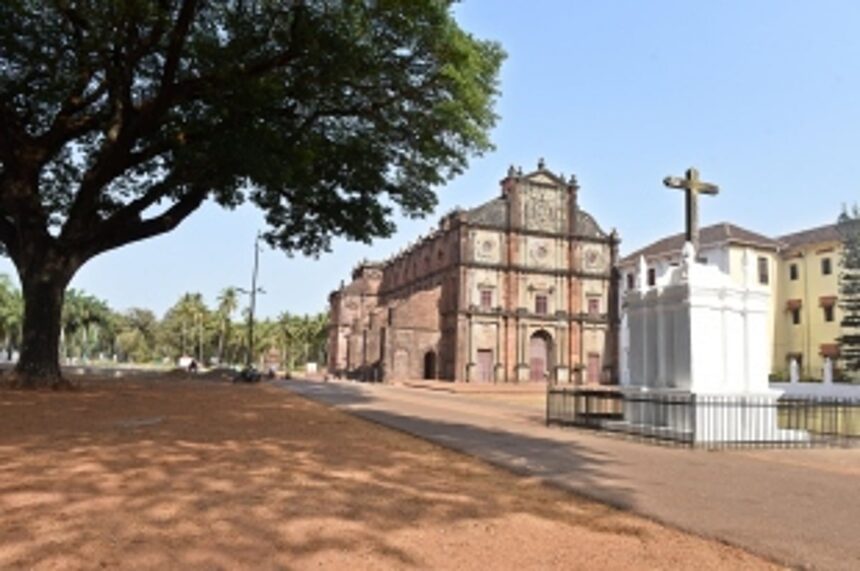
One such iconic adult tree that needs immediate attention is the rain tree in front of the Bom Jesus Basilica in Old Goa. With a girth of some 4 metres, this majestic tree rises to probably more than 25 metres, has a large dense canopy that occupies an area of about 2300 square metres. If this heritage tree is not managed, the pilgrims that hear mass under its shade may lose the entire tree. Similarly, the Campal avenue is the only such tree lined setting that Goa can boast of. Here, some trees date back to the erstwhile regime, but have withstood the test of time. Most have huge trunks and abnormal heights. Many have been lost.
Public memory is short, is the maxim that has been repeated numerous times, on diverse occasions in the past. Despite scary warnings from natural hazards that culminate in loss of life, property and livestock, humans remain adamant by ignoring basic principles of ecology and laws of nature. Unfortunately, India does not have a coastal hazards policy although hydro-meteorological events keep recurring, and monetary losses keep mounting. The forest department does have plantation programmes, but a strategy to conserve large heritage trees by training and managing vegetal species does not exist.
Following the 2004 tsunami experience, our research and experience has confirmed that the only low risk sustainable development is the one that promotes inherent natural buffer: defensive elevation of the beach and protective vegetation of the coast.
(Dr Antonio Mascarenhas is a former Scientist,
NIO, Goa)