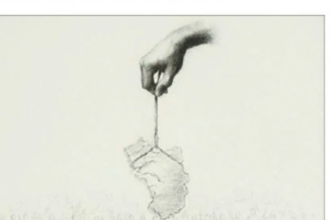
With all our worldly knowledge and experience we seem to be hardly bothered that everything living, including ourselves, is bound to come to an end one day. We appear on the world scene only to disappear after a short span of time. Indeed, nothing physical can escape the march of time and remain fixed in its place without decay, death or transformation. Nonetheless, we continue to live as if we are here forever, and try to “make hay while the sun shines’.
We live our lives as we please, and the world is all the time with us. We chase our desires and aspirations with so much greed that they sometimes extend out even beyond the confines of death encircling us. Plans and programmers are laid out years in advance when no one is sure of what is going to happen tomorrow. We acquire palatial homes and other objects of luxury that outlive us by many, many times over.
It is indeed ironical that, while we chase every goal that is temporal and transient, we should be oblivious of what is more certain and capable of putting an end to all our activities and connections with things we have been in love with. It does not occur to us that a life without a thought of mortality is incomplete and erroneous because it could lead us to much remorse.
Needless to say, our mindless pursuit of pleasures of life is the central weakness of our existence, and it is precisely for this reason that we are so scared of death that is predestined and inevitable. This flawed mode of living makes us restless. It not only hampers our decisive action in times of need but denies the joy and excitement of undertaking bold adventures in life. It is also the root cause of many of our setbacks due to ego, greed, pride, hatred, dishonesty, ostentatious living as against simple living.
The resultant problems and misunderstandings tie us down to the earthly plane and do not allow our imagination to soar high above to catch a glimpse of sublime truths and beauty at higher planes.
Spiritual wisdom tells us that death is not an end but the beginning of a new life. It is rather a point of transformation. The world we enter upon death is different with an altogether different set of requirements and standards. It is eternal and exists in both space and time. And what are the norms and requirements by which the dead are going to be judged? This is a question we ask ourselves time and again. We must find out the answers and transform our lives in the light of their revelations, if we are not to jeopardize our chances in the life hereafter. The wise man, as the prophets say, is the one who remembers death and keeps himself in a state of preparedness to face this eventuality. Death might then be an occasion for rejoicing rather than one of sorrow and repentance.
(The writer is the author of the book “Rise And Shine…The Lotus Way”, and a social activist)