The concept of self-reliance has plumbed to a new low under the present regime. The disruption of the time for usual special gram sabha on October 2, 2023, on the occasion of Gandhi Jayanti, with a thrust programme on Swayampurna Goa, where maximum time was taken in a top down approach where the Government held forth in a live programme telecast for almost until noon. This was only the latest in a series of moves, where anything but self-reliance is the ground norm to be considered in governance.
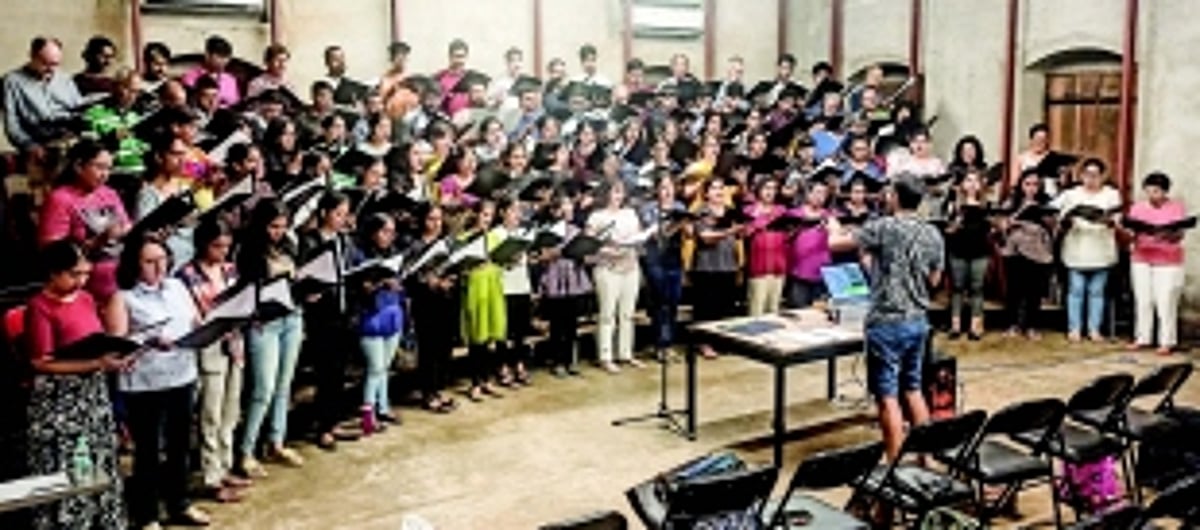
The Swayampurna Goa Programme is supposed to be a community-led action plan of the Government of Goa to make each and every Goan village and city self-reliant. And yet, a gram sabha where people’s voices must have primacy, is being weaponized as a site for promotion and publicity of the present Government, seemingly as a run-up to the coming Lok Sabha elections in 2024. As if that wasn’t bad enough, by the time, this ‘programme’ finished, it was about noon, and the CM was actually suggesting that in the next one hour people can have their gram sabha and should pass two resolutions –one commending the successful Chandrayan III mission and the other commending the 33% reservation in Parliament.

Strangely, the Chief Minister said nothing about the need to discuss inputs for the agriculture policy –this, when the direction for the agriculture policy can play a key role in making the State self-reliant. This when the demand has come from the people based on which a circular has been sent out by the Agriculture Minister. Everyone in Goa is painfully aware of the consequences of lack of self sufficiency that resulted in scarcity of vegetables and food insecurity during the Covid 19 peak. Yet, the aspect of maintaining and sustaining agricultural land, which can contribute to self-reliance, and doing it in a manner that is equitable and sustainable completely seems to have escaped the vision of the powers that be.
Can we have self-reliance, if agricultural lands are systematically destroyed? Can we have self-reliance, if land use planning process is out of the reach of people, because to start with even the documentation of land use is not democratically done? News reports have been streaming in of a draft zoning plan for Pernem where 1.5 crore square metres of land are proposed to be converted to settlement. What does this augur for self-sufficiency? Is there a baseline study that says that, that much land is required for housing by the people living there or by the projected increased population? What are the mechanisms by which it will be ensured that the requirements are met by the land utilization plans? What are the mechanisms through which it can be ensure that the powerful hawks (with apologies to the bird species called hawks) do not swallow the resources that people can engage with and use for self-reliance in a sustained way?
In the meantime, in Pernem taluka, Ibrampur’s Harijanwaddo still waits for the light of the model village that the proponents of things model and smart, promised. In the notifications, and reservations, no effort is made to acknowledge, for instance, the Scheduled Castes from Catholic communities. No effort is made to bring clarity to the classification of communities as Other Backward Classes, where the Christian mesta’s fate hangs in balance.
What are the studies conducted by the government from which it can be understood as to how resources, including fish resources (which constitute the diet of many a Goan) are getting depleted and therefore what can be done to arrest the depletion of those resources? After all, aren’t these the resources that can ensure self sufficiency and not force so many of the people in Goa to migrate for want of secure incomes?
Can self-reliance be reduced to a concept in the air, where people’s needs and aspirations as a community are not considered, their voice in decision making and articulation through protest or journalism is stifled? Where public spaces including gram sabhas, are shrinking with a good amount of time being consumed to subjecting people to be passive receptacles of publicity information? Where permissions for meetings are selectively not given, but where other meetings and rallies, eg Ram Navami rally in 2022, are being allowed to be organised by people whose provocative antecedents have been clearly there in the public domain? Similarly, if people are not safe to go to work, to carry on their lives and livelihoods, there is no due diligence on the part of government to ensure the same, can we be said to be a Swayampurna Goa.
It has constantly been said that we do not need hand me downs, but we need the securing of equitable rights of all people to resources, which alone can ensure self-reliance of villages and communities. These rights are not something that people have to be given but are inherent. They are not the largesse that schemes pretend to be. The barriers to self-reliance which need to be addressed, need to be consciously identified. Instead, it feels that the State is actively complicit in reinforcing those barriers. A slew of legislation/amendments to legislation have been enacted over the last few years, which may seem like progressive legislation (a la the farmer laws) but in effect has the impact of decreasing our self-reliance.
Also, if the livelihoods of certain communities are being systematically, sometimes insidiously snatched away or they are being deprived of the possibility of practicing their trades legally, self reliance is being snatched away. How can we be a Swayampurna Goa, in such circumstances?
A sustainable environment, freedom from violence, good health parameters, equitable access to resources, credit, justice, are key components in the run up to being self-reliant.
NFHS-5 (2019-2021) data points to the fact that ‘around 20 per cent of the surveyed women (aged 18-49 years) had experienced either physical or sexual violence, and three per cent had experienced both. Overall, eight per cent of women, who were or had ever been married, reported experiencing violence from their spouses. Only 10 per cent of the women who had experienced physical or sexual violence sought help’. This should compel to stand up and take steps to empower women to seek help. NFHS-5 data also indicate that 39% women are reported to be anaemic.
In the ultimate analysis, even as we talk of self-reliance, we also need to be aware of inter-dependency. We don’t live as islands wading through life alone, as they say. We cannot but be concerned about issues that span the state, the country and the world, if we have to continue to be self-reliant. Injustice anywhere is a threat to justice everywhere, inequity anywhere is a threat to equity leading to self-reliance everywhere.
(Albertina Almeida is a lawyer and human rights activist)