PANJIM, OCT 3
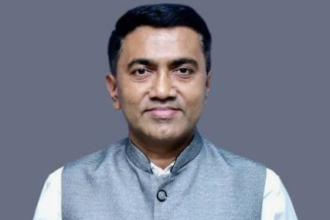
Even as the Health Minister Vishwajit Rane is pushing hard privatization of the government hospitals to provide “cutting-edge” health care to common man under Public Private Partnership (PPP) mode — the most important question lurks up is whether he has really seriously considered the implications of his “ambitious” project?
The answer is big “No.” The way in which he introduced PPP mode for Mapusa District Hospital (MDH) and, which is yet to be fully commissioned as his department is struggling to find a private player to take over, raises some grave questions.
The vital aspects which were needed to be addressed with priority for successfully implementing PPP project, especially in health care, have not been dealt with.
No wonder many have raised questions, including the Opposition BJP which have locked horns with heath minister on this issue.
Clarity about how the total mechanism will work under PPP — who will get the priority; poor patients referred by the government or those who will pay from their purse? is certainly missing, at least, at this stage. In fact, proper guidelines should have been in place prior to taking decision on PPP.
According to the health minister’s reply in the assembly last, when he was totally floored on the issue of MDH, he said, “the consultants will be appointed to study the feasibility of the project, assess the financial viability and operational model along with service delivery standards.” But it would been better if the government had fixed its own priorities.
Speaking to Herald social activist, Dr Oscar Rebello says he doesn’t doubt the integrity of the health minister when he says, “he wants to provide best health care to Goans” but asks whether all pros and cons of providing integrated health care under PPP mode have not been taken into account?
Dr Rebello also questions about what would happen to the existing government owned health care infrastructure and manpower, if it goes ahead with privitisation of government hospitals? (see box)
Also, what will be the future of existing private investment in health care such as by Victor Apollo, Vintage Hospital, Salgaocar Research Centre, Wockhart Nusi, and many others in the State. Moreover, Dr Rebello asks who will be in control?
Pointing out that “medicine is very complex issue,” he says, there is a lot of ambiguity about how the government will proceed on PPP and whether the poor will really benefit?
“Has the health minister thought the economics of privatisation, “ he asks as he points out that the government has not been able to clear huge medi-claim dues of various private hospitals on time.
As on June 2010, total outstanding amount of various hospitals involved with medi-claim scheme was Rs 366.91 lakh.
This also throws up another important question — what will happen to poor patients if the government fails to fulfill its monitory obligations agreed under PPP?
On the other hand Opposition Leader Manohar Parrikar who is vehemently opposed to handing over of district government hospitals to a private player, fails see to any substance in claims made by the health minister.
The Health Minister had told Goa Assembly last that present set up of Asilo Hospital is not efficient to run the MDH in a professional manner while justifying PPP mode.
Ironically, the government never thought it important enough to have discussion on inclusion of private parties in health care under PPP.
In fact, the decision to run MDH came as a bolt from blue after MDH was almost ready, equipments purchased and process of recruitment of staff was underway.
On February 10, 2010 the health minister moved a note seeking approval of the government regarding appointment of IDFC (Triple iii) as consultants for projects — Valpoi 110 bedded hospital, Ponda 240 bedded hospital, medical and educational hub to be set up at Kadamba Plateau and North Goa District Hospital.
At this time, he also intended to have Sanquelim 70 bedded hospital and South Goa district hospital, Margao, both are under constructions , to be run under PPP mode saying the infrastructure can be best managed in most efficient manner under PPP.
However, Chief Minister Digambar Kamat granted approval to MDH for PPP whereas in other cases decision was deferred as those structures under construction.
“The note should have come from the health department but director of health was thrown aside like a mosquito and all the proposals were moved through Joint -Secretary health, Dattaram Sardessai.” pointed out Parrikar.
Parrikar objects having run MDH on PPP saying whole infrastructure belongs to the government — land , structure, equipments which have been left unused due to delay in commissioning of the hospital (It was only after a lot of pressure from the Opposition that OPD at new hospital was finally started last month) and the newly recruited staff .
Also, staff at the old Asilo hospital is also to be taken into account, he says.
With nearly all investment in MDH is by the government, the Opposition Leader wonders, “What will be the contribution of a private party?
Until August, 2010 total 171 posts including senior doctors, staff nurses (74), technicians, pharmacists, physiotherapist, administrative staff, morgue attendants were advertised for MDH and, many posts have been filled.
Parrikar alleges that proper criteria has not been followed for having MDA under PPP and warns that he will expose the heath minister once he receives all information that he has sought under the Right to Information (RTI) Act.
The argument of the Health Minister in favour of PPP projects for the current set-up is not efficient enough to run the state-of-the-art MDH lacks substance.
It doesn’t make sense in handing hand over fully- built-up hospital along with manpower and high-tech equipment to a private party. According to Parrikar this is like giving the hospital on contract and nothing like as envisaged under PPP wherein infrastructure is set-up up by the private party while government provides the land and other inputs.
Parrikar pointed out a case in Mumbai where a private player was given a chance to run the hospital who eventually turned it out into total private set-up while ignoring poor patients.
A government doctor who did not wish to be identified says he is skeptical of a private party getting hold of the government health care.
“How do you determine his real intensions? How do you ensure that needy patients are guaranteed health care in a hospital run under PPP mode?
However , he say some charitable organisations who are experienced in running hospitals can be tried if government is really concerned about offering integrated health care to common man.
When this reporter contacted Health Minister Vishwajit Rane to get clarification on his pet PPP projects, “I have explained everything during assembly session, you please refer to assembly proceedings,” he replied.