Team Herald
PANJIM: In a scathing critique of the state government’s actions, concerned citizens have condemned the destruction of trees during the construction of the elevated corridor at Porvorim. The backlash follows an affidavit filed by Telangana-based Doctor Trees India Private Limited before the High Court of Bombay at Goa, detailing the measures taken to protect three translocated trees.

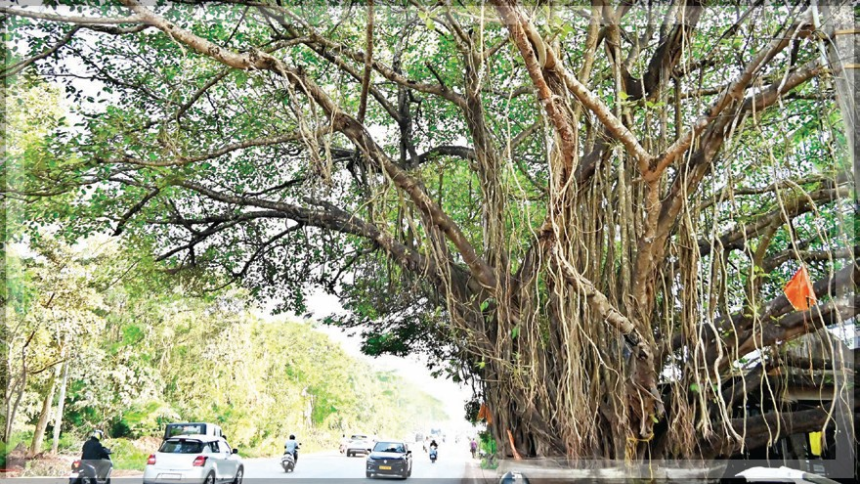
Activist Avertino Miranda voiced his outrage, calling the translocation of five age-old trees – including two banyan trees – as part of the ongoing six-lane elevated corridor project a “disastrous” move. He alleged that one of the translocated trees had been attacked by mites and that the authorities had ignored crucial guidelines set by the Ministry of Road Transport and Highways (MoRTH), particularly the three-month pre-treatment period for the trees.
Miranda further criticized the government for hastily transplanting the trees and for their alleged mishandling of the process, claiming that gravel had been dumped near a translocated banyan tree, compromising its chances of survival. “How can the tree survive under such conditions?” Miranda questioned. He also raised concerns over the engagement of experts for the translocation process, questioning the competency of those involved.
Additionally, Miranda claimed that more than 600 trees had been felled as part of the project. He accused Doctor Trees India of charging Rs 12 lakh to transplant just six trees, casting doubt on the survival of any of them. “I condemn the role of Doctor Trees. They have destroyed trees instead of saving them,” he said, emphasizing that the translocation should have taken place during the monsoon season for a better survival rate.
In response, Venkata Raghu Teja Teegala, director of Doctor Trees India Pvt Ltd, filed an affidavit asserting that all necessary care, including proper watering and medicinal treatments, was being provided to the translocated trees. Teegala also submitted a report, supported by photographs, showing the measures taken to secure the trees’ post-translocation survival. These included compacting the soil around the trees, levelling the plot, and erecting a protective guard fence around them.