Exploring the Legacy of Saint Francis Xavier Through Rare Antiques

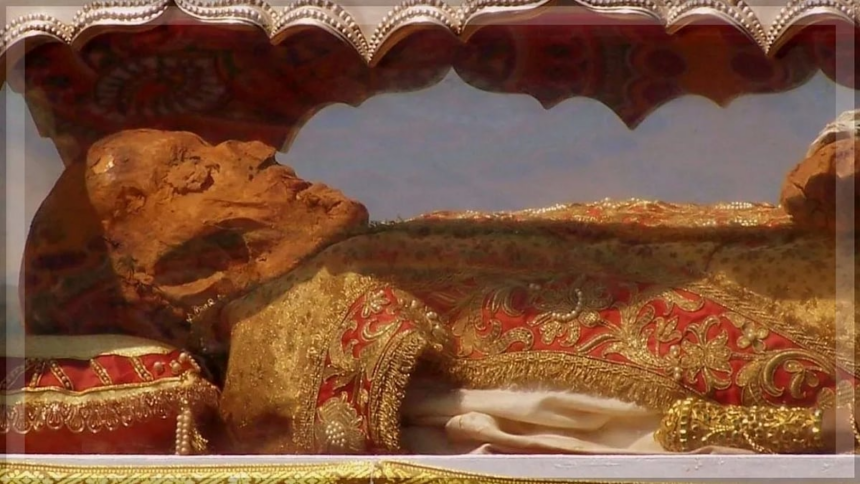
St Francis Xavier was born in Javier in the kingdom of Navarre (in present-day Spain), he was a companion of Ignatius of Loyola and one of the first seven Jesuits who took vows of poverty and chastity at Montmartre, Paris, in 1534. He led an extensive mission into Asia, mainly in the Portuguese Empire of the time and was influential in evangelization work, most notably in India. He also was the first Christian missionary to venture into Japan, Borneo, the Maluku Islands, and other areas. Xavier was about to extend his missionary preaching to China when he died on Shangchuan Island. He was beatified by Pope Paul V on 25 October 1619 and canonized by Pope Gregory XV on 12 March 1622. In 1624 he was made co-patron of Navarre. In Goa he is also given the title 'Goencho Saib' i.e. The master or protector of Goa and 'Poddeacho dhoni' i.e. The master of daily bread for all.

Featuring objects associated with Saint Francis Xavier from the private collection of Frazer Andrade, Margão.

- Advertisement -

Add as preferred source on Google

If you enjoyed reading this article, you can help support our journalism by adding OHeraldo as a preferred source.

This Indo-Portuguese representation of St Francis Xavier is characterized by its composite structure, crafted from ebony and adorned with ivory elements, including the head, hands, feet, and decorative features of the pedestal. The remaining surfaces are embellished with white motifs, creating a lace-like effect. The stole is gilded and elegantly bordered with red pigment. Evidence of gold gilt can be seen along the edges of the cassock and on the ivory embellishments at the base. A pinhole intended for a halo is noticeable on the figure’s head.

Period: 18th Century

Share This Article